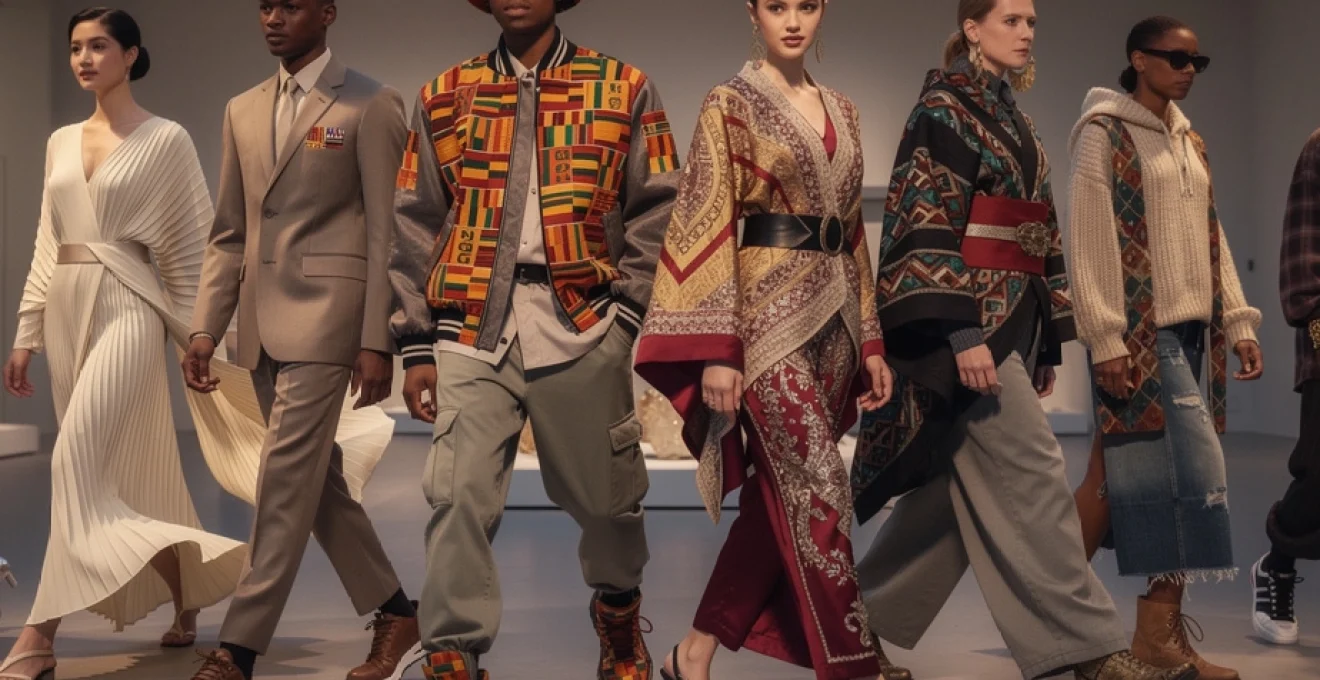
Fashion serves as a powerful mirror reflecting the diverse cultural tapestry of human civilization. Throughout history, cultural movements, artistic philosophies, musical genres, and traditional practices have consistently sparked revolutionary changes in fashion design, creating a dynamic interplay between heritage and innovation. From the geometric precision of Art Deco to the minimalist philosophy of Japanese aesthetics, cultural influences have continuously reshaped how designers approach form, function, and meaning in clothing.
The relationship between culture and fashion extends far beyond surface-level aesthetics. It represents a profound dialogue between past and present, tradition and modernity, local identity and global exchange. Today’s fashion landscape demonstrates an unprecedented level of cultural cross-pollination, where designers draw inspiration from ancient weaving techniques, subcultural movements, religious ceremonies, and digital phenomena to create garments that speak to contemporary audiences whilst honouring their cultural origins.
This cultural fusion has accelerated dramatically in the digital age, where instantaneous global communication allows fashion movements to spread across continents within hours. The result is a rich ecosystem where traditional craftsmanship meets cutting-edge technology, where ceremonial dress codes influence secular trends, and where regional folk elements transform modern silhouettes in ways that would have been impossible just decades ago.
Historical cultural movements that revolutionised fashion design paradigms
Cultural movements throughout history have fundamentally altered fashion’s trajectory, establishing new design languages that continue to influence contemporary collections. These paradigm shifts demonstrate how broader cultural changes inevitably manifest in the clothes people wear, creating lasting legacies that transcend their original contexts.
Art deco geometric patterns in 1920s flapper dress construction
The Art Deco movement of the 1920s revolutionised fashion through its emphasis on geometric precision and modern industrial aesthetics. Flapper dresses became the perfect canvas for expressing Art Deco’s angular beauty, featuring intricate beadwork arranged in chevron patterns, sunburst motifs, and stepped geometric designs. These decorative elements weren’t merely ornamental; they reflected society’s fascination with machine-age efficiency and the rejection of Victorian ornate excess.
The construction techniques employed in these garments showcased remarkable technical innovation. Designers like Paul Poiret and Gabrielle Chanel incorporated architectural principles into dress-making, creating structured silhouettes that emphasised the female form’s natural geometry rather than constraining it with corsetry. The dropped waistline, characteristic of flapper fashion, allowed for greater freedom of movement whilst maintaining the clean lines that Art Deco championed.
Japanese minimalism’s impact on issey miyake’s pleating techniques
Japanese minimalism profoundly influenced modern fashion through its philosophy of functional beauty and spatial awareness. Issey Miyake’s revolutionary pleating techniques exemplify how traditional Japanese aesthetic principles can transform contemporary garment construction. His approach draws from the Japanese concept of « ma » – the meaningful use of negative space – creating garments that breathe and move with the wearer’s body.
Miyake’s pleats represent more than technical mastery; they embody the Japanese principle of finding beauty in simplicity and impermanence. The fabric’s ability to expand and contract mirrors traditional Japanese design philosophies about flexibility and adaptation. This technique has influenced countless designers worldwide, demonstrating how cultural aesthetics can create entirely new categories of clothing that merge art, technology, and wearability.
African kente weaving patterns in contemporary streetwear collections
The integration of African Kente weaving patterns into contemporary streetwear represents one of fashion’s most significant cultural exchanges. Kente cloth, with its complex symbolic meanings embedded in colour combinations and geometric arrangements, has found new expression in modern urban fashion. Each pattern traditionally conveys specific cultural messages about wisdom, strength, and community values.
Contemporary designers have approached this integration with varying degrees of cultural sensitivity, with the most successful collaborations involving direct partnerships with African artisans and communities. Brands like Off-White and Supreme have incorporated Kente-inspired elements whilst working to ensure authentic representation and fair compensation for traditional craftspeople. This approach demonstrates how cultural appreciation can foster meaningful creative exchange rather than mere appropriation.
Bauhaus functionalism principles in modern sustainable fashion design
These principles of Bauhaus functionalism — reducing design to its essential purpose, valuing honest materials, and prioritising human needs — have become cornerstones of modern sustainable fashion. Today’s eco-conscious labels apply “form follows function” by eliminating unnecessary trims, designing modular garments that can be repaired or reconfigured, and favouring mono-material construction that simplifies recycling. In many ways, the sustainable wardrobe is the Bauhaus wardrobe revisited: minimal, purposeful, and designed to endure rather than to be discarded after a single season.
As circular design and slow fashion gain momentum, more brands are revisiting Bauhaus philosophies to question every stage of the garment lifecycle. Why add decorative elements that make a piece harder to recycle? How can we design a jacket that serves multiple climates or occasions instead of forcing you to buy three? By returning to functionalism, designers are finding that sustainability is not a constraint but a creative framework that inspires new fashion movements grounded in responsibility.
Cross-cultural fashion fusion methodologies in contemporary design
Cross-cultural fashion fusion has evolved from surface-level borrowing into a more thoughtful and collaborative methodology. Rather than simply lifting motifs from a culture and applying them to a new silhouette, leading designers now pursue deeper research, co-creation with local artisans, and transparent storytelling about a garment’s origins. This shift towards cultural appreciation over appropriation is reshaping how new fashion movements are born.
In practice, contemporary fashion fusion involves a careful balance of innovation and respect. Designers immerse themselves in the social context, symbolism, and technical processes behind traditional garments before adapting them for global audiences. The result is hybrid fashion that feels authentic to its cultural roots yet relevant to today’s lifestyle, proving that you can build a modern wardrobe while still honouring centuries of tradition.
Kimono silhouette integration in western haute couture construction
The kimono’s influence on Western haute couture offers one of the most striking examples of cross-cultural fashion fusion. Its signature straight-cut panels, wrap closure, and emphasis on fluid drape have inspired designers from Paul Poiret to John Galliano and Rei Kawakubo. Instead of simply reproducing a traditional kimono, these designers have translated its core principles — ease of movement, modular layering, and architectural volume — into evening gowns, coats, and even tailored suits.
From a construction perspective, the kimono silhouette challenges the fitted, body-con approach that dominated Western dressmaking for much of the 20th century. By prioritising space between the body and the garment, couture houses have explored new approaches to pattern cutting, such as zero-waste layouts and rectangular pattern pieces. This has tangible sustainability benefits: more efficient use of fabric, fewer offcuts, and garments that can be adjusted or re-belted to fit different bodies and life stages.
For designers, a key question emerges: how do you integrate a kimono-inspired silhouette without reducing it to an aesthetic cliché? The most considered collections use subtle nods — a kimono sleeve here, an obi-inspired belt there — supported by clear acknowledgement of Japanese textile traditions in show notes and brand storytelling. When handled with nuance, kimono influences can expand the vocabulary of Western haute couture construction while still paying respect to the garment’s cultural origins.
Indian embroidery techniques in luxury european fashion houses
Indian embroidery techniques, from zardozi metalwork to chikankari white-on-white stitching, have long been prized by luxury European fashion houses. The intricate beadwork seen on red-carpet gowns and couture jackets often originates in specialised ateliers in cities like Mumbai, Kolkata, and Lucknow. These embellishment traditions bring a tactile richness and narrative depth that machine embroidery simply cannot replicate.
However, as demand for hand-embellished garments has increased, so too have concerns about transparency, fair wages, and crediting of artisans. Leading houses are beginning to address this by naming partner ateliers, investing in training programmes, and publishing details about handwork hours in their sustainability reports. When you see a gown shimmering under runway lights, you are often witnessing the output of hundreds of hours of collective labour grounded in generations of cultural knowledge.
For emerging designers looking to incorporate Indian embroidery into luxury fashion, a responsible methodology is essential. This includes building long-term relationships with craft clusters, agreeing on shared design authorship, and avoiding the use of sacred or ritual motifs in purely commercial contexts. Approached this way, Indian embroidery becomes more than decoration; it becomes a bridge connecting European fashion houses with living craft communities across the globe.
Latin american textile heritage in modern ready-to-wear collections
Latin American textile heritage — from Andean alpaca weaving to Guatemalan huipil patterns — has become a fertile source of inspiration for modern ready-to-wear collections. Designers are drawn to the bold colour-blocking, symbolic motifs, and robust handwoven structures that lend themselves to contemporary outerwear, knitwear, and accessories. In many cases, these textiles tell stories of land, mythology, and resistance, infusing garments with layers of meaning that go far beyond print trends.
In the last decade, a growing number of ethical fashion brands have partnered directly with cooperatives in Peru, Bolivia, Mexico, and beyond to co-create capsule collections. These collaborations often prioritise slow production timelines, natural fibres, and local dyeing traditions, aligning with the global push towards sustainable wardrobes. When executed thoughtfully, such partnerships can provide stable income for rural communities while giving fashion consumers access to pieces that feel both contemporary and deeply rooted in place.
Yet the risk of cultural flattening remains. Not every colourful stripe or woven diamond should be treated as interchangeable “boho” decoration. Designers who work with Latin American textiles must ask: which communities developed these patterns, and what do they signify? Are we crediting these origins in our marketing and labelling? By foregrounding provenance, brands can ensure that Latin American textile heritage in ready-to-wear collections is celebrated rather than commodified.
Scandinavian hygge philosophy in minimalist wardrobe design
The Scandinavian concept of hygge — loosely translated as cosy well-being — has had a quiet yet powerful impact on minimalist wardrobe design. Rather than chasing constant novelty, hygge-inspired fashion prioritises comfort, tactility, and emotional connection to clothing. Think soft merino knitwear, cocoon coats, and neutral-toned separates that can be mixed and matched across seasons without feeling dated.
In practical terms, hygge philosophy encourages us to build a capsule wardrobe around a small number of well-loved pieces that support our daily rituals. Designers from Copenhagen to Stockholm have embraced this by creating collections with limited colour palettes, modular layering options, and silhouettes that look equally at home in the office or at a weekend cabin. The emphasis is on how garments feel against the skin and how they support a slower, more intentional lifestyle.
For consumers overwhelmed by trend cycles, hygge-inspired minimalism offers a refreshing alternative: fewer purchases, higher-quality fabrics, and a closer emotional bond with what you own. It also brings a subtle cultural influence into your wardrobe without overt folk motifs or logos, showing that not all cultural fashion inspiration needs to be visually loud. Sometimes, a simple, well-cut wool jumper can carry as much cultural meaning as an ornate festival costume.
Regional folk costume elements transforming modern silhouettes
Regional folk costumes have become a powerful catalyst for transforming modern silhouettes, particularly as designers seek alternatives to homogenised global trends. Elements such as dirndl bodices, embroidered blouses, corseted vests, and full circle skirts are being reinterpreted in everything from streetwear to bridal collections. These references are seldom literal reproductions; instead, they act as structural and decorative starting points for contemporary fashion design.
One striking example is the renewed interest in Eastern European and Balkan folk dress. Designers have adapted voluminous sleeves, smocked details, and cross-stitched yokes into modern day dresses and tops that pair comfortably with denim or tailoring. Similarly, the tailored vests from Central European and Andean traditions have inspired new waistcoat silhouettes that blur the line between suiting and folkwear, giving you a way to experiment with cultural influences in fashion without feeling like you are in costume.
This transformation is not only aesthetic; it also challenges how we think about fit and body politics. Folk garments were often designed to accommodate changing bodies, seasonal layering, and movement — features that resonate strongly with today’s calls for size inclusivity and comfort. By revisiting adjustable lacing, wrap constructions, and multi-piece outfits, designers are learning from folk costume engineering to create modern clothes that adapt to real lives rather than idealised figures.
Music subculture aesthetics driving fashion innovation cycles
Music subcultures have consistently acted as accelerators for new fashion movements, pushing aesthetics from the fringes into the mainstream. The visual codes surrounding punk, hip-hop, grunge, and electronic music scenes demonstrate how sound can shape style, and how clothing can, in turn, amplify a community’s values. When a new genre emerges, it rarely changes only what people listen to; it also shifts what they wear, how they customise garments, and how they use fashion to signal belonging.
Today, the fashion industry treats music subcultures as both muse and laboratory. Brands mine underground scenes for fresh silhouettes, styling techniques, and attitude-driven details that can be distilled into sellable collections. At the same time, artists and fans continue to experiment DIY-style, hacking existing clothes to fit their musical identities. This constant feedback loop keeps fashion innovation cycles dynamic, ensuring that cultural influences on fashion do not stagnate but evolve with each new beat.
Punk movement’s deconstruction techniques in alexander mcqueen’s collections
The punk movement of the 1970s introduced a radical approach to clothing: tear it apart, safety-pin it back together, and wear your rebellion on your sleeve — sometimes literally. Deconstruction became both a political stance and a design method, rejecting polished finishes in favour of exposed seams, raw hems, and reassembled scraps. This ethos deeply influenced Alexander McQueen, whose collections frequently embraced destruction as a path to new beauty.
McQueen’s tailoring, often compared to Savile Row in its precision, was intentionally disrupted by slashed fabrics, asymmetric hems, and garments that appeared to be coming undone. This tension between technical mastery and deliberate damage echoed punk’s refusal to conform. Rather than copying punk looks, McQueen translated its spirit into couture-level craftsmanship, demonstrating that cultural inspiration in fashion can be both reverent and radically innovative.
Today, the deconstruction techniques pioneered by punk and refined by designers like McQueen continue to inspire independent labels and luxury houses alike. Distressed denim, inside-out seams, and hybrid garments made from spliced jackets or shirts all owe a debt to this movement. For anyone designing or curating a wardrobe, punk reminds us that imperfection and disruption can be powerful aesthetic tools when used with intention.
Hip-hop culture’s oversized proportions in contemporary streetwear brands
Hip-hop culture has had a transformative impact on fashion, particularly through its embrace of oversized proportions and logo-centric styling. In the 1980s and 1990s, baggy jeans, voluminous hoodies, and generously cut jerseys became symbols of comfort, defiance, and community. These silhouettes challenged Eurocentric tailoring norms that prioritised narrow fits and rigid structure, instead foregrounding freedom of movement and a sense of swagger.
Contemporary streetwear brands have inherited and evolved this visual language. From luxury labels partnering with rappers to independent designers drawing on local scenes, the influence of hip-hop can be seen in elongated t-shirts, wide-leg trousers, and padded outerwear that exaggerates the body’s outline. Oversized proportions allow wearers to occupy space boldly, turning the street into a runway and everyday clothing into an assertion of presence.
As hip-hop-inspired streetwear enters luxury spaces, designers grapple with questions of authenticity and ownership. Who gets to profit from these aesthetics, and how are the origin communities credited and compensated? By engaging openly with hip-hop’s cultural roots and collaborating with artists, stylists, and designers from within the culture, brands can ensure that this influential fashion movement remains grounded in the communities that created it.
Grunge aesthetic’s layering methodology in independent fashion labels
The grunge aesthetic of the early 1990s, associated with bands like Nirvana and Pearl Jam, introduced a new, anti-polished approach to dressing. Its core elements — flannel shirts, ripped denim, oversized knits, and thrift-store dresses — were often thrown together in loose layers, more out of practicality than deliberate styling. Yet this unplanned, “I just grabbed what was on the floor” look quickly became its own recognisable fashion code.
Independent fashion labels have revisited grunge layering as an antidote to hyper-curated, Instagram-perfect outfits. By combining slip dresses over t-shirts, hoodies under blazers, and multiple textures in a single look, designers embrace a kind of controlled chaos that feels authentic and lived-in. This methodology invites you to see your wardrobe as a modular toolkit rather than a set of fixed outfits, encouraging experimentation and personal storytelling.
At a deeper level, grunge challenged the idea that fashion must always appear pristine and expensive to be valid. Today’s designers channel that spirit by integrating deadstock fabrics, upcycled garments, and visible mending into their collections. In doing so, they prove that grunge’s cultural influence on fashion extends far beyond plaid shirts; it informs a broader philosophy of imperfection, sustainability, and individuality.
Electronic music scene’s technological integration in wearable fashion design
The electronic music scene has long been a testing ground for technological integration in fashion, particularly in club and festival environments. As DJs and producers experimented with synthesizers and digital effects, fashion designers explored LEDs, reflective materials, and responsive textiles that pulse or change colour with sound. Rave culture, with its emphasis on sensory overload, created a natural demand for clothing that interacts with light and movement.
Today, wearable technology inspired by electronic music ranges from LED-infused jackets to garments with built-in speakers or haptic feedback systems. Designers collaborate with engineers and programmers to create interactive outfits that blur the line between costume, performance gear, and everyday wear. In this context, a jacket is no longer just a layer against the cold; it can become a visualiser for the music you’re hearing, turning your body into a moving canvas.
For the broader industry, these experiments raise intriguing questions: will tech-enhanced clothing become part of mainstream wardrobes, or remain tied to nightlife and stagewear? As battery life improves and components shrink, we may see more subtle integrations — like smart fibres that react to temperature or sound — filter into ready-to-wear. The electronic music scene thus acts as a cultural and technological laboratory, pushing fashion to reconsider what a garment can do.
Religious and ceremonial dress codes influencing secular fashion trends
Religious and ceremonial dress codes have quietly, and sometimes controversially, shaped secular fashion trends for decades. Elements such as veils, cassocks, prayer shawls, and mitre-like headpieces have appeared on runways from Paris to New York, often abstracted into high collars, long-line coats, and dramatic capes. When handled with awareness, these references can highlight the beauty of sacred craftsmanship; when not, they risk trivialising deeply held beliefs.
One prominent example is the rise of modest fashion, which draws in part from Islamic, Jewish, and Christian dressing practices. Long sleeves, high necklines, and floor-length skirts have moved from niche religious markets into mainstream collections, driven by consumer demand for elegant, less-revealing clothing. This has opened up new design challenges: how do you create garments that feel contemporary and expressive while respecting modesty requirements across different cultures?
Wedding and ceremonial wear offers another clear intersection between religious codes and secular style. White bridal gowns, originally popularised in Western Christian contexts, are now a global staple, while design details like lace veils, embroidered chuppah-inspired motifs, or sari draping techniques often migrate into eveningwear and couture. For designers and consumers alike, the key is intentionality. Asking “What is the origin and meaning of this element?” before incorporating it into a purely aesthetic look helps ensure that religious and ceremonial influences enhance, rather than exploit, the fashion narrative.
Digital age cultural phenomena reshaping fashion communication strategies
The digital age has radically altered how cultural influences in fashion are shared, discussed, and transformed. Social media platforms, livestreamed shows, and virtual communities allow fashion movements to emerge, evolve, and globalise at unprecedented speed. A look first worn by a micro-influencer in Lagos or Seoul can inspire designers and consumers in London or Los Angeles within hours, creating a real-time feedback loop between culture and clothing.
For brands, this new landscape demands agile fashion communication strategies. Instead of relying solely on seasonal campaigns and glossy editorials, labels now engage audiences through short-form video, behind-the-scenes content, and interactive experiences such as digital try-ons or augmented reality filters. These tools not only showcase garments but also contextualise their cultural inspirations, giving you insight into the artisans, music, or rituals that shaped a collection.
At the same time, digital culture has made conversations around cultural appropriation, sustainability, and inclusivity more visible — and more urgent. Consumers can call out problematic designs, share alternative narratives, and highlight underrepresented creators with a single post. This increased scrutiny pushes the industry to be more transparent about where inspiration comes from and how it is translated into products. In response, forward-thinking brands use their online platforms to credit collaborators, explain design decisions, and invite dialogue, turning fashion communication into an ongoing cultural conversation rather than a one-way broadcast.
Looking ahead, emerging technologies like virtual reality showrooms, AI-driven styling tools, and fully digital garments are likely to deepen this transformation. You may soon “wear” a culturally inspired digital outfit in a virtual space long before it exists physically, if it ever does. As these innovations unfold, the central challenge remains the same: how can we harness digital phenomena to share cultural influences on fashion in ways that are respectful, inclusive, and creatively empowering for everyone involved?