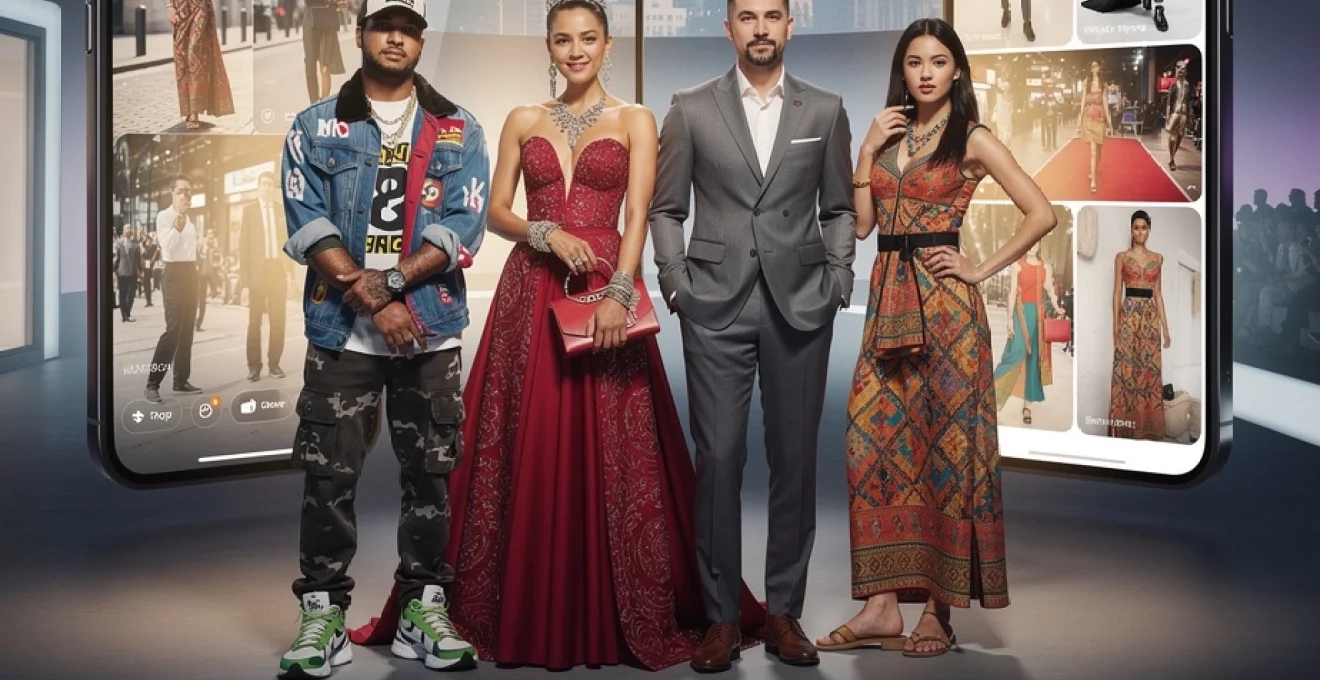
The intersection of celebrity culture and fashion has created one of the most powerful forces shaping global style preferences today. From red carpet moments that spark worldwide conversations to casual street style documentation that influences millions of purchasing decisions, celebrities wield unprecedented influence over what people wear across continents. This phenomenon extends far beyond simple product placement, encompassing complex cultural exchanges, economic impacts, and technological innovations that reshape how fashion trends emerge, spread, and evolve in our interconnected world.
Celebrity fashion influence operates through multiple sophisticated mechanisms that leverage both traditional media and cutting-edge digital platforms. The speed at which a single celebrity outfit can transform from a personal style choice into a global trend reflects the remarkable power dynamics at play in contemporary fashion marketing. Understanding these mechanisms reveals not just how trends spread, but why certain celebrities become fashion authorities while others fade into sartorial irrelevance.
Celebrity fashion influence mechanisms through digital platforms and social media
The digital revolution has fundamentally transformed how celebrity fashion influence operates, creating instantaneous global reach that was unimaginable just two decades ago. Social media platforms have evolved into sophisticated fashion laboratories where celebrities experiment with styles, collaborate with designers, and directly engage with millions of followers who eagerly await their next sartorial revelation.
Modern celebrity fashion influence operates through a complex ecosystem of interconnected digital touchpoints. Each platform serves distinct functions in the trend creation and amplification process, from initial style documentation to viral spread and commercial conversion. This multi-platform approach ensures maximum reach across diverse demographic segments, age groups, and geographic regions.
Instagram street style documentation and viral fashion moments
Instagram has emerged as the primary platform for celebrity street style documentation, with paparazzi-style shots and carefully curated outfit posts generating millions of engagements. When Zendaya shares her daily looks or Rihanna showcases her latest Fenty designs, these posts frequently achieve viral status within hours. The platform’s visual nature makes it particularly effective for fashion content, allowing followers to examine every detail from accessories to styling choices.
The « Instagram effect » has created new categories of fashion moments that extend beyond formal events. Casual coffee shop visits, airport arrivals, and workout sessions now serve as potential trend-setting opportunities. This democratisation of fashion influence means that celebrity style choices carry weight regardless of the occasion or setting, fundamentally changing how stars approach their daily wardrobe selections.
Red carpet events as trendsetting catalysts for global markets
Red carpet events continue to function as premier fashion showcases, but their influence has been amplified exponentially through digital distribution. The Met Gala, Cannes Film Festival, and Academy Awards generate billions of social media impressions, with individual looks sparking immediate global fashion conversations. Lady Gaga’s multiple costume changes at the 2019 Met Gala, for instance, dominated fashion discussions for weeks and influenced everything from statement jewelry trends to dramatic outerwear designs.
These events serve as crucial testing grounds for emerging designers and established fashion houses alike. When Timothée Chalamet wears a lesser-known designer like Haider Ackermann to a major festival, it can transform the brand’s global profile overnight. This dynamic has created intense competition among fashion houses to secure celebrity partnerships for high-profile events.
Tiktok fashion challenges and Celebrity-Driven viral content
TikTok has introduced entirely new mechanisms for celebrity fashion influence through challenge-based content and short-form styling videos. Hashtags like #outfitcheck and #fashioninspo have accumulated billions of views, with celebrity participation often determining which trends achieve mainstream adoption. The platform’s algorithm rewards engagement and creativity, meaning innovative celebrity fashion content can reach massive audiences regardless of follower count.
The speed of trend propagation on TikTok is unprecedented in fashion history. A single video featuring a celebrity wearing platform boots or rhinestone accessories can generate thousands of imitation posts within 24 hours. This rapid-fire trend cycle has forced fashion brands to adapt their production schedules and marketing strategies to capitalise on fleeting viral moments.
Paparazzi photography’s role in casual fashion trend propagation
Traditional paparazzi photography maintains significant influence in celebrity fashion trend setting, particularly for candid moments that feel more authentic than styled
and unscripted. Airport looks, coffee runs, or school drop-offs captured by photographers often resonate more with audiences than editorial shoots because they feel attainable. When Hailey Bieber is photographed in oversized blazers and biker shorts, or when A$AP Rocky steps out in unexpected colour combinations, those images circulate across tabloids, Twitter, and Instagram fan pages within minutes.
These candid photos frequently become reference points for everyday dressing and “off-duty” style inspiration. Fast fashion retailers and smaller boutiques monitor these images closely, rushing to replicate key pieces—from sunglasses shapes to sneaker silhouettes. In many ways, paparazzi shots function like real-time focus groups for global fashion trends, revealing which celebrity looks spark enough public interest to justify full-scale production or targeted capsule drops.
High-profile celebrity fashion collaborations shaping industry standards
As celebrity influence has intensified, collaborations between stars and fashion houses have evolved from one-off capsule collections into long-term strategic partnerships. Rather than simply lending a face to a campaign, celebrities now co-create products, define visual identities, and even reshape supply chains. These high-profile collaborations set new benchmarks for inclusivity, design innovation, and marketing, often forcing the wider industry to update its standards to keep pace.
For consumers, these partnerships serve as a shortcut to aspirational style: buying into a celebrity-led collection feels like gaining access to their curated world. For brands, celebrity fashion collaborations offer instant cultural capital and built-in global audiences. The most successful examples—like Fenty, Yeezy, or SKIMS—operate less like endorsements and more like full-fledged fashion businesses that influence how the wider market approaches sizing, materials, and aesthetics.
Rihanna’s fenty revolution and inclusive luxury market disruption
Rihanna’s Fenty empire is often cited as a turning point in the modern fashion and beauty landscape. With Fenty Beauty launching 40+ foundation shades from day one, the brand forced legacy luxury labels to confront their lack of inclusivity. This same philosophy carried into Savage X Fenty, which showcased lingerie on bodies of all sizes, skin tones, and gender expressions—often via high-energy runway shows that rivalled Victoria’s Secret in cultural impact while sending a very different message.
The “Fenty effect” goes beyond marketing. By proving that inclusive product ranges can be commercially successful, Rihanna reset expectations for what luxury fashion and beauty should look like. Consumers now actively question brands that do not provide extended sizes or diverse shade ranges, especially when a high-profile celebrity has shown that inclusivity and profitability can coexist. In this sense, Rihanna has not just followed trends—she has rewritten the rulebook for what a global fashion brand can and should be.
Kanye west’s yeezy brand impact on streetwear aesthetics
Before Yeezy, luxury fashion and streetwear occupied distinct cultural lanes. Kanye West’s partnership with Adidas blurred those boundaries, creating a minimalist, futuristic streetwear aesthetic that quickly filtered from hype culture into mainstream wardrobes. The neutral colour palettes, oversized silhouettes, and “ugly” sneaker designs associated with Yeezy helped normalise a more utilitarian, dystopian style that many brands later adopted.
Yeezy’s impact on global fashion trends is visible in everything from the proliferation of chunky sneakers to the popularity of athleisure-inspired basics. Limited drops and high resale values turned each release into an event, training consumers to see sneakers and hoodies as investment pieces rather than casual throwaways. Despite the controversies surrounding West, the aesthetic blueprint established by Yeezy continues to shape streetwear collections, high fashion runways, and mass-market offerings alike.
Victoria beckham’s transition from pop icon to high-end fashion authority
Victoria Beckham’s evolution from pop star to respected designer illustrates another pathway for celebrity influence on high fashion. Instead of relying on gimmicks, Beckham built her eponymous brand on precise tailoring, refined minimalism, and consistent quality—positioning herself as a serious creative director rather than a celebrity hobbyist. Over time, her label earned critical acclaim and a loyal customer base seeking quiet luxury and polished everyday pieces.
Her journey demonstrates how celebrities can leverage their public image to enter fashion, then gradually shift perception through craftsmanship and coherent brand identity. For consumers, Victoria Beckham’s success legitimises the idea that a celebrity-founded label can deliver long-term value and timeless pieces, not just viral drops. For the industry, her brand has helped reinforce the growing demand for understated, investment-ready fashion in an era crowded with loud, logo-driven trends.
Pharrell williams’ louis vuitton appointment and cultural crossover strategy
Pharrell Williams’ appointment as men’s creative director at Louis Vuitton marked a new chapter in the relationship between celebrity culture and heritage luxury houses. Rather than selecting a traditional design-school veteran, Louis Vuitton chose a multi-hyphenate artist with deep roots in music, streetwear, and youth culture. His debut show on the Pont Neuf in Paris underscored how star power, live performance, and fashion spectacle can fuse into a single, globally streamed cultural moment.
Pharrell’s role signals a broader shift: celebrities are no longer just muses or ambassadors; they can now steward the creative direction of century-old brands. This crossover strategy allows luxury houses to tap into new audiences without sacrificing their heritage, using celebrity directors to reconcile archival codes with contemporary cultural currents. As more brands experiment with similar appointments, we can expect the boundary between entertainment and high fashion to become even more porous.
Fashion week celebrity front row positioning and trend amplification
At global Fashion Weeks—from New York and London to Milan and Paris—the front row has become almost as important as the runway itself. Brands meticulously curate seating plans to align specific celebrities with their desired image and target markets. A single photo of Zendaya, Jung Ho-yeon, or Timothée Chalamet sitting front row can generate as much media value as the show coverage, especially once those images circulate across Instagram, TikTok, and fashion media.
Why does positioning matter so much? Because proximity equals perceived endorsement. When a star consistently attends a specific house’s shows, audiences and buyers start to associate their personal style with that brand’s DNA. This, in turn, accelerates trend adoption: the silhouettes, colours, and accessories seen both on the runway and on high-profile guests quickly migrate into mood boards, retailer buys, and everyday wardrobes. In this way, Fashion Week becomes a high-intensity accelerator for celebrity-driven fashion trends.
Fast fashion retail chains’ celebrity style replication strategies
Fast fashion brands closely monitor celebrity appearances to identify styles that can be replicated and distributed at speed and scale. Within days of a high-impact red carpet look, paparazzi outfit, or TikTok moment, similar designs begin appearing on e-commerce sites and in high-street windows. This rapid-response model relies on agile supply chains, in-house trend teams, and sophisticated social listening tools that track which celebrity fashion moments are gaining traction.
For consumers, this creates the feeling of near-instant access to “celebrity style on a budget,” reinforcing the perception that trends should be quickly attainable and frequently updated. For the fashion ecosystem, however, it raises important questions about sustainability and originality. As fast fashion chains race to replicate celebrity outfits, production volumes soar and garment lifespans shrink. The same mechanisms that make global trends more democratic can also drive overconsumption, prompting more conscious shoppers to seek alternatives such as rental, resale, or investing in fewer, higher-quality pieces.
Regional celebrity fashion influence across global markets
While Hollywood stars and global pop icons dominate many fashion headlines, regional celebrities exert powerful influence within their own markets—and increasingly on a global scale. Thanks to streaming platforms, cross-border fandoms, and multilingual social media communities, local style icons can now set trends far beyond their home countries. This has led to a richer, more diverse fashion landscape in which regional aesthetics circulate and blend into global trends.
From K-pop idols popularising Korean streetwear to Bollywood actors elevating contemporary saris, regional celebrities help export cultural specificities that might once have remained niche. For brands, understanding these local influencers is no longer optional; it is crucial for building relevance in key markets and for tapping into emerging global fashion movements that originate outside traditional Western capitals.
K-pop idols’ impact on asian fashion consumption patterns
K-pop idols have become some of the most influential fashion figures in the world, particularly across Asia. Groups like BTS, Blackpink, and NewJeans not only dominate music charts but also drive massive spikes in demand for the brands they wear. When an idol appears in a particular sneaker, handbag, or jewellery piece, regional retailers often report immediate sellouts and waitlists, reflecting an intense, highly engaged fan culture.
K-pop fashion influence extends from stage outfits to airport looks and variety show appearances, each carefully styled yet presented as part of the idols’ daily lives. This constant visual exposure shapes fashion consumption patterns, especially among younger demographics who look to idols for cues on how to mix luxury, streetwear, and affordable pieces. As a result, many global houses now appoint K-pop stars as ambassadors early in their careers, betting that their style will resonate across both Asian and Western markets.
Bollywood celebrities driving south asian traditional and contemporary fusion
In South Asia, Bollywood actors have long been central arbiters of style, but their impact has deepened in the age of Instagram and streaming platforms. Wedding seasons, festival campaigns, and film promotions now double as fashion showcases, with stars like Deepika Padukone, Alia Bhatt, and Ranveer Singh setting the tone for what is considered desirable in both traditional and fusion wear. Their outfits—often a mix of lehengas, saris, sherwanis, and contemporary separates—quickly inspire bridal collections and high-street adaptations.
This fusion of traditional silhouettes with modern cuts and global influences reflects a broader cultural shift: younger consumers want to honour heritage while also expressing individuality. Bollywood celebrities, working with high-profile designers and stylists, model how to balance those priorities. For international audiences discovering these looks via OTT platforms and social media, Bollywood becomes an entry point into South Asian textile traditions and embellishment techniques that then filter into global fashion narratives.
European royal family members’ influence on accessible luxury trends
Members of European royal families, particularly the British royals, continue to wield outsized influence on accessible luxury and “polished everyday” fashion. The so-called “Kate Effect” and “Meghan Markle Effect” have shown how quickly mid-range brands can sell out after being worn by a duchess or princess. Coats, boots, handbags, and jewellery that balance elegance with practicality become wardrobe staples for consumers seeking a refined yet attainable look.
Unlike many celebrities, royals often favour repeat wear and classic pieces, inadvertently promoting a more sustainable approach to dressing. Their influence therefore extends beyond single-season trends, reinforcing long-term shifts toward investment coats, tailored separates, and versatile dresses. When royal wardrobes combine high-end labels with high-street finds, they also validate the concept of “high-low” dressing, encouraging consumers to mix luxury accessories with more affordable basics.
Latin american celebrities’ role in colourful maximalist fashion movement
Latin American celebrities, from musicians like J Balvin and Karol G to actresses such as Eiza González, have championed a vibrant, maximalist approach to dressing that contrasts with more minimalist Western aesthetics. Bold colours, prints, and statement accessories feature heavily in their performance outfits, red carpet appearances, and editorial shoots. As these images reach global audiences via music videos and social media, they help popularise a more expressive, joyful fashion sensibility.
For many fans, this maximalist style embodies cultural pride and a refusal to tone down personality for the sake of Western norms. Brands seeking to connect with Latin American markets—or simply to inject energy into their collections—often draw inspiration from these celebrity-led looks. Over time, this has contributed to broader acceptance of bright colour blocking, ornate jewellery, and playful pattern mixing in mainstream fashion, challenging the idea that sophistication must always mean restraint.
Economic quantification of celebrity-driven fashion market dynamics
Behind the cultural narratives and viral moments lies a powerful economic engine. Celebrity-driven fashion influence can be measured in concrete metrics such as sales spikes, earned media value, and brand equity growth. Analytics platforms now track how much visibility celebrities generate for brands across social media, estimating millions—or even billions—of dollars in exposure from a single high-profile campaign or red carpet moment.
When Beyoncé references “denim on denim” in a song and searches for double-denim outfits rise by double digits, or when Zendaya’s film press tour triggers an 80 per cent jump in tennis-core styling, we see the direct link between celebrity visibility and consumer spending. Brands compete fiercely for these high-impact associations, sometimes paying seven- or eight-figure sums for ambassador contracts they believe will translate into global demand. At the same time, consumers are becoming more discerning, rewarding collaborations that feel authentic and aligned with the star’s personal values.
As we move deeper into a data-driven era, the economic value of celebrity fashion influence will only become more precisely quantified. Brands will continue to refine their strategies, balancing mega-celebrity partnerships with niche influencers and regional stars. For all of us watching—and shopping—the result is a fashion landscape where a single outfit, post, or lyric can ripple across markets, reshape wardrobes, and shift billions in spending almost overnight.