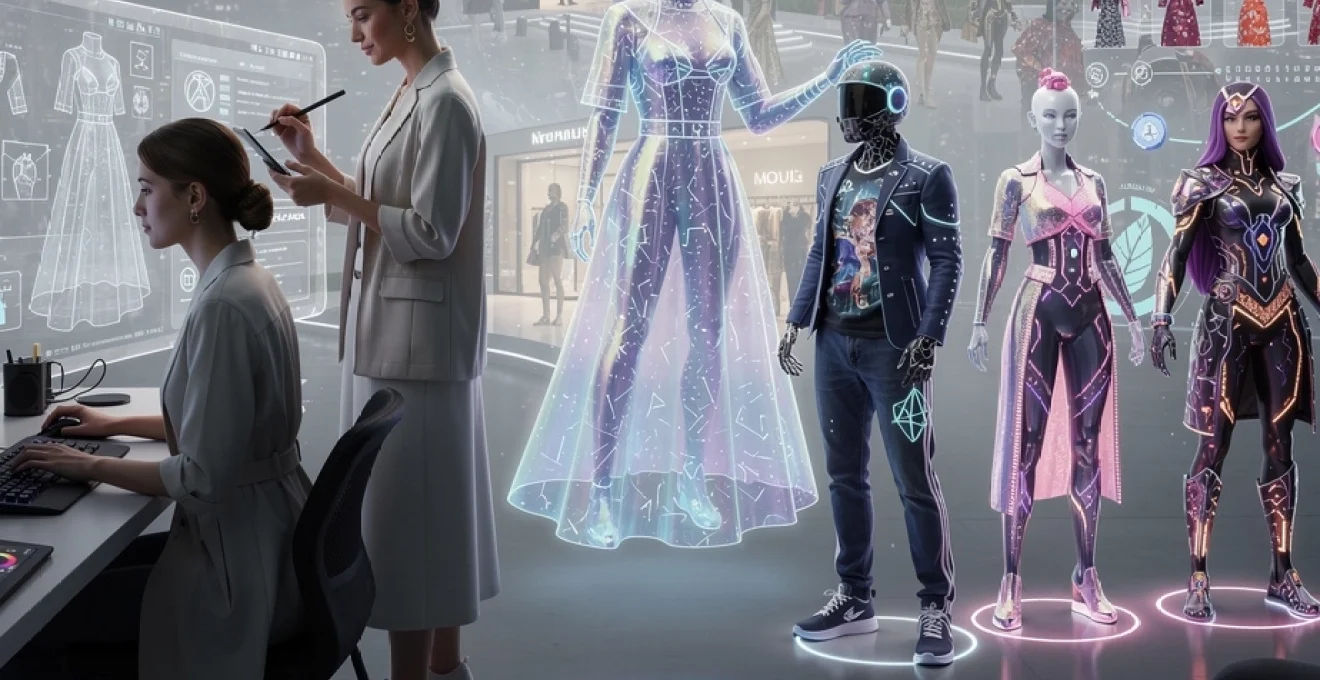
Fashion has entered a transformative era where pixels rival fabric and virtual runways compete with physical catwalks. Digital fashion—clothing designed exclusively for the digital realm—has exploded from a niche curiosity into a multi-billion-dollar industry poised for exponential growth. What began as simple avatar skins in gaming environments has evolved into sophisticated, photorealistic garments that exist solely as digital assets. This revolution isn’t merely about technology; it’s fundamentally reshaping how you express identity, consume fashion, and interact with brands across virtual spaces.
The convergence of blockchain technology, advanced 3D design tools, and immersive metaverse platforms has created an ecosystem where digital garments carry real-world value. Major luxury houses now invest heavily in virtual collections, while independent digital fashion studios command premium prices for their crypto-authenticated creations. According to market analysts, the digital fashion sector—valued at approximately $120 million in 2022—is projected to reach $67.6 billion by 2027, representing a staggering 566-fold increase. This unprecedented growth reflects shifting consumer behaviours, particularly among Gen Z audiences who spend significant portions of their lives in digital environments.
Beyond market dynamics, digital fashion addresses critical sustainability concerns plaguing the traditional industry. With textile waste and carbon emissions reaching alarming levels, virtual garments offer a zero-waste alternative that requires no physical materials, shipping, or manufacturing. For you as a conscious consumer, this presents an opportunity to experiment with bold styles while minimising environmental impact—a proposition increasingly attractive in our climate-conscious era.
Blockchain authentication and NFT technology in digital fashion ecosystems
The integration of blockchain technology has fundamentally transformed digital fashion from ephemeral digital images into authenticated, ownable assets. Non-fungible tokens (NFTs) serve as cryptographic certificates of authenticity, establishing provenance and scarcity for virtual garments in ways previously impossible. This technological foundation enables you to truly own digital fashion pieces, not merely license them temporarily—a distinction that mirrors physical luxury goods ownership.
Ethereum and polygon smart contracts for virtual garment ownership
Smart contracts on blockchain networks like Ethereum and Polygon automate ownership transfer and enforce usage rights for digital fashion items. When you purchase an NFT-based garment, the smart contract records your ownership immutably on the blockchain, creating a permanent, transparent ledger of provenance. Ethereum remains the dominant platform for high-value digital fashion NFTs, though its higher transaction fees (often called « gas fees ») have prompted many creators to explore Layer 2 solutions like Polygon, which offers faster transactions at considerably lower costs.
These smart contracts contain metadata specifying the digital asset’s attributes—designer information, edition numbers, file formats, and sometimes even embedded usage rights. The technology enables secondary market royalties, ensuring original designers receive compensation whenever you resell their digital creations. This economic model has proven particularly attractive to emerging designers who previously struggled to capture value from resale markets in physical fashion.
RTFKT studios and the fabricant: pioneering NFT fashion collections
RTFKT Studios (acquired by Nike in 2021) and The Fabricant represent vanguard digital fashion houses that have established NFT collections as legitimate luxury goods. RTFKT’s collaboration drops have commanded six-figure prices, with their Clone X avatars and corresponding virtual sneakers becoming status symbols within Web3 communities. The Fabricant, meanwhile, pioneered the concept of digital-only haute couture, creating garments that push creative boundaries impossible in physical production—think dresses made of liquid metal or jackets that defy gravity.
The Fabricant’s landmark 2019 sale of the « Iridescence » dress for $9,500 marked a watershed moment, demonstrating that consumers would pay substantial sums for garments they could never physically wear. This psychological shift—valuing digital aesthetics and social signalling over tactile ownership—reflects broader cultural changes in how you perceive value in an increasingly digital world. Both studios employ skilled 3D artists who spend weeks crafting each piece, ensuring quality that justifies premium pricing.
Proof of authenticity through cryptographic verification systems
Cryptographic verification provides ironclad authentication that addresses counterfeiting concerns plaguing physical luxury markets. Each NFT contains a unique
identifier and is linked to a specific wallet address, making it trivial to verify whether a garment is genuine or a counterfeit copy. Instead of relying on paper certificates or centralised databases, you can check authenticity directly on-chain using blockchain explorers or marketplace interfaces. This is particularly crucial for limited-edition drops, where scarcity underpins value. In practice, cryptographic verification functions like a tamper-proof digital label sewn into the garment’s code, guaranteeing its origin, ownership history, and edition size.
For brands, this infrastructure reduces fraud and builds trust with collectors who demand verifiable proof of authenticity for high-value digital fashion assets. For you as a buyer, it simplifies due diligence: with a few clicks, you can confirm that a piece is an original release, not an unauthorised copy or « right-click save » imitation. As more fashion brands adopt NFT standards such as ERC-721 and ERC-1155, cross-platform verification becomes easier, enabling a more transparent and secure digital fashion ecosystem.
Secondary market dynamics on OpenSea and rarible platforms
Once digital fashion items are minted and sold, they often enter vibrant secondary markets on platforms like OpenSea and Rarible. Here, NFT garments function similarly to limited-edition sneakers or handbags in resale marketplaces, with prices fluctuating based on rarity, brand prestige, and cultural relevance. You can buy, sell, or trade virtual clothing just as you would physical collectibles, but with seamless, instant settlement and transparent pricing history. This liquidity transforms digital wardrobes into dynamic investment portfolios rather than static possessions.
On-chain royalty mechanisms ensure that each secondary sale automatically routes a percentage back to the original creator, a model that is still elusive in physical fashion. This ongoing revenue stream incentivises designers to maintain and grow the cultural cachet of their digital collections. However, volatility and speculative behaviour can also pose risks: prices may spike during hype cycles and fall just as quickly. As a participant, you need to approach NFT fashion markets with the same caution you would apply to any emerging asset class—balancing emotional attachment to a piece with a rational assessment of its long-term value.
3D design software and digital garment creation workflows
Behind every compelling piece of digital fashion lies a sophisticated 3D design pipeline. Unlike traditional fashion, where physical samples and fabric swatches dominate, digital garment creation unfolds entirely on-screen through specialised software. Designers blend pattern-making tools, texturing suites, physics engines, and 3D modelling platforms to build assets that behave and photograph like real clothing—or intentionally break physical rules for dramatic effect. Understanding this workflow helps you appreciate why high-quality digital pieces can take weeks to produce and command premium prices.
CLO3D and browzwear: professional pattern-making tools
CLO3D and Browzwear have become industry-standard tools for professional digital garment design, particularly for brands that want patterns to align with real-world manufacturing. These platforms allow designers to draft 2D patterns, stitch them virtually, and see garments assemble around adjustable 3D avatars. If you come from a traditional fashion background, you will recognise familiar workflows—grading, seam allowances, darts, and fit adjustments—translated into a digital interface. This bridge between analog pattern-making and 3D simulation makes the transition to digital fashion more accessible.
For digital-only collections, CLO3D and Browzwear still provide enormous value because they ensure garments drape believably on diverse body shapes. You can experiment with silhouette, volume, and construction details without cutting a single piece of fabric. Many brands now use these tools not only for final digital garments but also for pre-visualising physical collections, reducing the number of physical samples needed. In this sense, 3D pattern-making software acts like a virtual atelier, where iterations are faster, cheaper, and more sustainable.
Substance painter texturing for photorealistic fabric rendering
Once the base garment is modelled, the next challenge is making materials look convincing—or intentionally otherworldly. Substance Painter, part of Adobe’s 3D toolset, plays a crucial role in achieving photorealistic fabric textures. Designers use it to paint high-resolution maps that define colour, roughness, metalness, and normal details such as stitching, weave patterns, or fabric imperfections. If you’ve ever marvelled at a digital jacket that looks like you could reach out and feel the leather grain, Substance-style texturing is likely behind it.
This process is akin to tailoring at the microscopic level: every pore, thread, and reflection is carefully tuned. For fashion brands replicating physical collections in digital form, Substance Painter enables near one-to-one visual fidelity, which is vital for brand consistency across physical and virtual channels. For digital-native labels, it opens an even broader canvas, allowing for animated prints, reactive surfaces, and materials that shift appearance based on lighting or user interaction. The result is digital fashion that photographs beautifully for social media, e-commerce, and metaverse experiences.
Marvelous designer physics simulation for draping mechanics
While textures define surface appearance, physics simulation determines how a garment moves. Marvelous Designer specialises in realistic cloth simulation, using numerical models to reproduce how fabrics drape, fold, and react to motion or gravity. Designers can customise fabric properties such as stiffness, stretch, and weight, then watch garments flow over a walking avatar in real time. This is essential if you want digital fashion that behaves believably in animations, game engines, or AR try-on experiences.
Think of Marvelous Designer as the wind tunnel for digital fashion: it lets you test extreme silhouettes, layered looks, and complex constructions in a controlled virtual environment. For physical brands, these simulations can inform pattern adjustments before cutting fabric, saving both time and material. For digital-only creators, they unlock visually stunning garments that would be structurally impossible or prohibitively expensive in real life—like gowns made of semi-liquid fabric or coats with dynamically shifting volumes. When done well, these physics-driven drapes are what make a digital garment feel « real » to your eye, even if your hands never touch it.
Blender and maya integration for fashion asset pipeline
To integrate digital fashion into broader 3D ecosystems—games, films, metaverse platforms—designers often rely on generalist tools like Blender and Autodesk Maya. These applications handle tasks such as retopology (optimising meshes for performance), rigging (preparing garments to move with avatars), lighting, and final rendering. Garments initially crafted in CLO3D or Marvelous Designer are exported and cleaned up in Blender or Maya to ensure they perform well across real-time engines like Unity and Unreal, as well as offline renderers used for campaign imagery.
This multi-tool pipeline can sound complex, but you can think of it like a production line in a couture house: each station has a specialisation, from pattern-cutting to final styling. The key to a smooth digital fashion workflow is interoperability—consistent file formats, scale, and naming conventions. Many studios build custom scripts and templates to automate repetitive tasks, allowing artists to focus on creativity rather than file management. As you explore digital fashion, even at a hobbyist level, learning basic Blender workflows can dramatically expand where and how your virtual garments can be used.
Metaverse integration: decentraland, roblox, and zepeto fashion markets
Creating digital garments is only half the story; the other half is where you wear them. Metaverse platforms like Decentraland, Roblox, and Zepeto have become bustling fashion markets where virtual clothing functions as both self-expression and status symbol. Each ecosystem has its own technical standards, monetisation models, and user demographics, but all share a common thread: your avatar’s outfit is a primary way you signal identity in digital spaces. As daily life becomes more hybrid, « dressing for the metaverse » is starting to feel as normal as picking an outfit for work or a night out.
Gucci garden and balenciaga virtual storefronts in gaming platforms
Luxury fashion’s embrace of gaming platforms has been one of the clearest signals that digital fashion is entering the mainstream. Gucci’s « Gucci Garden » activation on Roblox allowed players to explore themed virtual environments and purchase limited-edition digital items, some of which resold for more than their physical equivalents. Balenciaga, meanwhile, launched virtual skins in Fortnite and created its own game-like experience, « Afterworld: The Age of Tomorrow, » to showcase a collection. These initiatives blur the line between marketing campaigns and fully fledged digital product lines.
From your perspective as a consumer, these virtual storefronts offer an accessible gateway into luxury branding. Instead of visiting a flagship store in Milan or Paris, you can browse and buy digital pieces from within a game you already play. For brands, the benefits are twofold: they tap into massive, engaged audiences while experimenting with new revenue models and storytelling formats. It’s like moving from a static shop window to an immersive, interactive world that you can step into—and dress up for—whenever you like.
Avatar customisation standards: ready player me and MetaHuman creator
As metaverse platforms multiply, avatar standards such as Ready Player Me and Epic Games’ MetaHuman Creator are emerging to simplify how you represent yourself across worlds. Ready Player Me allows users to create a single 3D avatar that can be ported into hundreds of compatible apps and games, while MetaHuman focuses on ultra-realistic characters for high-end experiences. Both frameworks are increasingly relevant to digital fashion because garments must conform to the body rigs, proportions, and animation systems defined by these standards.
For designers, adopting avatar standards reduces the need to rebuild garments from scratch for every platform. You can create a jacket that fits a Ready Player Me base model and then adapt it more easily to different environments. For you as a user, standardisation means your favourite outfits could, in theory, follow you from a social hangout space to a VR concert or a mobile game. We are not fully there yet, but these avatar systems are early building blocks for that « one wardrobe, many worlds » vision that so many digital fashion enthusiasts imagine.
Cross-platform wearable interoperability challenges
Despite promising standards, genuine interoperability for digital wearables remains a complex challenge. Each platform has its own technical constraints—polygon counts, texture sizes, rigging systems—as well as distinct policies around content ownership and monetisation. A high-fidelity gown designed for a PC-based virtual world might be far too heavy for a mobile game that must run smoothly on mid-range devices. As a result, many digital garments are still effectively « locked » to a single ecosystem, limiting their utility and perceived value.
Solving this is not just a technical issue but also a business one. Platforms need incentives to support open standards that allow assets to move in and out, rather than trapping users in walled gardens. For now, if you are investing in digital fashion, it’s wise to check where and how an item can be used—whether it’s only for social media imagery, compatible with a specific game, or genuinely portable across multiple metaverse spaces. Over time, we can expect middleware solutions and industry alliances to make interoperability more practical, but for the moment, cross-platform wearability is more aspiration than reality.
Luxury fashion houses entering digital clothing: dolce & gabbana to burberry
When digital fashion first emerged, it was driven mainly by indie creators and gaming companies. Today, however, luxury fashion houses from Dolce & Gabbana to Burberry are actively building digital strategies. Dolce & Gabbana’s « Collezione Genesi » NFT drop generated millions in sales and included both physical and digital pieces, signalling that heritage brands see genuine value in virtual couture. Burberry has collaborated with games like Honor of Kings and launched NFT accessories, using digital fashion as a way to reach younger, mobile-first audiences in China and beyond.
These moves are not just experimental marketing stunts; they are part of a broader shift in how luxury houses think about brand presence. Digital collections allow them to test bolder concepts, explore new silhouettes, and tell immersive stories without the constraints of physical production cycles. For you, this convergence means your relationship with luxury can unfold across multiple channels: you might discover a brand through a mobile game skin, follow up with AR try-ons on social media, and eventually purchase a physical piece that echoes its digital counterpart. As more maisons formalise « chief metaverse officer » or « digital couture director » roles, expect digital fashion to become a permanent pillar of luxury strategy rather than a side project.
Sustainability metrics and carbon footprint analysis of virtual versus physical production
One of the most compelling arguments for digital fashion is its potential to reduce the environmental impact of the fashion industry. Traditional apparel production consumes vast amounts of water, energy, and raw materials, while generating significant textile waste and carbon emissions. By contrast, digital garments require no fabric, dye, or shipping, and they never end up in landfills. But how much greener is virtual clothing in measurable terms, and what trade-offs should you be aware of?
Lifecycle analyses suggest that a single digital garment used for content creation can have a fraction of the carbon footprint of a fast-fashion item worn a handful of times and then discarded. Eliminating physical sampling alone can dramatically cut waste: brands using 3D prototyping tools report reductions of up to 30–50% in sample production, which translates into fewer unused garments and lower logistics emissions. However, it’s important to note that digital fashion is not entirely impact-free. Rendering high-resolution imagery, running blockchain networks, and powering data centres all consume energy—though many NFT platforms and cloud providers are shifting toward more efficient, renewable-powered infrastructures.
For you as a consumer, the most sustainable approach may be a hybrid wardrobe strategy. You can reserve physical purchases for durable, timeless pieces you will wear for years, while using digital-only fashion for trend-driven looks, social media content, and metaverse events. This reduces impulse buying of low-quality garments that quickly fall out of rotation. On the brand side, tracking sustainability metrics—such as avoided samples, reduced returns due to virtual try-on, and lower overproduction—can help quantify the positive impact of digital initiatives. As reporting standards mature, we are likely to see more transparent comparisons between the carbon cost of a physical garment and its digital twin.
Augmented reality try-on technology: snapchat lens studio and DressX applications
While fully virtual worlds capture much of the attention, some of the most immediate applications of digital fashion are happening through augmented reality (AR) in the apps you already use. AR try-on technology overlays digital garments onto your live image or photos, allowing you to « wear » outfits without owning them physically. This can be as playful as a Snapchat filter that adds a couture gown to your selfie, or as practical as an AR fitting room that helps you choose the right size and style before buying a physical item.
Snapchat’s Lens Studio has become a powerful tool for brands and creators to build interactive AR experiences. Fashion lenses can track body movements, adapt to different lighting conditions, and integrate branded elements like logos or signature patterns. For you, this means you can test a virtual sneaker drop or limited-edition jacket in seconds, share the look with friends, and decide whether to purchase the physical version—or simply enjoy the digital moment. Because lenses are easy to distribute, they offer brands a scalable way to reach millions of users with minimal friction.
DressX takes the AR try-on concept a step further by operating as a full-fledged digital fashion retailer. You can purchase digital-only garments, upload your photos, and receive edited images where you’re wearing intricate, high-fashion looks that don’t exist in the physical world. More recently, DressX has been integrating real-time AR features, enabling you to see garments directly on your body via a smartphone camera. This bridges the gap between metaverse clothing and everyday social media use, turning your feed into a personal runway.
Looking ahead, we can expect AR try-on to move beyond novelty and become a standard part of the fashion purchase journey. Imagine browsing an online store where every product page includes an instant AR fitting option, or attending a live-streamed show where you can « catch » and try looks in real time. As tracking accuracy improves and devices become more powerful, the boundary between your physical self and your digital wardrobe will continue to blur. The practical question then becomes: how will you curate a style identity that spans both worlds in a way that feels authentic, sustainable, and creatively fulfilling?