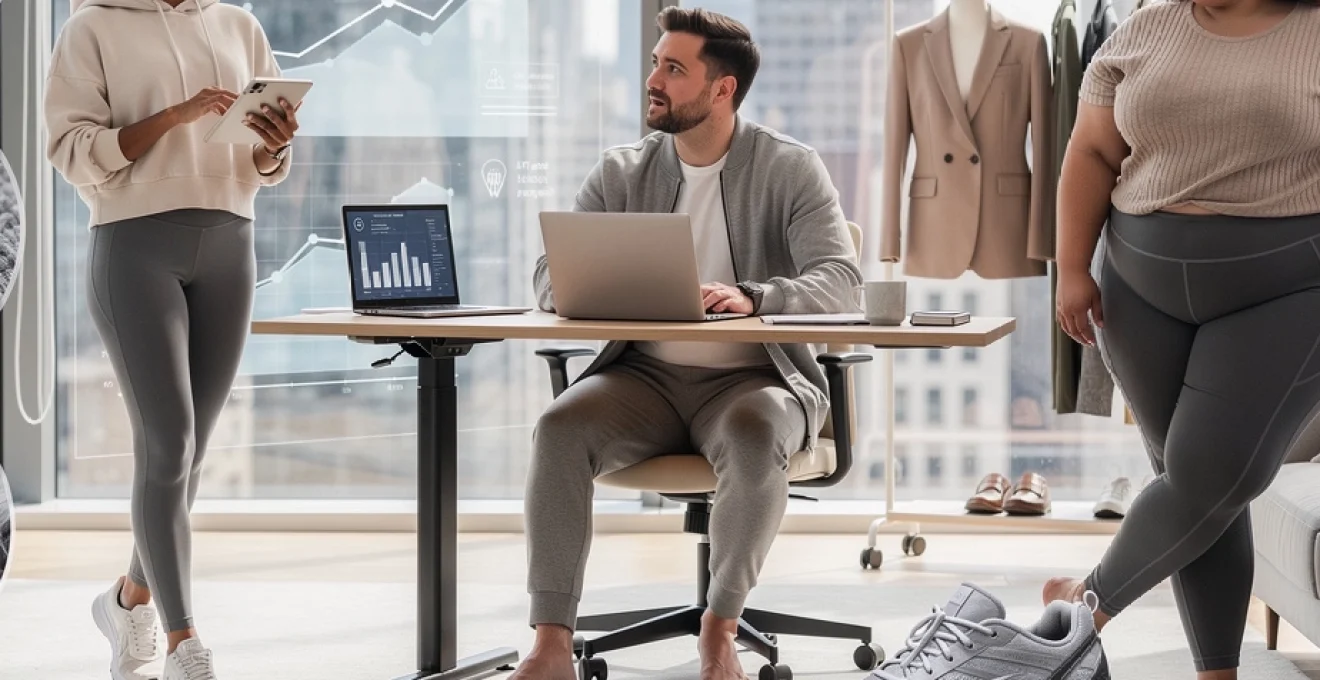
The fashion industry stands at a pivotal moment where consumer priorities have fundamentally shifted from appearance-first thinking to comfort-centric purchasing decisions. This transformation isn’t merely a temporary trend sparked by global events, but rather represents a profound evolution in how people approach their personal style and clothing choices. Modern consumers increasingly demand garments that seamlessly blend aesthetic appeal with functional comfort, creating a new paradigm where looking good no longer requires physical sacrifice or daily discomfort.
The rise of comfort-driven fashion reflects broader lifestyle changes, including remote work adoption, wellness consciousness, and sustainable consumption patterns. Fashion brands that recognise this shift are revolutionising their design philosophies, material selections, and manufacturing processes to meet evolving consumer expectations. The result is an industry that’s learning to create clothing that supports rather than restricts daily activities.
Athleisure market transformation and consumer behaviour analytics
The athleisure market has experienced unprecedented growth, expanding from a niche category to a dominant force worth over £250 billion globally. This transformation reflects changing consumer attitudes towards fashion functionality and the blurring of boundaries between activewear and everyday clothing. Market research indicates that 73% of millennials and Gen Z consumers now prioritise comfort when making clothing purchases, compared to just 43% a decade ago.
Consumer behaviour analytics reveal fascinating patterns in this transformation. Shoppers increasingly seek versatile pieces that transition seamlessly between different activities throughout the day. The average consumer now expects clothing to perform multiple functions, from morning workouts to evening social gatherings. This expectation has driven brands to innovate beyond traditional category boundaries.
Lululemon and nike’s strategic pivot towards Comfort-First design philosophy
Leading brands have responded to this shift with comprehensive design philosophy overhauls. Lululemon’s expansion beyond yoga wear into everyday essentials demonstrates how comfort-first thinking can drive brand evolution. Their technical fabrics, originally developed for athletic performance, now influence casual wear collections that emphasise all-day wearability. Nike’s strategic pivot includes developing lifestyle collections that incorporate performance technologies into everyday silhouettes.
These brands have invested heavily in fabric research and development, creating materials that offer four-way stretch, moisture-wicking properties, and wrinkle resistance. The success of these initiatives is reflected in customer retention rates, with comfort-focused brands showing 40% higher repeat purchase rates compared to traditional fashion retailers.
Post-pandemic shopping pattern analysis and remote work impact metrics
The global shift to remote work has permanently altered clothing consumption patterns. Data from major retailers shows a 165% increase in comfortable clothing sales between 2020 and 2023, with this trend maintaining momentum even as traditional work environments reopened. Remote workers report spending 60% less on formal business attire while increasing investment in quality casual pieces that photograph well on video calls.
Shopping pattern analysis reveals that consumers now research comfort features as thoroughly as they once examined style details. Online reviews increasingly focus on fabric feel, fit comfort, and day-long wearability rather than purely aesthetic considerations. This shift has forced retailers to provide more detailed comfort specifications and fit guidance.
Generation Z and millennial purchase decision frameworks in fashion
Younger consumers have fundamentally redefined fashion purchase criteria, with comfort ranking as the primary decision factor for 68% of Gen Z and millennial shoppers. This demographic demonstrates sophisticated understanding of fabric technology and construction quality, often researching material compositions before making purchases. They value brands that transparently communicate comfort features and performance benefits.
Social media influence has amplified comfort-focused messaging, with fashion influencers increasingly showcasing relaxed, comfortable styling rather than restrictive trend pieces. This demographic’s purchasing power continues to grow, making their comfort-first preferences increasingly influential across the entire fashion market.
Comfort index correlation with brand loyalty retention rates
Statistical analysis reveals strong correlation between comfort ratings and customer loyalty metrics. Brands scoring above 4.2 on comfort indices show 55% higher customer retention rates compared to those prioritising aesthetics alone. This data suggests that comfort investment translates directly into long-term business value through repeat purchases and positive word-of-mouth marketing.
Customer lifetime value calculations demonstrate that comfort-satisfied customers generate 47% more revenue over three-year periods compared to style-only focused segments. This correlation has prompted
customer-centric brands to embed comfort metrics into product design briefs, fit testing protocols, and post-purchase surveys. In practice, this means iterating more quickly on popular silhouettes, retiring uncomfortable designs faster, and treating « all-day wearability » as a core performance benchmark alongside durability and style relevance.
Technical fabric innovation and performance textile engineering
The comfort-driven fashion shift would not be possible without rapid advances in performance textile engineering. Behind every « feels-like-loungewear » blazer or « second-skin » legging sits a complex ecosystem of fibre selection, yarn construction, and finishing techniques. Brands are investing in R&D labs, collaborating with textile mills, and adopting data-led testing to quantify softness, stretch recovery, breathability, and thermal regulation.
As consumers become more educated, fabric names and technical features are moving from back-of-label details to front-of-page marketing claims. You are no longer just buying a T-shirt; you are choosing between moisture-wicking polyester blends, merino wool layers, bamboo fibre loungewear, or memory foam-enhanced footwear. Understanding these technologies helps you make informed comfort-first fashion choices that align with your lifestyle.
Moisture-wicking polyester blends and four-way stretch technology integration
Moisture-wicking polyester blends sit at the heart of the athleisure boom and the wider comfort revolution. Unlike traditional cotton, technical polyester yarns can be engineered with cross-sections that pull sweat away from the skin and spread it across a larger surface area for rapid evaporation. When combined with elastane or spandex, these fabrics maintain a dry, cool feel during movement while offering a « four-way stretch » that adapts to every micro-shift of the body.
Four-way stretch technology integrates elastic fibres both lengthwise and crosswise, allowing garments to move like a second layer of skin rather than a rigid shell. This is why modern leggings, performance chinos, and stretch-denim jeans feel radically different from their predecessors. From an engineering perspective, the challenge lies in balancing stretch, opacity, and shape retention so pieces do not become baggy or transparent over time. Brands that master this balance see higher satisfaction scores on comfort-driven fashion reviews and reduced return rates due to fit issues.
Merino wool processing advances and temperature regulation properties
Merino wool has emerged as a cornerstone fibre for premium comfort wear, especially in climates with significant temperature swings. Fine merino fibres, often 18.5 microns or less in diameter, bend easily against the skin, reducing the itch traditionally associated with wool. Advanced processing techniques, including smoother spinning, gentle enzyme treatments, and compact knitting, further enhance softness while maintaining the fibre’s natural insulating and moisture-management properties.
What makes merino particularly valuable in comfort-driven fashion is its ability to regulate temperature across different environments. The fibre traps air to provide warmth in cold conditions yet remains breathable and moisture-absorbing when temperatures rise. Think of it as a built-in climate control system in your clothing. This is why merino base layers, T-shirts, and socks are increasingly marketed as « travel essentials » and « all-season staples » for consumers seeking versatile, low-maintenance comfort.
Bamboo fibre manufacturing and antimicrobial treatment applications
Bamboo-based textiles have gained traction as a sustainable comfort option, often promoted for their softness and eco-friendly reputation. In reality, most bamboo fabrics are produced either as bamboo viscose (a regenerated cellulose fibre) or as mechanically processed bamboo linen. The former offers a silky hand-feel and fluid drape, while the latter delivers a more textured, breathable finish closer to traditional linen.
One key advantage of bamboo-derived fabrics in comfort-driven fashion is their inherent moisture absorption and breathability. Many manufacturers also apply antimicrobial treatments—sometimes leveraging the natural properties of the bamboo plant, sometimes using added finishes—to reduce odour build-up in high-contact garments like underwear, loungewear, and active tops. As always, it is wise to look for transparent labelling and credible certifications to ensure that softness and comfort do not come at the expense of environmental responsibility.
Memory foam integration in footwear sole construction techniques
Footwear has undergone its own comfort revolution, with memory foam becoming synonymous with cushioned, supportive shoes suitable for long days on your feet. Originally developed for aerospace applications, memory foam (viscoelastic polyurethane) responds to body heat and pressure, moulding to the contours of the foot before slowly returning to its original shape. In shoe design, this translates to insoles and midsoles that distribute pressure more evenly and reduce impact on joints.
Modern construction techniques often layer memory foam with firmer EVA or rubber compounds to balance plush comfort and structural support. Without this, shoes might feel soft but lack the stability required for daily wear. By strategically zoning materials—placing denser foam under the arch and heel, for example—designers create ergonomic footbeds that align with gait patterns and reduce fatigue. For consumers, the result is footwear that fits into a comfort-driven wardrobe as seamlessly as a well-cut hoodie or stretch trouser.
Sustainable comfort fashion manufacturing and supply chain optimisation
As comfort becomes the new standard, sustainability expectations are rising in parallel. Consumers no longer want soft, stretchy garments that feel great for a season but fall apart—and end up in landfill—soon after. Instead, there is growing demand for comfort-driven fashion that is durable, responsibly produced, and traceable across the supply chain. This has pushed brands to rethink everything from fibre sourcing to factory conditions and logistics.
Supply chain optimisation now involves more than cost and speed; it also weighs environmental impact and worker welfare. Brands are mapping tier-one and tier-two suppliers, investing in cleaner dyeing technologies, and consolidating production runs to reduce waste. For example, using organic cotton with mechanical stretch alternatives can lower reliance on synthetic fibres, while on-demand manufacturing models help align production volumes with real-time comfort-focused demand data. The most forward-thinking labels view sustainable comfort not as a marketing niche but as a baseline operating standard.
Digital commerce platforms and comfort-centric marketing strategies
The rise of e-commerce and social media has transformed how comfort-driven fashion is discovered, evaluated, and purchased. Online shoppers cannot touch fabrics or test fit in person, so digital platforms are stepping in with richer product detail pages, fit analytics, and user-generated reviews that spotlight comfort. High-resolution zoomable images, 360-degree views, and fabric drape videos help bridge the tactile gap, while size recommendation tools use data from thousands of purchases to suggest the best fit.
Marketing strategies have also shifted. Instead of promoting only bold runway trends, brands now highlight « all-day comfort, » « work-from-anywhere outfits, » and « second-skin basics » as core propositions. Influencer campaigns feature creators showing how pieces perform on long commutes, in home offices, or during weekend errands. Some retailers even use comfort scores and « softness badges » in their filters, allowing you to shop specifically for comfort-first designs. In this sense, digital commerce has become both a showroom and a proving ground for comfort-centric fashion narratives.
Ergonomic design principles in contemporary fashion architecture
True comfort goes beyond fabric selection; it is embedded in the architecture of a garment. Ergonomic design principles borrow from sports science, physiotherapy, and industrial design to create clothing that supports natural movement patterns rather than fighting them. This can be as subtle as curving a seam to follow the line of a shoulder or as complex as engineering a panelled legging that compresses certain muscles while freeing others.
Think of ergonomic fashion as the difference between sitting in a chair designed for posture and balance versus a random café stool. Both serve the same basic function, but one works with your body, and the other works against it. As comfort-driven fashion becomes mainstream, more brands integrate 3D body scanning, motion capture studies, and user testing into their design pipelines, ensuring that pattern lines, closures, and fabric grain all contribute to ease of wear.
Seam placement engineering for reduced friction and enhanced mobility
Seam placement might seem like a small detail, yet it plays a major role in how comfortable clothing feels throughout the day. Poorly positioned seams can rub against sensitive areas, restrict movement, or create pressure points, particularly in activewear and close-fitting pieces. To counter this, designers use seam mapping—often informed by motion studies—to locate high-friction zones and redirect seams away from them.
Flatlock stitching, bonded seams, and gusseted panels are common tools in this ergonomic toolkit. A gusset at the underarm or crotch, for instance, adds a diamond-shaped insert that allows greater range of motion without pulling or bunching. Bonded seams can feel almost invisible against the skin, reducing the risk of chafing during extended wear. When you slip into a pair of leggings or a tailored jogger that never digs in or rides up, you are experiencing the benefits of thoughtful seam placement engineering.
Pattern grading methodologies for inclusive sizing and body diversity
Comfort cannot be a privilege reserved only for a narrow size range. Inclusive sizing is central to a genuine comfort-driven fashion approach, and this is where pattern grading methodologies come into play. Traditional grading often scaled patterns up and down from a single « fit model » body type, neglecting the reality of diverse body proportions. The result was clothing that technically fit larger or smaller sizes but did not sit comfortably or flatteringly on the body.
Modern brands are investing in multi-size fit testing, 3D body scans across different demographics, and data-informed grading rules that adjust more than just circumference. Shoulder widths, torso lengths, rise depths, and bicep circumferences are all recalibrated to reflect real-world bodies. The impact is profound: when you find jeans that fit your waist without gaping at the back or a blazer that accommodates your shoulders without pulling, you are seeing inclusive pattern grading in action. This inclusive approach strengthens brand loyalty and aligns with consumer expectations for comfort and body diversity.
Compression garment technology and graduated pressure distribution
Compression garments, once confined largely to medical and performance sports contexts, have entered everyday wardrobes through shapewear, recovery wear, and travel-friendly pieces. The core principle is graduated pressure distribution: providing firmer support in specific zones (such as the ankles or calves) and easing pressure as the garment moves up the limb or torso. Done correctly, this can enhance blood circulation, reduce muscle fatigue, and create a subtle feeling of « held » support without constriction.
However, comfort-driven compression requires precise engineering. Too much pressure or inconsistent distribution can cause discomfort, restricted movement, or even health risks. Leading brands use lab testing and user trials to calibrate compression levels, often expressing them in millimetres of mercury (mmHg) similar to medical-grade stockings. When integrated thoughtfully, compression technology can make leggings feel more supportive on long flights, help recovery after workouts, or provide gentle core stability in everyday wear, merging performance benefits with lifestyle comfort.
Luxury fashion houses adaptation to comfort-first consumer demands
Luxury fashion houses, once synonymous with rigid tailoring and showpiece garments, are rapidly adapting to comfort-first consumer expectations. Runway collections now feature soft suiting, knit coordinates, and elevated loungewear alongside statement gowns and sculptural pieces. Materials have shifted from heavy, unforgiving fabrics towards cashmere blends, stretch wools, and technical silks that move with the wearer while retaining a luxurious hand-feel.
Many heritage labels are introducing « home couture » or « off-duty » capsules that reinterpret iconic house codes through a comfort lens: monogrammed tracksuits, oversized logo knits, and slip-on sneakers crafted with the same attention to detail as their classic handbags. This evolution reflects a deeper cultural change. In a world where we spend more time in hybrid workspaces and value well-being over spectacle, luxury is increasingly defined by how clothing feels over an entire day—not just how it photographs on a red carpet.
Strategically, this pivot allows luxury brands to capture new use occasions and expand customer lifetime value. A consumer might still invest in a statement coat or evening dress once every few years, but they will reach for their luxury hoodie, knit dress, or stretch trouser multiple times a week. By aligning with comfort-driven fashion standards while preserving craftsmanship and brand identity, luxury houses ensure they remain relevant to the next generation of style-conscious, comfort-obsessed buyers.