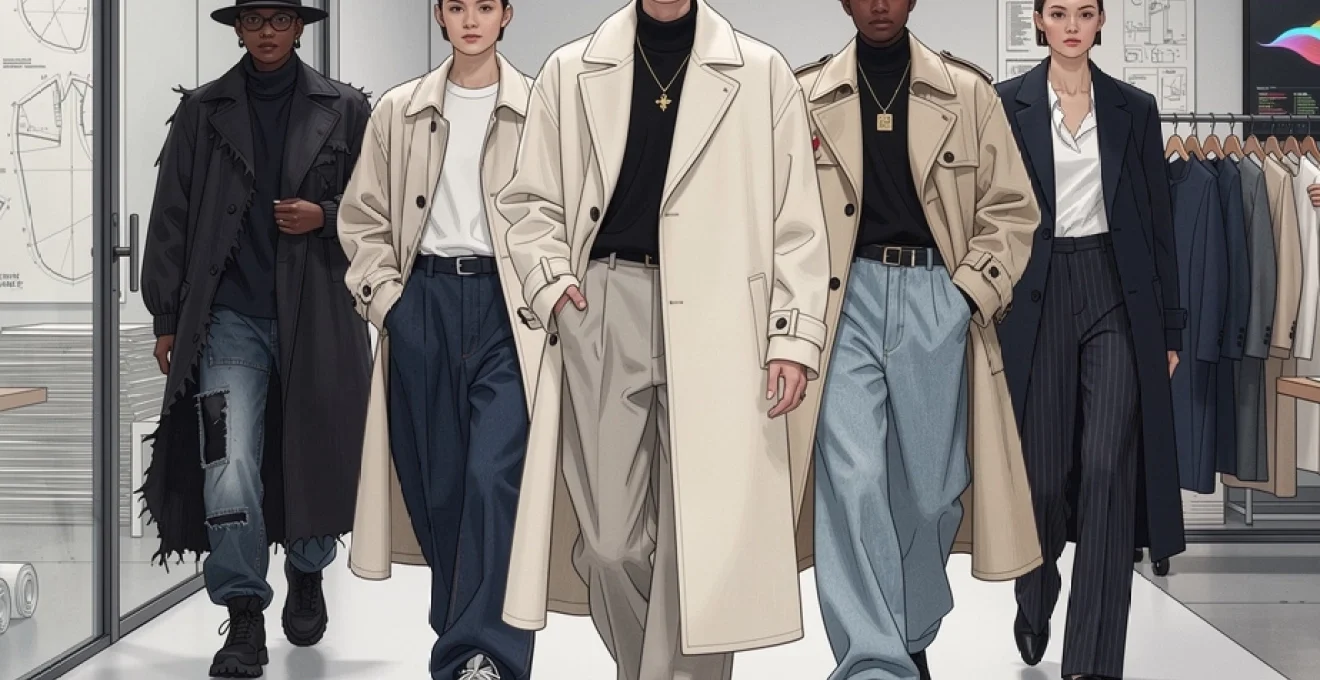
The fashion landscape has undergone a remarkable transformation, with oversized silhouettes emerging as the defining aesthetic of contemporary style. From the voluminous coats that graced runways during Fashion Week to the baggy streetwear that fills our wardrobes, oversized fashion represents more than just a trend—it embodies a fundamental shift in how we approach clothing design, comfort, and self-expression. This dramatic departure from body-conscious silhouettes reflects deeper cultural changes, technological advances in textile engineering, and evolving consumer priorities that prioritise comfort without sacrificing sophistication.
The dominance of oversized proportions in today’s fashion ecosystem stems from a complex interplay of historical influences, technological innovations, and sociocultural transformations. Understanding why these voluminous shapes have captured both designer imagination and consumer loyalty requires examining the intricate relationship between fashion’s past, present, and future trajectories.
Historical evolution of oversized silhouettes in fashion design
The journey of oversized fashion through history reveals a fascinating narrative of rebellion, innovation, and cultural expression. While contemporary oversized styles might appear revolutionary, their roots extend deep into fashion’s past, drawing inspiration from diverse sources that span continents and decades. The evolution of these silhouettes demonstrates how fashion continuously reinterprets historical references through modern lenses, creating fresh perspectives on proportion and fit.
Japanese Avant-Garde pioneers: rei kawakubo and yohji yamamoto’s deconstructionist approach
The revolutionary impact of Japanese designers on oversized fashion cannot be overstated, particularly through the groundbreaking work of Comme des Garçons’ Rei Kawakubo and Yohji Yamamoto. During the early 1980s, these visionaries introduced Western audiences to a completely different philosophy of clothing construction that challenged traditional European tailoring principles. Their approach to deconstructionist fashion deliberately disrupted established notions of fit, creating garments that existed independently of body contours.
Kawakubo’s architectural approach to clothing design transformed fabric into sculptural elements that created space around the body rather than conforming to it. Her innovative techniques included asymmetrical construction, deliberate distortion of proportions, and the strategic placement of volume to create unexpected silhouettes. This methodology established foundational principles that continue to influence contemporary oversized design, particularly in the realm of avant-garde fashion houses.
Yamamoto’s contribution lay in his masterful manipulation of traditional Japanese garment construction techniques, adapting kimono-inspired draping methods to create Western silhouettes with unprecedented volume. His work demonstrated how cultural traditions could be recontextualised for modern fashion, establishing a template for cross-cultural design exchange that remains influential today.
Post-war comfort culture and the rise of relaxed tailoring
The post-World War II era witnessed a significant shift towards comfort-oriented clothing as societies adjusted to changing lifestyles and social structures. Traditional formal dress codes began relaxing, creating space for more casual, comfortable silhouettes that prioritised ease of movement over rigid structure. This period marked the beginning of a broader cultural transition that would eventually culminate in today’s comfort-first fashion philosophy.
American sportswear designers played a crucial role during this transition, developing relaxed tailoring techniques that maintained sophistication while offering greater comfort than traditional European cuts. The emergence of leisure-focused lifestyles created demand for versatile garments that could transition seamlessly between different activities, laying the groundwork for the multi-functional oversized pieces that define contemporary wardrobes.
1990s Hip-Hop influence on mainstream fashion proportions
The 1990s hip-hop movement introduced oversized silhouettes to mainstream fashion through a powerful combination of cultural rebellion and practical considerations. Hip-hop artists adopted baggy clothing as both a style statement and a response to economic constraints, often purchasing garments in larger sizes for affordability and comfort. This approach to sizing challenged fashion’s traditional emphasis on precise fit, introducing the concept that intentional looseness could be both stylish and meaningful.
The influence of hip-hop culture on fashion proportions extended far beyond music scenes, permeating mainstream retail and luxury fashion. Designers began incorporating elements of streetwear proportions into high-fashion collections, recognising the
commercial potential of relaxed silhouettes and the cultural credibility that came with them. Iconic brands and artists—from Wu-Tang Clan and TLC to labels like FUBU and Karl Kani—cemented the image of baggy jeans, oversized jerseys, and voluminous outerwear as symbols of confidence, resistance, and community identity. As luxury houses began referencing this visual language on the runway, the foundation was laid for the ongoing dialogue between streetwear and high fashion that still shapes today’s oversized silhouettes.
Céline’s phoebe philo era: minimalist oversized luxury
If hip-hop defined the expressive, street-driven side of oversized dressing, Phoebe Philo’s tenure at Céline (2008–2018) crystallised its luxurious, minimalist interpretation. Philo reimagined volume through a lens of quiet sophistication, presenting long coats, generous trousers, and cocooning knitwear in restrained palettes and precise cuts. Her approach demonstrated that oversized clothing could be both sharp and fluid, delivering a new template for modern oversized luxury that felt powerful rather than sloppy.
Instead of using volume to overwhelm the body, Philo used it to create aura and presence. Shoulders were structured, fabrics were meticulously chosen, and silhouettes were elongated rather than widened, giving wearers a sense of ease and authority. This philosophy continues to inform contemporary brands that prioritise clean lines and architectural drape, proving that oversized silhouettes can sit comfortably within refined, professional, and even corporate wardrobes.
Technical construction methods behind contemporary oversized garments
Behind every successful oversized silhouette lies a series of precise technical decisions. Contrary to the assumption that oversized simply means “buy a bigger size,” contemporary designers rely on advanced pattern cutting, fabric engineering, and construction techniques to create garments that are voluminous yet intentional. Understanding these methods reveals why some oversized pieces feel effortlessly balanced while others look bulky or unflattering.
From strategic pattern grading to thoughtful seam placement, the construction of oversized garments functions much like architectural design. Designers must consider how fabric falls, where weight accumulates, and how movement will affect the overall shape. The result is a category of clothing that feels relaxed on the body but is anything but casual in its technical execution.
Pattern grading techniques for voluminous silhouettes
Pattern grading for oversized silhouettes involves more than simply scaling up a standard block. Traditional grading increases measurements proportionally, but this can distort balance when translated into intentionally voluminous designs. Instead, pattern cutters adjust specific areas—such as shoulder width, sleeve length, and hem circumference—at different rates to maintain visual harmony. This customised approach ensures that oversized outerwear, knitwear, or shirts retain their intended shape across a range of sizes.
You can think of this process like enlarging a photograph versus redrawing an image for a larger canvas. When a pattern is merely “blown up,” details become disproportionate and the garment can swamp the wearer. Thoughtful grading redistributes volume where it adds drama and comfort, while controlling it where structure is needed. This is why well-designed oversized coats still align at the shoulder, and why wide-leg trousers can have generous width without collapsing into excess fabric around the hips or knees.
Fabric weight distribution and structural engineering
Fabric choice is critical in oversized fashion design because volume amplifies how textiles behave. A lightweight, fluid fabric may create beautiful drape in a straight-cut dress, but when scaled into a floor-length oversized coat, it can lose shape and appear limp. Conversely, heavy wool or densely woven cotton can give architectural structure to wide silhouettes but may restrict movement or feel overwhelming without careful engineering. Designers must therefore calculate fabric weight distribution with the same care an engineer applies to load-bearing structures.
To manage this, pattern makers strategically place seams, facings, and interlinings to support key areas like shoulders, collars, and waistlines. Techniques such as partial lining, canvas reinforcement, or discreet internal straps help distribute weight evenly and preserve the intended silhouette. In many contemporary oversized blazers and trench coats, for example, the combination of a strong shoulder line with a lighter, more fluid body creates a balance between form and flow, allowing the garment to move with the wearer rather than against them.
Dart manipulation and seam placement for architectural drape
Oversized garments often appear simple on the surface, yet beneath that visual ease lies complex pattern manipulation. Darts—normally used to contour fabric to the body—are frequently rotated, extended, or converted into seams to create architectural drape without hugging the figure. By relocating shaping into unexpected areas, designers can generate volume that stands away from the body while still guiding fabric in a controlled, intentional way.
For instance, a dress that appears to be a straightforward voluminous column may actually rely on side panel seams, hidden tucks, or inverted pleats that direct excess fabric into elegant folds. Seam placement across the shoulder or back can also encourage fabric to fall in specific directions, creating a sense of movement when the wearer walks. In this way, oversized design is similar to origami: subtle folds and joins transform a flat surface into a three-dimensional structure that maintains its integrity from multiple angles.
Zero-waste design principles in oversized pattern making
The relationship between oversized silhouettes and sustainable fashion has encouraged many designers to experiment with zero-waste pattern cutting. Because oversized garments often use generous yardage, there is an opportunity— and a responsibility—to minimise offcuts. Zero-waste patterns are drafted to fit together like a puzzle across the fabric width, ensuring that nearly every centimetre is utilised within the final garment.
This approach not only reduces material waste but also naturally lends itself to boxy, elongated, or modular shapes that align with contemporary oversized aesthetics. Designers might integrate rectangular panels, elongated sleeves, or wrap-style closures that emerge directly from the logic of the pattern layout. For you as a wearer, this can mean pieces that feel simultaneously modern and timeless, with silhouettes that reflect both design innovation and a conscious approach to resource use.
Psychological and sociocultural drivers of oversized fashion adoption
While construction techniques explain how oversized garments are made, they do not fully answer why they resonate so deeply with modern consumers. The widespread adoption of oversized silhouettes reflects powerful psychological and sociocultural shifts—from evolving body politics to changes in how we live, work, and present ourselves online. Oversized fashion has become a visual language through which we negotiate comfort, identity, and public visibility.
Today’s oversized dressing is not just about hiding or revealing the body; it is about re-framing the relationship between self and clothing. As we navigate fluid identities, hybrid work environments, and highly visual digital spaces, voluminous silhouettes offer both protection and expression. They allow us to take up space, literally and metaphorically, on our own terms.
Body neutrality movement and gender-fluid dressing
The rise of the body neutrality movement has shifted conversations away from constant body optimisation towards simple acceptance. In this context, oversized silhouettes offer an appealing alternative to hyper-fitted garments that highlight every contour. Many people find comfort in clothing that does not demand they present a sculpted or idealised shape at all times. Instead, these pieces create a soft buffer between body and gaze, allowing wearers to feel dressed without feeling exposed.
At the same time, gender-fluid dressing has gained momentum, with consumers increasingly rejecting rigid menswear and womenswear binaries. Oversized shirts, tailoring, and outerwear easily transcend traditional gender categories because they prioritise shape, volume, and proportion over overtly gendered details. This means you can explore your personal style along a spectrum, choosing silhouettes based on how they make you feel rather than who they were “intended” for. As a result, oversized fashion has become a key tool in building inclusive wardrobes that reflect evolving understandings of identity.
Digital lifestyle integration and comfort-first mentality
Our daily lives are now deeply intertwined with digital environments, from remote work to social media and gaming. This shift has reinforced a comfort-first mentality in fashion. When much of your day is spent at a screen, rigid suiting and restrictive garments often feel unnecessary, even counterproductive. Oversized hoodies, relaxed trousers, and roomy knitwear align more closely with the realities of switching between desk work, errands, and downtime.
Yet comfort alone does not explain the appeal; the key is the hybrid nature of contemporary oversized pieces. Designers are creating garments that look polished enough for a video call yet feel as comfortable as loungewear. Think of soft-structured blazers, elasticated wide-leg trousers, or boxy shirts in elevated fabrics. Oversized silhouettes bridge the gap between public and private modes of dressing, allowing you to feel put-together without sacrificing ease—an essential balance in a lifestyle that constantly blends personal and professional spaces.
Post-pandemic dress codes and professional wardrobe evolution
The COVID-19 pandemic radically accelerated changes in workplace dress codes. As offices closed and remote work expanded, traditional business attire lost its daily relevance for many professionals. When people began returning to shared spaces, few were willing to fully abandon the comfort they had grown accustomed to. This tension sparked a redefinition of professional dress in which oversized and relaxed tailoring took centre stage.
Wide-legged trousers, softly structured blazers, and generously cut shirting now serve as the building blocks of modern professional wardrobes. These pieces signal seriousness and style while reflecting the more human, flexible approach to work that many organisations now endorse. The psychological comfort of not feeling tightly bound by clothing mirrors a wider desire to move away from rigid corporate norms. In this context, oversized silhouettes feel not only fashionable but also aligned with a broader reevaluation of work-life balance and mental wellbeing.
Social media aesthetics and proportional photography impact
Social media has transformed how outfits are seen, shared, and evaluated. On platforms like Instagram and TikTok, clothing is consumed primarily through the lens of photography and video, where proportion can be exaggerated or flattened depending on angles and framing. Oversized silhouettes often translate especially well in this environment: bold shoulders, wide trousers, or voluminous coats create striking lines that stand out in a crowded feed.
Influencers and content creators have quickly recognised that oversized pieces add drama and motion on camera. A sweeping coat or billowing dress can turn a simple street scene into a visually compelling moment. Because we increasingly encounter fashion through screens before seeing it in person, these social media aesthetics have a powerful feedback effect. What photographs well drives aspiration and demand, encouraging both brands and consumers to experiment with larger, more expressive silhouettes that hold their own in a highly visual digital landscape.
Designer case studies: contemporary oversized fashion leaders
Several designers and houses have emerged as leaders in redefining oversized silhouettes for the current era. Their work highlights different facets of the trend—from conceptual runway statements to wearable luxury and street-led experimentation. By examining their approaches, we can better understand how oversized fashion functions across diverse price points and aesthetics.
These case studies also offer insight into how you might interpret oversized dressing in your own wardrobe. Whether your style leans avant-garde, minimalist, or streetwear, there are design philosophies that translate into practical choices: where to add volume, how to balance proportions, and which fabrics best support your preferred look.
Balenciaga under Demna, for example, has become synonymous with extreme volume and exaggerated shoulders that challenge conventional ideas of flattery. The brand’s coats, hoodies, and tailoring often toy with scale in a way that feels almost surreal, yet the underlying pattern cutting is meticulous. Meanwhile, labels like The Row and Lemaire champion a quieter, more understated approach to oversized elegance, focusing on long lines, muted palettes, and luxurious fabrics that drape rather than balloon.
On the streetwear side, brands such as Vetements and Fear of God have popularised elongated hoodies, drop-shoulder T-shirts, and wide-legged trousers that reflect a fusion of skate, hip-hop, and luxury influences. Many of these pieces are designed to be styled in layers, inviting you to play with scale—pairing an oversized hoodie with slimmer denim, or a voluminous coat over a streamlined base layer. Across these different perspectives, a common theme emerges: oversized silhouettes are not about one specific “look,” but about using volume as a tool to express mood, identity, and confidence.
Textile innovation and performance fabric development for oversized wear
Textile innovation has played a decisive role in making oversized fashion both practical and desirable. As silhouettes expand, the demands on fabric performance increase: garments must remain breathable, hold their shape, resist excessive creasing, and often provide weather protection without becoming heavy. Advances in fibre technology and fabric construction have given designers more options than ever before to achieve these goals.
Modern performance fabrics now appear not only in sportswear but also in tailored coats, dresses, and knitwear. Blends that combine natural fibres like wool or cotton with technical yarns such as elastane, nylon, or recycled polyester create textiles that can support volume without feeling rigid. This synergy allows oversize coats to stay light yet warm, and wide-leg trousers to maintain a clean line throughout the day.
Another crucial development is the rise of sustainable and recycled materials in oversized collections. Because voluminous garments often use more fabric, brands are increasingly turning to organic cotton, regenerative wool, TENCEL™ lyocell, and recycled synthetics to reduce environmental impact. Some labels experiment with padded or quilted constructions using recycled fill, achieving dramatic shapes with responsible sourcing. For you as a consumer, this means you can choose oversized pieces that align with both your aesthetic preferences and your values.
Finishing technologies also enhance the wearability of oversized silhouettes. Wrinkle-resistant treatments, water-repellent finishes, and breathable membrane laminations ensure that larger garments remain functional across climates and daily scenarios. Imagine a floor-sweeping trench that is fully waterproof yet drapes like a traditional cotton gabardine—that balance of function and form is increasingly common. As textile research continues to evolve, we can expect even more responsive, lightweight, and sustainable fabrics designed specifically to support the architectural demands of oversized fashion.
Market analytics and commercial success metrics of oversized fashion segments
The dominance of oversized silhouettes is not just a visual impression; it is measurable in market data and consumer behaviour. Over the past five years, global demand for relaxed and oversized categories—particularly in outerwear, knitwear, and denim—has consistently outperformed more fitted counterparts. Industry reports from major analytics firms have highlighted sustained growth in “relaxed fit” and “loose fit” segments, even as micro-trends like skinny jeans briefly attempt comebacks.
One reason for this commercial resilience is versatility. Oversized garments can accommodate a wider range of body types and styling preferences, increasing their potential customer base. Retailers also benefit from lower return rates when fits are more forgiving, particularly in e-commerce, where precise sizing can be difficult to gauge. From a merchandising perspective, oversized coats, hoodies, and wide-leg trousers have become core, year-round categories rather than niche statements, contributing to stable revenue streams.
Data from the plus-size and inclusive fashion markets further underscores the importance of volume-based design. Analysts project the global plus-size market to approach or exceed the $300 billion mark in the mid-2020s, yet many consumers still report limited access to fashion-forward silhouettes in their size range. Brands that offer thoughtfully graded oversized pieces across extended size runs often see strong customer loyalty and repeat purchases, as these garments meet both emotional and functional needs.
Looking ahead, market forecasts suggest that oversized silhouettes will continue to dominate key segments, even as cycles of fit preference evolve. Rather than disappearing, they are likely to diversify: think hybrid fits that combine a sharp shoulder with a relaxed body, or adjustable designs that allow wearers to modulate volume with internal ties, belts, or buttons. For businesses, the commercial success of oversized fashion lies in balancing trend-led statements with timeless, well-constructed essentials. For you, it means that investing in a considered oversized coat, blazer, or pair of trousers is not just a nod to the current moment, but a strategic addition to a future-proof wardrobe.