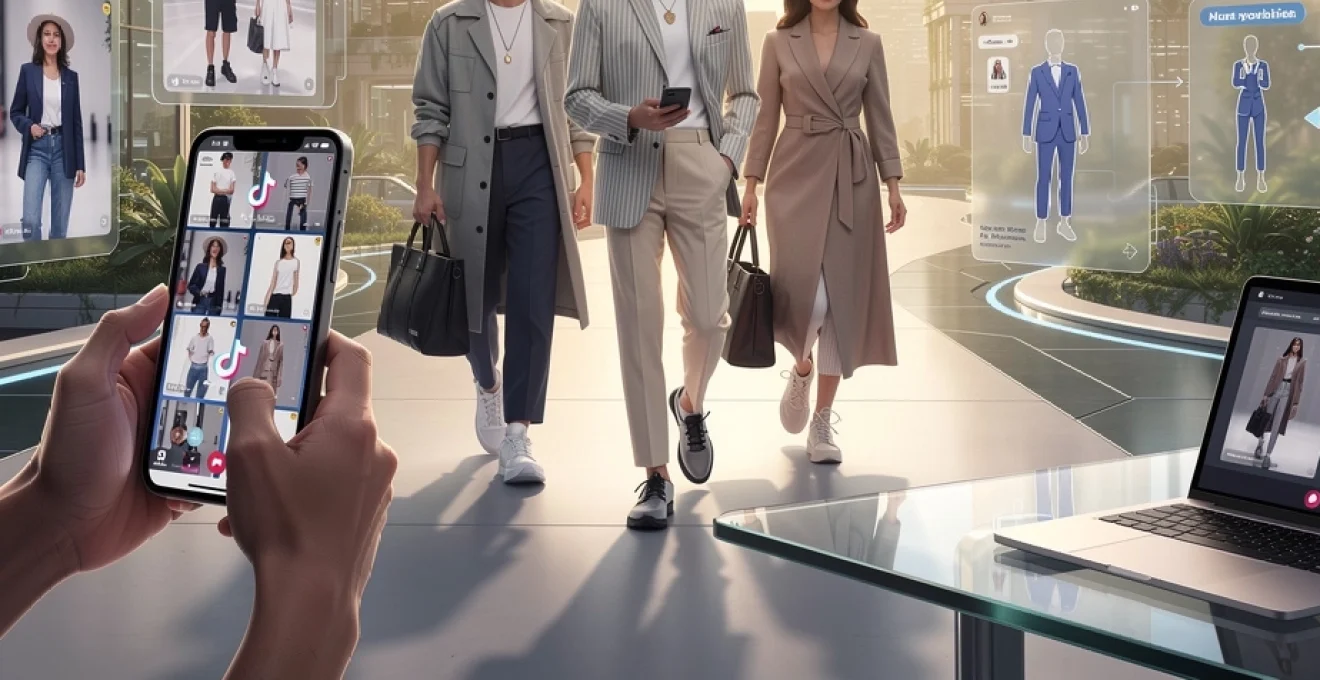
The fashion industry stands at an unprecedented crossroads, where traditional style rules are being challenged, reimagined, and completely overturned. Digital platforms are reshaping how consumers discover trends, while sustainability concerns drive fundamental changes in production and consumption patterns. Meanwhile, emerging technologies and evolving social consciousness are creating new paradigms that extend far beyond seasonal collections. This transformation represents more than just aesthetic shifts; it reflects a profound reimagining of what fashion means in contemporary society.
Today’s fashion landscape bears little resemblance to the industry of even a decade ago. The democratisation of style through social media has shifted power from exclusive fashion houses to everyday influencers and conscious consumers. Simultaneously, environmental awareness has transformed from a niche concern into a mainstream movement that influences purchasing decisions across all demographics. These forces are converging to create an ecosystem where adaptability and authenticity matter more than adherence to established conventions.
Digital transformation of fashion media and influencer marketing strategies
The fashion industry’s digital evolution has fundamentally altered how style trends emerge, spread, and influence consumer behaviour. Traditional gatekeepers like fashion magazines and runway shows no longer hold exclusive authority over trend forecasting. Instead, a complex ecosystem of digital platforms, influencers, and user-generated content shapes contemporary fashion consciousness. This shift has democratised fashion influence while creating new challenges for brands seeking to maintain relevance in an increasingly fragmented media landscape.
Social media platforms have become the primary vehicles for fashion discovery, with each platform offering unique advantages for different types of content and audience engagement. The visual nature of fashion makes it particularly well-suited to digital formats, where instant sharing and viral spread can transform unknown designers into global phenomena overnight. This acceleration of trend cycles has created both opportunities and pressures for fashion brands to respond more quickly to consumer preferences.
Tiktok’s algorithm impact on Micro-Trend acceleration and consumer behaviour
TikTok’s sophisticated recommendation algorithm has revolutionised how fashion trends develop and spread, creating an environment where micro-trends can achieve global reach within days rather than seasons. The platform’s emphasis on short-form video content has made fashion more accessible and interactive, encouraging users to experiment with styling techniques and share their personal interpretations of trending looks. This has resulted in a more inclusive fashion environment where creativity often trumps commercial production values.
The platform’s influence extends beyond mere trend sharing to actual purchasing behaviour. TikTok users frequently make impulse purchases based on styling videos, creating a direct link between content consumption and retail sales. Brands have responded by developing TikTok-specific marketing strategies that emphasise authenticity and relatability over traditional advertising approaches. The success of hashtag challenges and user-generated content campaigns demonstrates how the platform has created new pathways for fashion engagement.
Instagram’s shopping integration and Direct-to-Consumer fashion commerce
Instagram’s evolution into a comprehensive shopping platform has streamlined the journey from fashion discovery to purchase. The integration of shopping tags, product catalogues, and checkout functionality has created a seamless experience where users can transition from inspiration to acquisition without leaving the application. This development has been particularly beneficial for emerging designers and independent brands that may lack the resources for traditional retail partnerships.
The platform’s emphasis on visual storytelling aligns perfectly with fashion marketing needs, allowing brands to showcase products in lifestyle contexts rather than sterile catalogue formats. Instagram Stories and Reels have created new opportunities for behind-the-scenes content, styling tutorials, and authentic brand narratives that resonate with contemporary consumers’ desire for transparency and connection.
Youtube fashion hauls and Long-Form content creator monetisation models
YouTube’s long-form content format has established it as the premier platform for comprehensive fashion coverage, from detailed product reviews to styling tutorials and seasonal wardrobe planning. Fashion haul videos have become a significant content category, influencing purchasing decisions through detailed product demonstrations and honest reviews. Content creators have developed sophisticated monetisation strategies that extend beyond traditional advertising to include affiliate marketing, brand partnerships, and exclusive product collaborations.
The platform’s algorithm rewards consistent, high-quality content, which has led to the emergence of fashion creators who function as trusted advisors to their audiences. These creators often develop long-term relationships with viewers, creating a level of trust and influence that traditional advertising struggles to achieve. The detailed nature of YouTube content allows for nuanced discussions about fit, quality, and value that shorter-form content
around garment construction and brand ethics can support. As audiences become more critical of fast fashion hauls, many creators are pivoting towards capsule wardrobe content, cost-per-wear analysis, and honest discussions about overconsumption. This evolution illustrates how monetisation models are slowly adapting to new style rules that prioritise mindful purchasing over volume-based consumption.
Pinterest’s visual discovery engine and style forecasting analytics
Pinterest operates as a hybrid between a social network and a search engine, making it a powerful tool for long-term trend discovery and wardrobe planning. Its visual discovery engine encourages users to build mood boards that reflect their evolving personal style, rather than chasing fleeting micro-trends. As a result, Pinterest data often captures the early stages of emerging aesthetics—from quiet luxury to coastal grandmother—months before they hit mainstream platforms.
For brands and fashion media, Pinterest’s analytics tools function as an informal style forecasting system. By tracking saves, searches, and board themes, marketers gain insight into colour palettes, silhouettes, and categories that are gaining traction with specific demographics. Unlike the rapid churn of TikTok, Pinterest encourages slower, more deliberate engagement, aligning more closely with consumers interested in building a timeless wardrobe. This creates a valuable counterbalance in a digital ecosystem otherwise driven by speed and novelty.
Sustainable fashion movement and circular economy implementation
As environmental awareness deepens, sustainability is shifting from a marketing slogan to a structural imperative within fashion. The circular economy model—based on designing out waste, keeping materials in use, and regenerating natural systems—is challenging the industry’s linear « take-make-dispose » approach. Rather than relying solely on consumers to make better choices, leading brands are redesigning products, business models, and supply chains to embed sustainability at every stage.
The most impactful initiatives go beyond recycled fabrics and capsule collections, addressing overproduction, product longevity, and end-of-life solutions. These programmes are, in effect, rewriting fashion’s style rules: durability becomes as desirable as novelty, repair is reframed as luxury, and ownership is complemented by rental, resale, and refurbishment. The following pioneers illustrate how circular strategies can coexist with strong brand identities and commercial success.
Patagonia’s worn wear programme and brand activism integration
Patagonia’s Worn Wear programme exemplifies how circularity and brand activism can reinforce each other. By encouraging customers to repair, resell, or trade in their garments, the brand directly challenges the assumption that style requires constant newness. Worn Wear pop-ups and online platforms normalise visible repairs and aged fabrics, reframing them as badges of environmental commitment rather than signs of neglect.
This strategy also deepens customer loyalty. When a brand helps you keep a jacket for ten years instead of two, it stops being just a label and becomes a long-term partner in your lifestyle. Patagonia’s open criticism of overconsumption—famously captured in its « Don’t Buy This Jacket » campaign—might seem counterintuitive in a growth-driven industry, yet it has strengthened the company’s cultural relevance. The Worn Wear model shows that sustainable fashion can align commercial success with reduced resource use when storytelling, repair services, and product design are tightly integrated.
Stella McCartney’s mylo leather innovation and bio-material development
Stella McCartney has positioned her brand at the forefront of bio-material innovation, particularly through early adoption of Mylo, a mycelium-based leather alternative. Unlike traditional leather, which relies on intensive animal agriculture and chemical-heavy tanning, Mylo is grown from mushroom roots in controlled environments. This reduces land use and can significantly cut greenhouse gas emissions, while still delivering a premium look and feel suitable for luxury fashion.
However, bio-materials bring new challenges: scaling production, ensuring durability, and navigating regulatory approval. Stella McCartney’s experimentation illustrates how innovation cycles in sustainable fashion mirror those in tech—early prototypes may be limited in volume and application, but they pave the way for broader adoption. By showcasing Mylo pieces on runways and in exhibitions, the brand is not just launching products; it is helping redefine what « luxury materials » mean in a climate-conscious era.
Eileen fisher’s renew take-back system and textile recycling processes
Eileen Fisher’s Renew programme demonstrates how take-back systems can extend the life of garments and reduce textile waste. Customers return used pieces, which are then cleaned, repaired, resold, or deconstructed and transformed into new designs. This creates several style layers within a single brand: pristine new collections, gently used classics, and one-of-a-kind reconstructed pieces that appeal to consumers seeking uniqueness with a lower environmental footprint.
Textile recycling at this scale is technically complex, involving fibre separation, quality control, and thoughtful design to avoid downcycling garments into lower-value products. Yet, Renew proves that a minimalist, timeless aesthetic pairs naturally with circular models—if a silhouette remains relevant for a decade, the incentive to repair and recirculate it increases dramatically. For consumers, this system reframes wardrobe curation as a long-term relationship with a brand rather than a series of disconnected purchases.
Reformation’s carbon neutral shipping and supply chain transparency
Reformation has built its reputation on combining trend-driven designs with detailed sustainability reporting, making eco-conscious style feel aspirational rather than restrictive. One of its most distinctive initiatives is carbon-neutral shipping, achieved through a mix of efficiency improvements and offset projects. While offsets are not a perfect solution, they represent a step toward internalising environmental costs that the fashion industry has historically ignored.
Equally important is Reformation’s radical transparency about its supply chain and product impact. Each garment is accompanied by information on water usage, carbon emissions, and waste, giving consumers tangible metrics to inform their choices. This data-driven approach helps demystify sustainable fashion, turning abstract concerns into concrete comparisons—how else can you decide whether a linen dress or a viscose jumpsuit better aligns with your sustainability values? Over time, such transparency nudges the industry toward more accountable production standards.
Fast fashion disruption through direct-to-consumer brand models
Fast fashion’s dominance has been built on speed, low prices, and aggressive trend replication. However, direct-to-consumer (DTC) brands are beginning to disrupt this model by offering a different value proposition: fewer intermediaries, higher product quality, and closer relationships with customers. By selling primarily online and managing their own distribution, DTC labels can respond to feedback quickly without resorting to relentless overproduction.
Many DTC fashion brands are embracing pre-order systems, small-batch drops, and waitlists to match supply more closely with demand. This not only reduces inventory waste but also reframes scarcity as a function of intentional design rather than artificial hype. Instead of releasing hundreds of new styles weekly, these brands focus on refining core pieces that can be restocked or iterated based on real-world wear. For consumers weary of the fast fashion cycle yet still budget-conscious, DTC offers a middle path between ultra-cheap disposability and inaccessible luxury.
From a style-rules perspective, DTC disruption encourages shoppers to prioritise fit, fabric, and versatility over sheer volume. When you invest in a direct-to-consumer blazer that fits perfectly and is designed to last, it becomes an anchor piece that reduces the urge to constantly chase micro-trends. The challenge for these brands is maintaining growth without slipping into the same overproduction patterns they initially set out to challenge.
Gender-fluid fashion design and non-binary market segmentation
The rigid gender binaries that once defined fashion are rapidly eroding, giving rise to gender-fluid design and non-binary market segments. Younger consumers, particularly Gen Z, increasingly view clothing as a tool for self-expression rather than a fixed marker of identity. In response, designers and brands are designing collections around silhouettes, fabrics, and moods rather than « menswear » or « womenswear » categories.
This shift is more than a marketing trend; it influences everything from pattern cutting to retail layouts. Racks sorted by fit and style rather than gender, inclusive size ranges, and campaigns featuring non-binary models are slowly becoming more common. Yet, genuine gender-fluid fashion requires more than simply relabelling existing garments as « unisex. » It demands thoughtful construction that accommodates diverse body types and challenges aesthetic norms about who can wear what.
Telfar’s unisex bag strategy and inclusive brand positioning
Telfar has become a cultural phenomenon by centring inclusivity in both product design and brand messaging. The iconic Telfar Shopping Bag is marketed as « not for you—for everyone, » a tagline that encapsulates its unisex, anti-elitist philosophy. By focusing on accessories, the brand sidesteps fit-related gender constraints and creates a product that genuinely works across style identities.
Drop culture and accessible pricing further reinforce Telfar’s inclusive stance, even as high demand has generated significant resale mark-ups. The brand has responded with restocks and lottery systems designed to curb bots and give more fans access. In doing so, Telfar challenges the fashion rule that status must rely on exclusion. Instead, owning a Telfar bag signals alignment with a community-oriented, gender-fluid vision of style.
Palomo spain’s runway gender deconstruction and traditional menswear subversion
Palomo Spain has gained attention for its opulent, romantic designs that intentionally blur the lines between traditional menswear and womenswear. Ruffles, corsetry, embroidery, and sheer fabrics—elements historically coded as feminine—are reimagined on male and non-binary bodies. This runway deconstruction goes beyond mere provocation; it invites audiences to rethink why certain textures and silhouettes have been restricted to specific genders in the first place.
By drawing on Spanish heritage, theatrical costume, and queer aesthetics, Palomo Spain contributes to a broader cultural conversation about masculinity and vulnerability. For consumers, the brand’s visibility normalises styling choices—such as lace shirts or pearl jewellery—that were once considered taboo for men. In everyday wardrobes, this translates into greater freedom to mix so-called masculine and feminine elements without feeling bound by outdated rules.
Official rebrand’s size-inclusive streetwear and body-positive marketing
Official Rebrand approaches gender fluidity through the lens of upcycled streetwear and body positivity. Rather than designing separate lines for different genders, the brand reworks second-hand garments into pieces intended for all bodies. Oversized fits, adjustable elements, and draped silhouettes allow wearers to style items according to their comfort and identity, rather than according to a label on a tag.
Marketing imagery further reinforces this inclusivity, showcasing models of various sizes, genders, and expressions. In a market where « unisex » often defaults to slender, androgynous bodies, Official Rebrand’s approach highlights that true genderless fashion must also be size-inclusive. The brand demonstrates how circular design, ethical production, and non-binary styling can coexist within a coherent aesthetic.
69’s genderless clothing architecture and minimalist design philosophy
69, a Los Angeles–based label, has built its identity around fully anonymous, genderless design. The brand’s loose, architectural shapes—often crafted from denim and other sturdy fabrics—prioritise form and function over body-conscious tailoring. By avoiding traditional darts, waistlines, and bust shaping, 69 garments create a blank canvas onto which wearers can project their own style narratives.
This minimalist aesthetic illustrates a different path to gender-fluid fashion: rather than fusing masculine and feminine codes, it sidesteps them altogether. In practice, this means clothing that can shift roles in a wardrobe over time, functioning as outerwear, loungewear, or statement pieces depending on how they are layered and accessorised. For consumers exploring non-binary dressing, such architecture offers a low-pressure entry point into redefining their personal style rules.
Artificial intelligence integration in fashion forecasting and personalisation
Artificial intelligence is rapidly becoming a silent stylist behind the scenes of the fashion industry. By analysing vast datasets—search queries, social media trends, sell-through rates, and even weather patterns—AI systems can forecast demand more accurately than traditional methods. This has the potential to reduce overproduction, one of fashion’s biggest environmental issues, by aligning supply more closely with real consumer interest.
On the consumer-facing side, AI powers recommendation engines, virtual stylists, and size-prediction tools that personalise the shopping experience. Have you ever noticed how quickly your favourite platforms learn your preferred silhouettes or colour palettes? This is AI at work, attempting to decode your style DNA. When used thoughtfully, such tools can help shoppers build more cohesive wardrobes, avoid duplicate purchases, and discover brands that fit their values and body types.
However, AI integration also raises questions about privacy, bias, and homogenisation. If algorithms only recommend items similar to what we have already bought, do they limit our style experimentation? To maintain creativity, brands and platforms must balance data-driven efficiency with serendipity, occasionally surfacing unexpected pieces that challenge our fashion comfort zones. Done well, AI can act like a perceptive shop assistant rather than a rigid rule enforcer—guiding, not dictating, our evolving style choices.
Web3 technologies and NFT fashion collectibles market emergence
Web3 technologies—blockchain, NFTs, and decentralised platforms—are introducing a new layer of value to fashion that exists entirely in the digital realm. Non-fungible tokens (NFTs) enable designers to create verifiable digital garments and accessories that can be bought, sold, and traded like physical collectibles. In virtual worlds and gaming environments, these items function as status symbols, much like limited-edition sneakers or handbags do offline.
For brands, NFTs offer new revenue streams and a way to engage customers with limited drops that do not require physical production. Digital fashion houses are already collaborating with established luxury labels to design skins for avatars, AR filters, and metaverse experiences. In this context, the traditional rules of fabric, gravity, and practicality disappear—designers can experiment with impossible silhouettes, animated textures, and interactive elements. What does « wearability » mean when the garment exists only on screen?
At the same time, Web3 raises complex questions about sustainability, accessibility, and speculation. Early blockchain systems were energy-intensive, though newer protocols are significantly reducing emissions. There is also the risk that NFT fashion becomes more about financial investment than creative expression, replicating exclusivity dynamics the industry is trying to move beyond. Yet, if approached with intention, digital fashion could help decouple style experimentation from physical overproduction, allowing consumers to explore bolder looks in virtual spaces while keeping their physical wardrobes more curated and sustainable.