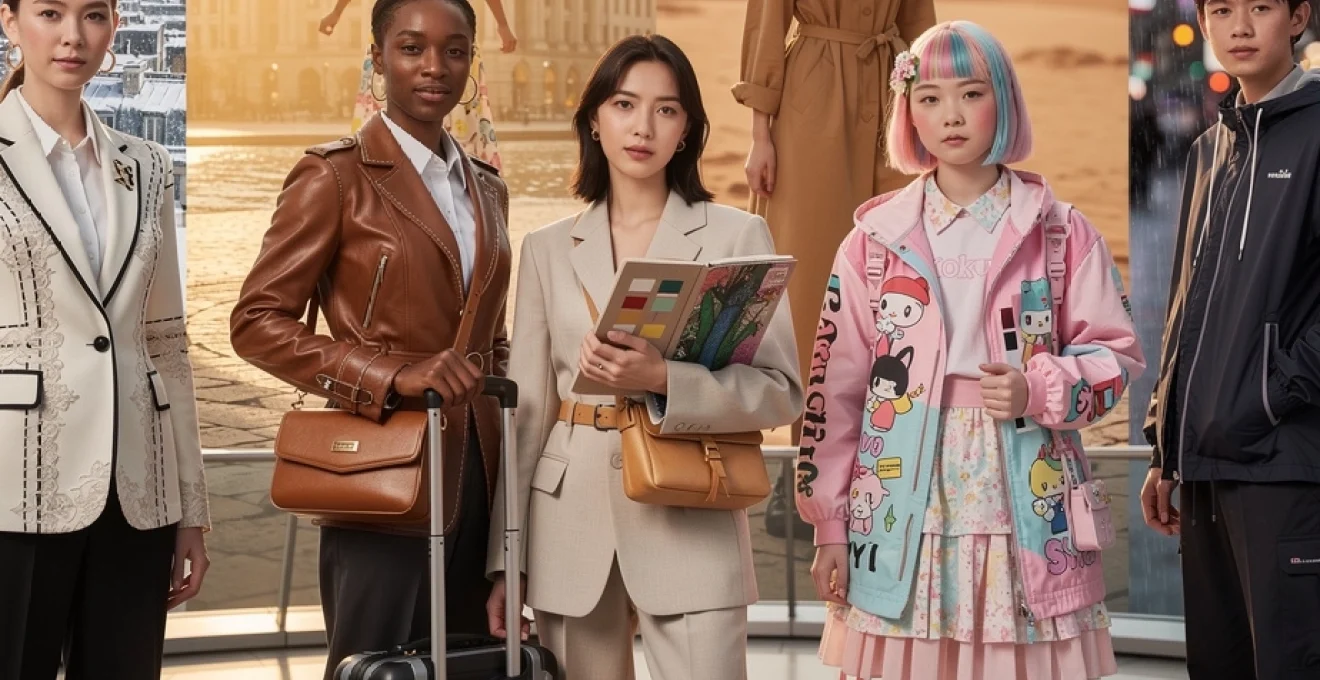
The intersection of travel and fashion represents one of the most dynamic forces shaping contemporary style. As globalisation continues to break down cultural barriers, fashion designers and consumers alike draw inspiration from diverse destinations, climates, and cultural traditions encountered during their journeys. This cultural exchange has fundamentally transformed how fashion evolves, moving beyond traditional seasonal collections to embrace a more fluid, travel-inspired approach that reflects our increasingly mobile lifestyle.
Modern fashion trends emerge from the authentic experiences travellers have with local cultures, traditional craftsmanship, and environmental challenges unique to different regions. The influence extends far beyond simple aesthetic borrowing, encompassing technical innovation driven by climate adaptation, sustainable practices inspired by eco-conscious travel, and philosophical shifts toward minimalism born from nomadic lifestyles. This travel-fashion symbiosis has created a new paradigm where geographical exploration directly translates into sartorial innovation.
Cultural immersion and textile heritage discovery through global fashion capitals
The world’s fashion capitals serve as epicentres for cultural textile exchange, where traditional craftsmanship meets contemporary design innovation. These metropolitan hubs attract designers, artisans, and fashion enthusiasts who immerse themselves in local textile traditions, ultimately carrying these influences back to global markets. The process creates a continuous dialogue between heritage techniques and modern fashion sensibilities, resulting in collections that honour tradition while embracing contemporary aesthetics.
Parisian haute couture techniques influencing contemporary Ready-to-Wear collections
Paris remains the undisputed capital of haute couture, where centuries-old techniques continue to influence modern fashion design. Designers visiting Parisian ateliers witness hand-beading, intricate embroidery, and precision tailoring that requires months to complete. These observations translate into ready-to-wear collections that incorporate simplified versions of couture techniques, making luxury craftsmanship accessible to broader markets. The influence manifests in structured silhouettes, detailed construction methods, and an emphasis on garment longevity that challenges fast fashion principles.
Contemporary designers often spend time in Parisian workshops learning traditional techniques such as tambour embroidery and hand-finishing methods. This knowledge transforms their approach to garment construction, introducing quality standards and attention to detail that elevate commercial fashion. The result is a new generation of designers who prioritise craftsmanship over quantity, creating pieces that reflect Parisian sophistication whilst remaining commercially viable.
Milan’s artisanal leather craftsmanship integration in modern accessories design
Milan’s leather artisans represent generations of expertise in working with premium materials, techniques that travellers and designers absorb during extended stays in the Italian fashion capital. The city’s workshops reveal traditional methods of leather treatment, hand-stitching, and patina development that cannot be replicated through industrial processes. These techniques inspire contemporary accessories designers to incorporate artisanal elements into their collections, creating hybrid pieces that combine traditional craftsmanship with modern functionality.
The influence of Milanese leather craftsmanship extends beyond luxury brands, inspiring mid-market designers to invest in quality materials and construction techniques. Visiting designers learn about leather selection, natural tanning processes, and hand-finishing that result in accessories with superior durability and aesthetic appeal. This knowledge transfer elevates the entire accessories market, encouraging consumers to value craftsmanship over convenience.
Tokyo’s kawaii culture and harajuku street style impact on western youth fashion
Tokyo’s youth culture districts, particularly Harajuku, serve as laboratories for experimental fashion that challenges conventional Western style norms. Travellers encountering these vibrant street scenes witness fashion as performance art, where self-expression takes precedence over commercial appeal. The kawaii aesthetic, characterised by playful colours, unconventional silhouettes, and mixed cultural references, has profoundly influenced Western youth fashion, encouraging experimentation and individual expression.
Western designers visiting Tokyo’s fashion districts absorb the fearless approach to colour combination, texture mixing, and gender-fluid styling that defines Japanese street fashion. This influence appears in collections that embrace asymmetrical designs, bold graphic elements, and playful proportions that would have seemed radical in Western markets just decades ago. The impact extends to retail environments, where Tokyo-inspired styling encourages consumers to view fashion as creative self-expression rather than adherence to established trends.
Mumbai’s
Mumbai’s rich textile legacy introduces travellers and designers to intricate handwork traditions such as zardozi, gota patti, mirror work, and fine bead embellishment. Time spent in Mumbai’s ateliers and heritage workshops reveals how teams of artisans can spend hundreds of hours on a single panel of embroidery, elevating fabric into wearable art. As global demand grows for distinctive evening wear, these traditional embroidery methods are being reimagined in contemporary silhouettes, from red-carpet gowns to statement jackets that pair easily with Western wardrobe staples.
Luxury fashion houses now collaborate directly with Indian embroidery clusters, integrating metallic threadwork, jewel-toned motifs, and hand-beaded borders into modern evening collections. Instead of restricting these techniques to traditional saris or bridal wear, designers apply them to sleek column dresses, minimalist slips, and tailored tuxedo blazers, creating a contrast between clean lines and highly detailed surfaces. For travellers, investing in embroidered pieces from Mumbai is no longer just about souvenirs; it is a way to support skilled artisans, champion slow fashion, and bring globally inspired luxury evening wear into everyday wardrobes.
Climate-responsive fashion innovation driven by destination-specific environmental factors
As travellers move between radically different climates, from freezing Arctic landscapes to humid tropics, fashion must adapt to destination-specific environmental demands. These real-world conditions push brands and textile engineers to develop performance garments that protect the wearer while still aligning with evolving style expectations. Travel, in this sense, operates like a live laboratory, revealing what works, what fails, and where innovation is needed for climate-responsive fashion design.
Technical outerwear, breathable resort wear, UV-protective garments, and monsoon-ready pieces all owe their development to insights gathered from travellers, adventure guides, and local communities living in extreme environments. When these innovations prove successful, they rarely stay confined to specialist markets. Instead, they filter into mainstream wardrobes, influencing city commuters, festival-goers, and remote workers who increasingly expect travel-ready performance from their everyday fashion choices.
Arctic region technical outerwear development for extreme weather performance
Journeys to Arctic and sub-Arctic regions demand clothing that can withstand extreme cold, high winds, and rapid weather changes. Outdoor brands that outfit polar expeditions and winter tourism rely on field testing in these harsh environments to refine technical outerwear. Multilayer insulation systems, water-repellent shells, and strategic ventilation panels are all responses to practical feedback from travellers who need garments that balance warmth, mobility, and packability.
Over time, innovations such as down-proof baffles, synthetic insulation that retains heat when wet, and ergonomic hood designs have migrated from expedition gear into urban winter coats. We now see parkas designed for city streets using the same lab-tested materials used in Arctic exploration, often with sleeker silhouettes and fashion-forward colourways. The result is a generation of winter outerwear that allows you to move seamlessly from icy landscapes to metropolitan life without sacrificing comfort or style, a direct outcome of travel-driven performance testing.
Tropical climate breathable fabric technologies and moisture-wicking solutions
Travel to tropical regions exposes designers and brands to the realities of high humidity, intense heat, and sudden downpours. Traditional solutions such as loosely woven cotton, linen, and bamboo fabrics have long provided comfort in these climates, and many contemporary designers now revisit these fibres with a modern lens. By blending natural fibres with advanced synthetics, textile developers create lightweight, breathable fabrics that dry quickly and wick moisture away from the skin.
Performance resort wear, travel-ready shirting, and warm-weather athleisure now often feature mesh zones, laser-cut ventilation, and anti-odour finishes tested in tropical destinations. You can think of these garments as the clothing equivalent of a high-efficiency fan: almost invisible in operation but crucial to comfort. Influenced by the needs of beach travellers, digital nomads in coastal hubs, and eco-tourism enthusiasts, brands are exploring sustainable sources such as TENCEL, hemp, and regenerated fibres to ensure that breathable travel fashion is also environmentally responsible.
Desert environment UV protection garments and sand-resistant textile engineering
Desert travel, from Sahara treks to Middle Eastern city breaks, highlights the dual challenges of sun exposure and abrasive sand. Traditional garments like the keffiyeh, djellaba, and loose robes offer valuable lessons in airflow, coverage, and heat management, which contemporary designers translate into modern silhouettes. Long-sleeve shirts with high-UPF ratings, wide-brim hats with neck protection, and lightweight trousers with reinforced weaves now draw directly from these regional dressing practices.
In parallel, textile engineers have developed sand-resistant and stain-repellent finishes inspired by the demands of desert tourism and motorsport events such as rallies. Fabrics that shed dust, resist fading under intense UV rays, and maintain colour vibrancy are increasingly used in both performance gear and lifestyle collections. This crossover means that garments originally designed for desert expeditions now influence festival fashion, city-ready utility wear, and even children’s clothing, where durable, UV-protective textiles are a growing priority.
Monsoon-adapted waterproof fashion design and quick-dry material innovation
Travel during monsoon seasons in South and Southeast Asia underscores the need for waterproof yet breathable clothing that transitions easily from torrential rain to humid heat. Traditional heavy raincoats quickly become impractical in such climates, prompting brands to experiment with ultralight shells, seam-sealed construction, and innovative ventilation systems. Designers visiting cities like Mumbai, Bangkok, or Manila observe how locals navigate flooded streets and sudden storms, then incorporate those insights into monsoon-adapted fashion.
Today’s travel wardrobes increasingly include compact rain jackets that fold into their own pockets, water-resistant sneakers, and quick-dry trousers that still look polished enough for urban environments. These pieces utilise hydrophobic treatments, bonded seams, and mesh linings to keep the wearer dry without trapping heat. Over time, such monsoon-tested innovations have shaped mainstream outerwear, proving that practical travel fashion can be both technically advanced and aesthetically refined.
Nomadic lifestyle and minimalist wardrobe philosophy shaping contemporary fashion
The rise of digital nomadism, van life, and long-term backpacking has brought a new philosophy to the forefront of fashion: owning fewer, better, and more versatile pieces. Travellers who live out of a carry-on suitcase quickly learn which garments truly earn their place, prioritising items that can be worn across multiple contexts, climates, and social settings. This minimalist wardrobe mindset has begun to influence mainstream consumers who may not travel full-time but are drawn to the efficiency and clarity that capsule wardrobes offer.
Fashion brands are responding with modular collections, convertible garments, and seasonless pieces designed to mix and match effortlessly. Think of reversible jackets, dresses that can be styled in multiple ways, or trousers with zip-off sections that convert to shorts. As more people experience the freedom of travelling light, demand grows for clothing that is durable, wrinkle-resistant, and ethically made, reinforcing the shift away from disposable fashion and towards thoughtful, travel-ready design.
Cross-cultural color psychology and regional aesthetic preferences in global fashion markets
Travel not only exposes us to new silhouettes and textiles; it also reshapes how we understand colour. Each region carries its own chromatic codes: hues that symbolise joy, spirituality, luxury, or calm. As designers and travellers move between these cultures, they absorb local colour psychology and bring those palettes into global fashion trends. This cross-pollination helps explain why certain tones suddenly seem to appear everywhere, from runways to high street stores, after a destination becomes popular.
Understanding these regional aesthetic preferences allows brands to design collections that resonate emotionally with global audiences. It also encourages you, as a traveller, to experiment with colours you might not usually wear at home. By integrating Scandinavian neutrals, Mediterranean blues, African brights, or Caribbean prints into your wardrobe, you effectively curate a visual diary of the places that have shaped your style.
Scandinavian hygge influence on neutral palette adoption in athleisure wear
Scandinavian countries have long championed minimalism, comfort, and functionality, concepts encapsulated in the idea of hygge. Travellers experiencing Nordic interiors, landscapes, and street style often notice a preference for soft neutrals, muted tones, and tactile fabrics. This aesthetic has migrated into athleisure and loungewear, where clean lines, cosy textures, and a restrained palette evoke calm and intentional living.
Brands inspired by Scandinavian travel now offer activewear in shades of oatmeal, stone, fog, and soft sage instead of only bold neons or stark black. These neutral athleisure collections are designed to move seamlessly from yoga studio to café to airport lounge, reflecting northern heritage lifestyle perspectives in modern design. For many consumers, wearing these hues feels like bringing a slice of Nordic serenity into everyday life, a subtle reminder of slow mornings and tranquil landscapes.
Mediterranean coastal blues and terra cotta integration in resort collections
Resort collections often draw heavily from Mediterranean destinations, translating sun-bleached architecture, terracotta rooftops, and shimmering sea views into colour stories. Travellers returning from the Greek Islands, the Amalfi Coast, or coastal Spain frequently seek clothing that mirrors these environments: crisp whites, deep cobalt blues, sandy neutrals, and warm clay tones. Designers, in turn, use these palettes to evoke feelings of escape and relaxation in their vacation-ready lines.
We see this influence in flowing linen sets, striped sundresses, and swimwear that combines oceanic blues with earthy accents. These hues are not just decorative; they tap into the emotional memory of Mediterranean travel, encouraging buyers to associate garments with warmth, leisure, and seaside dining. Over time, Mediterranean-inspired colours have moved beyond resort wear, appearing in office-appropriate tailoring and everyday basics, expanding the reach of travel-inspired palettes into all corners of the wardrobe.
African textile patterns and vibrant chromatic schemes in mainstream fashion
Travel to African countries introduces visitors to an extraordinary diversity of textile traditions, from West African wax prints to East African kanga cloth and North African geometric motifs. These fabrics are often defined by bold, saturated colours and symbolic patterns that communicate cultural stories. As more designers travel, collaborate with local artisans, or explore diaspora communities, these vibrant schemes have begun to influence mainstream fashion in a more respectful and informed way.
Global brands now integrate African-inspired prints into capsule collections, statement accessories, and limited-edition collaborations, often highlighting the artisans and communities behind the designs. When done ethically, this cross-cultural exchange celebrates heritage rather than simply appropriating aesthetics. For style-conscious travellers, purchasing directly from local markets or verified artisan collectives offers a way to support traditional craftsmanship while adding distinctive, story-rich pieces to their personal fashion repertoire.
Caribbean tropical print evolution and digital fabric printing technologies
Caribbean destinations are synonymous with exuberant colour, lush foliage, and rhythmic patterns, elements that have long shaped vacation wardrobes. Classic tropical prints—think palm leaves, hibiscus flowers, and exotic fruits—have been reinterpreted again and again by designers who spend time on islands such as Barbados, Jamaica, or Martinique. In recent years, digital fabric printing technologies have dramatically expanded what these prints can look like, allowing for hyper-detailed, photographic, or abstract interpretations that would have been impossible with older methods.
Digital printing enables smaller labels and local Caribbean designers to experiment with short runs, customised patterns, and complex gradients without the high setup costs of traditional screen printing. As travellers discover these innovative prints in local boutiques and beachside markets, they help propel them onto global platforms via social media and online retail. The result is an evolution of tropical fashion from predictable motifs to highly individual, destination-specific artworks, all made possible by the convergence of travel inspiration and textile technology.
Sustainable fashion movement accelerated by eco-tourism consciousness and ethical travel practices
Eco-tourism has exposed more travellers to the visible impact of pollution, overconsumption, and climate change on fragile ecosystems. Standing on a littered beach or hiking through a threatened rainforest makes the environmental cost of fast fashion difficult to ignore. As a result, many people return from such trips with a renewed commitment to sustainable fashion, seeking garments that align with their values and reduce harm to the destinations they love.
Brands are responding to this shift by prioritising organic fibres, recycled materials, transparent supply chains, and circular design models. Capsule travel wardrobes made from responsibly sourced textiles, rental services for occasion wear, and repair programs for outdoor gear are all gaining momentum, driven by consumers whose travel experiences have heightened their environmental awareness. We also see a rise in location-specific initiatives, such as resorts partnering with local artisans to create upcycled collections or tour operators offering workshops on textile repair and care.
Ethical travel practices extend beyond what we wear to how we buy. Conscious travellers increasingly ask: Who made this garment? How were they paid? What is its lifecycle once I am done with it? By choosing to support small-scale artisans, fair-trade cooperatives, and brands with verifiable sustainability credentials, travellers help shift the industry toward more responsible models. In this way, every trip becomes an opportunity not only to discover new styles, but also to vote with our wardrobes for the kind of fashion future we want to see.