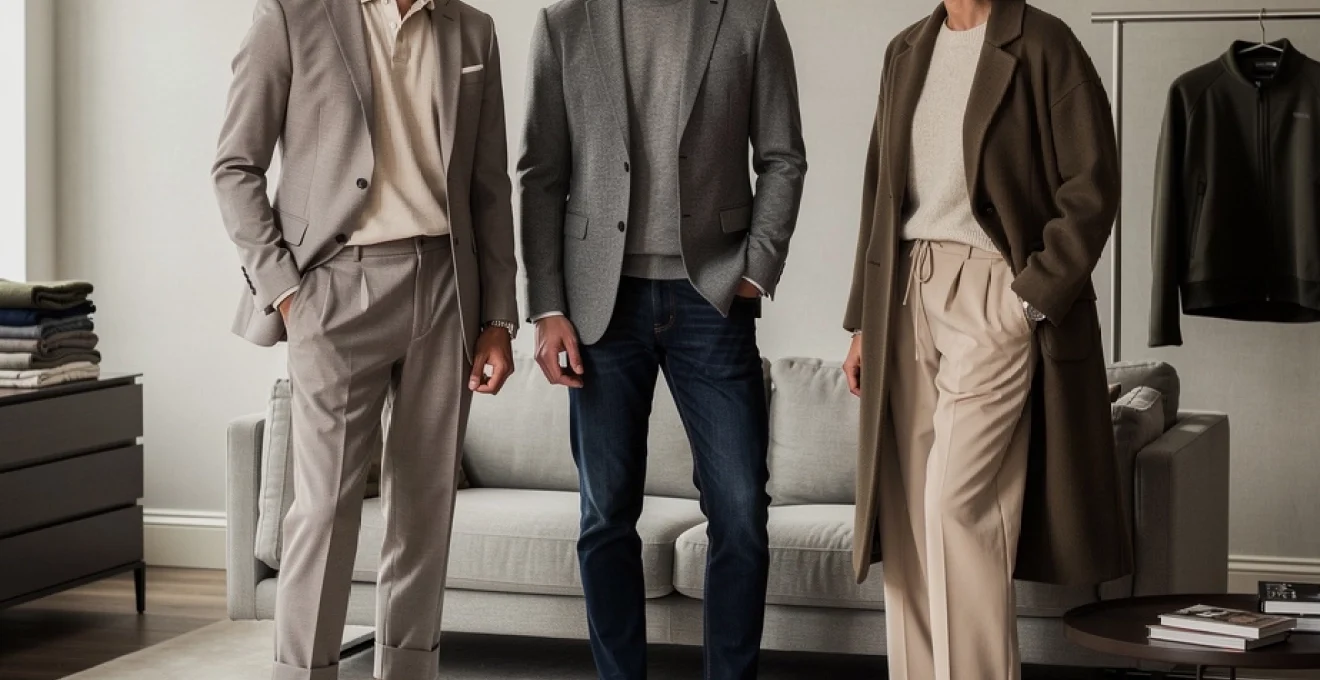
The contemporary fashion landscape has witnessed a remarkable shift towards styles that seamlessly blend comfort with sophistication. This evolution reflects the modern lifestyle’s demands for versatility, where clothing must transition effortlessly from professional environments to casual settings without compromising on elegance. The concept of relaxed refinement has emerged as the answer to this sartorial challenge, offering a new paradigm where luxury meets practicality.
Today’s discerning consumers seek garments that embody both comfort and polish, rejecting the traditional binary between formal and casual wear. This movement towards elevated ease represents more than just a trend; it signifies a fundamental reimagining of how we approach personal style. The integration of advanced fabric technologies, thoughtful design principles, and sophisticated colour palettes has created opportunities for fashion choices that feel as good as they look, whilst maintaining an air of understated luxury.
Elevated casual aesthetics: mastering Smart-Casual dress codes
The art of elevated casual dressing lies in understanding the delicate balance between formality and comfort. This approach requires a sophisticated eye for detail and an appreciation of how individual pieces work together to create a cohesive, polished appearance. The key principle involves selecting garments that possess inherent structure whilst offering the flexibility and ease associated with casual wear.
Smart-casual aesthetics have evolved significantly beyond the traditional blazer-and-jeans combination. Modern interpretations embrace textural contrasts, unexpected proportions, and innovative fabric combinations that challenge conventional dress codes. The contemporary approach to elevated casual dressing emphasises quality construction, thoughtful silhouettes, and refined finishing details that elevate even the most relaxed pieces.
Tailored separates integration in contemporary workwear
The integration of tailored separates into modern workwear represents a significant departure from traditional suiting conventions. Contemporary tailoring embraces softer construction techniques, creating pieces that maintain professional authority whilst offering enhanced comfort and mobility. This evolution reflects changing workplace dynamics and the increasing importance of versatility in professional wardrobes.
Modern tailored separates often feature unstructured or semi-structured construction, utilising minimal interfacing and soft shoulder lines to create garments that feel more like elevated knitwear than traditional suiting. The incorporation of technical fabrics with stretch properties ensures that these pieces maintain their shape throughout extended wear whilst providing the comfort necessary for today’s dynamic work environments.
Luxury knitwear selection: brunello cucinelli and loro piana techniques
Premium knitwear represents the pinnacle of relaxed luxury, where exceptional materials meet masterful craftsmanship to create pieces of enduring elegance. Leading luxury houses have perfected techniques that transform simple knitted constructions into sophisticated wardrobe foundations. These garments demonstrate how comfort and refinement can coexist without compromise.
The finest luxury knitwear employs time-honoured techniques such as intarsia patterning, fully-fashioned construction, and hand-finished details that distinguish premium pieces from their mass-market counterparts. The selection of fibres plays a crucial role, with cashmere, merino wool, and silk blends offering superior drape, texture, and longevity that justifies their investment status.
Premium denim styling: AG jeans and citizens of humanity applications
The elevation of denim from workwear staple to luxury wardrobe essential represents one of fashion’s most significant transformations. Premium denim houses have revolutionised jean construction through innovative washing techniques, superior fabric development, and meticulous attention to fit and finish. These advances have enabled denim to transcend casual boundaries and enter sophisticated style territories.
Contemporary premium denim incorporates advanced stretch technologies that maintain the authentic texture and appearance of traditional cotton denim whilst offering enhanced comfort and recovery. The application of laser finishing, hand-sanding, and eco-friendly washing processes creates unique aesthetic effects that distinguish luxury denim from conventional alternatives.
Sophisticated footwear transitions: Loafer-to-Sneaker continuum
The evolution of footwear design has created a sophisticated spectrum between traditional dress shoes and athletic footwear. This continuum offers numerous options for achieving elevated casual aesthetics whilst maintaining comfort and practicality
Designers have responded with hybrids that merge the polish of loafers and derbies with the cushioning and flex of trainers. Think leather sneakers with minimal branding, sleek cupsoles and refined stitching, or loafers built on rubber soles with subtle cushioning and arch support. These sophisticated footwear choices allow you to move fluidly between boardroom, airport lounge and weekend brunch while maintaining a coherent, relaxed yet refined aesthetic.
When navigating the loafer-to-sneaker continuum, the context and the rest of your outfit should guide your choice. A structured blazer and tailored trouser often call for a leather loafer, lug-sole loafer or minimal derby, whereas a softly tailored suit, premium denim or knit co-ord can be grounded elegantly with a leather sneaker. Pay attention to shoe maintenance—clean uppers and fresh laces are non‑negotiable if you want your relaxed footwear to read as intentional rather than careless.
Fabric technology and material innovation in relaxed luxury
The foundation of relaxed luxury lies as much in the textiles as in the design. Advanced fabric technology now enables garments that look impeccably refined yet perform like activewear. For the style-conscious professional, this means you can prioritise comfort, breathability and ease of care without compromising a sophisticated appearance. Understanding these materials helps you make smarter investment choices when building a modern, elevated casual wardrobe.
Innovative fibres and blends are particularly powerful when combined with clean silhouettes and quiet colour palettes. A simple crewneck in performance merino, cropped trouser in technical cotton or trench in recycled fibres can form the backbone of outfits that travel, layer and transition seamlessly. As we explore key textile categories—from performance wool to sustainable cellulosics—you will see how fabric technology underpins the very idea of relaxed yet refined dressing.
Performance merino wool: icebreaker and smartwool engineering
Merino wool has moved far beyond traditional knitwear, thanks in large part to performance pioneers such as Icebreaker and Smartwool. Their research into fibre diameter, yarn spinning and knit structure has produced merino fabrics that are light, soft and remarkably resilient. These textiles regulate temperature, wick moisture and resist odour, making them ideal for travel-friendly, elevated casual outfits.
Performance merino pieces—whether a fine-gauge turtleneck, polo or base layer—pair effortlessly with tailored separates and premium denim. You gain the practicality of sportswear with the visual refinement of classic wool. For example, a slim merino crewneck under a deconstructed blazer offers four‑season versatility and can replace bulkier layers that often undermine a sleek silhouette. When shopping, look for micron counts under 20 for softness, flatlock seams for comfort and blended constructions (such as merino with nylon or elastane) for durability.
Technical cotton blends: supima and pima cotton applications
Supima and Pima cotton represent the pinnacle of cotton quality, thanks to their extra-long staple fibres, which create smoother, stronger and less pilling fabrics. When these fibres are engineered into technical blends—with elastane for stretch, polyamide for resilience or moisture-management finishes—they become perfect for relaxed yet refined essentials such as T‑shirts, chinos and poplin shirts. The result is clothing that drapes cleanly, resists twisting and maintains colour depth over repeated washes.
For contemporary workwear, technical cotton chinos with a slight sheen and built‑in stretch can replace traditional dress trousers without lowering the overall formality of your look. Likewise, a Supima jersey T‑shirt under a blazer reads far more polished than a basic cotton tee, while feeling just as comfortable. You might ask: can a simple cotton shirt really change how refined you appear? In practice, the difference in fabric handle, opacity and recovery is immediately visible—it is the textile equivalent of upgrading from a standard to high‑definition screen.
Sustainable textile innovation: tencel lyocell and econyl integration
As sustainability becomes central to luxury fashion, fibres like Tencel Lyocell and Econyl have emerged as key players in relaxed luxury wardrobes. Tencel Lyocell, derived from responsibly sourced wood pulp, offers a fluid drape, silky handfeel and excellent moisture management. This makes it ideal for relaxed tailoring, soft shirts, dresses and wide‑leg trousers that skim the body rather than cling, achieving an effortless, elevated line.
Econyl, a regenerated nylon created from discarded fishing nets and industrial waste, brings technical performance to minimalist outerwear, swimwear and knit-backed tailoring. When used in streamlined bomber jackets, parka liners or sleek jogger-style trousers, Econyl enables pieces that are feather-light, durable and often water‑resistant. Combining these sustainable textiles with classic cuts allows you to align your wardrobe with environmental values while still presenting a composed, quietly luxurious image.
Wrinkle-resistant finishing: Nano-Sphere technology implementation
Wrinkle-resistant and stain‑repellent technologies, such as Nano-Sphere and similar nano-finishes, have transformed the practicality of elevated casual clothing. Applied at the fibre or fabric stage, these treatments create microscopic structures that replicate the self-cleaning properties of certain plant leaves, causing liquids and dirt to bead and roll off. The benefit for the wearer is clear: shirts, chinos and outerwear maintain a crisp appearance throughout the day with minimal maintenance.
For frequent travellers or busy professionals, garments treated with advanced wrinkle-resistant finishes reduce reliance on dry cleaning and constant pressing. Imagine a cotton-blend shirt that emerges from your suitcase ready to wear, or tailored joggers that resist bagging at the knees during long flights. The key is to seek fabrics where technology supports, rather than overwhelms, the natural hand and drape. High-quality implementations remain breathable and soft to the touch, ensuring that technical performance never compromises tactile luxury.
Colour psychology and tonal sophistication strategies
Colour is one of the most powerful tools in crafting a relaxed yet refined wardrobe. The right palette can communicate calm authority, creative ease or understated confidence long before a single word is spoken. In elevated casual dressing, we typically move away from loud, high-contrast combinations and towards nuanced, tonal approaches that feel both modern and timeless.
Tonal sophistication often starts with a base of neutrals—shades of camel, stone, navy, charcoal and off‑white—layered in varying intensities and textures. Wearing head‑to‑toe beige, for example, can look flat if all pieces share the same finish; combine a matte cotton, a brushed wool and a subtle sheen from silk or Tencel, and the outfit suddenly feels rich and curated. Strategic use of soft accent colours—muted terracotta, slate blue, olive or dusty rose—adds personality without disturbing the relaxed, polished mood.
From a psychological perspective, cooler neutrals such as charcoal, taupe and ink blue often project professionalism and reliability, while warmer tones like camel and cream evoke approachability and ease. If you aim to build a relaxed luxury capsule wardrobe, consider designing around one or two “anchor” colours (for instance, navy and stone) and selecting supplementary pieces that sit within that spectrum. This approach simplifies outfit building and almost guarantees that combinations feel harmonious and expensive-looking, even when individual items are relatively simple.
Silhouette architecture: contemporary tailoring principles
The architecture of an outfit—its overall silhouette and proportion—is what ultimately determines whether relaxed clothing appears refined or merely casual. Contemporary tailoring principles have shifted away from rigid, body‑conscious shapes towards fluid, ease‑filled lines that sit slightly away from the body. The aim is to create silhouettes that move with you, yet retain enough structure to signal intention and polish.
Mastering silhouette in relaxed luxury dressing is much like designing an interior: you balance volume, negative space and focal points. A wider trouser calls for a more contained top, while an oversized coat needs a considered under-layer to avoid overwhelming the frame. By understanding how individual garments contribute to the total composition, you can style pieces like deconstructed blazers, wide‑leg trousers and cocoon coats in ways that feel purposeful rather than sloppy.
Deconstructed blazer construction: soft shoulder techniques
The deconstructed blazer is central to the relaxed yet refined wardrobe, bridging the gap between traditional tailoring and knitwear. Soft shoulder techniques—minimal padding, gentle roping and natural shoulder lines—allow the jacket to follow the body’s contours rather than imposing a rigid shape. Often, canvassing is partially or fully removed, and the lining may be reduced or replaced with breathable, stretch-infused fabrics.
This softer construction lends itself to pairing with premium denim, technical chinos and even elevated joggers, without the jarring contrast a highly structured blazer would create. When selecting a deconstructed blazer, examine how it moves when unbuttoned: does it fall close to the torso, or does it flare awkwardly? A well-executed design should drape like a cardigan while retaining the sharpness of a lapel and a clean shoulder line. This balance of ease and definition is what allows you to throw a blazer over a simple T‑shirt and still appear thoughtfully dressed.
Relaxed trouser proportions: wide-leg and cropped hemline analysis
Relaxed trouser silhouettes—particularly wide‑leg and cropped styles—have become key components of contemporary smart‑casual dress codes. Wide‑leg trousers, whether full‑length or grazing the ankle, introduce a sense of fluidity and movement that feels inherently modern. The risk, of course, is losing shape and appearing swamped by fabric, which is why proportion and fabrication are crucial.
For wide‑leg tailoring, look for a defined waist, carefully placed darts and a fabric with enough weight to fall cleanly—lightweight wool, Tencel blends and heavier cotton twills work especially well. Cropped hemlines should reveal the ankle bone or sit just above a refined shoe, such as a loafer, block‑heel mule or structured sneaker. If you are petite, pairing cropped wide‑legs with a slightly cropped or tucked‑in top prevents the body from being visually shortened. Think of the trouser as a column: the more volume you introduce at the leg, the more clarity you need around the waist and upper body.
Oversized outerwear styling: cocoon coats and dropped shoulders
Oversized outerwear—cocoon coats, drop‑shoulder trenches and enveloping parkas—has become synonymous with relaxed luxury, offering drama without overt decoration. The cocoon coat in particular, with its rounded shoulders and tapered hem, creates a sculptural silhouette that instantly elevates simple base layers. When executed in brushed wool, cashmere or double‑faced fabrics, it conveys a sense of quiet opulence while remaining supremely practical.
Styling oversized outerwear successfully hinges on what you wear beneath. Streamlined under‑layers, such as slim trousers, straight‑leg denim or a column dress, keep the overall look anchored. Dropped-shoulder designs can broaden the upper body visually, so those who prefer a more contained frame may choose slightly narrower shoulders with volume added through the body and sleeve instead. As with all relaxed tailoring, the goal is controlled ease: enough volume to suggest nonchalance, but not so much that you lose your outline altogether.
Accessory curation for effortless refinement
Accessories are the finishing layer that transforms relaxed clothing into a coherent, refined ensemble. In the context of relaxed luxury, the emphasis shifts from conspicuous logos and statement pieces to subtle, function‑driven design. A structured crossbody bag in smooth leather, a pair of acetate wayfarer sunglasses or a polished yet understated watch can quietly upgrade a T‑shirt and jeans without feeling overdressed.
Thoughtful accessory curation also supports a streamlined wardrobe strategy. Instead of owning dozens of interchangeable items, you might focus on a concise selection that works across multiple settings: a slim leather belt to define the waist of wide‑leg trousers, a silk scarf to add colour and texture to tonal outfits, and a pair of medium‑scale earrings that complement both knitwear and tailoring. Ask yourself before leaving the house: “Is there one small detail I can add that would make this outfit feel intentional?” Often, that single addition—a cuff bracelet, neatly folded pocket square or textured sock—provides exactly the refinement you are seeking.
Brand case studies: exemplars of relaxed luxury positioning
Several contemporary and heritage brands exemplify the principles of relaxed yet refined fashion, translating them into cohesive collections and clear brand narratives. Their success lies in fusing high-quality materials, thoughtful cuts and understated aesthetics into pieces that slot naturally into a modern, elevated casual wardrobe. Studying these brands can help you refine your own purchasing criteria and better understand how relaxed luxury appears in practice.
Labels such as Brunello Cucinelli and Loro Piana sit at the pinnacle of this space, combining Italian craftsmanship with muted palettes and tactile fabrics. Their cashmere hoodies, unstructured jackets and softly tailored trousers illustrate how sportswear codes can be elevated through fibre choice and construction. At a more accessible level, brands like AG Jeans and Citizens of Humanity have redefined premium denim, offering cuts and washes that integrate seamlessly with deconstructed blazers and luxury knitwear in both professional and off‑duty contexts.
Emerging and contemporary labels—think Róhe, Kallmeyer, Another Tomorrow or Loulou Studio—extend the relaxed luxury philosophy with a sharper, often more directional edge. They prioritise seasonless capsules, neutral palettes and architectural silhouettes that resonate with a generation seeking fewer, better pieces. Whether you gravitate towards the quiet opulence of heritage maisons or the modern minimalism of new-wave designers, the common thread is clear: relaxed yet refined fashion is no longer a niche, but a fully realised aesthetic language that allows you to move through your day with both ease and elegance.