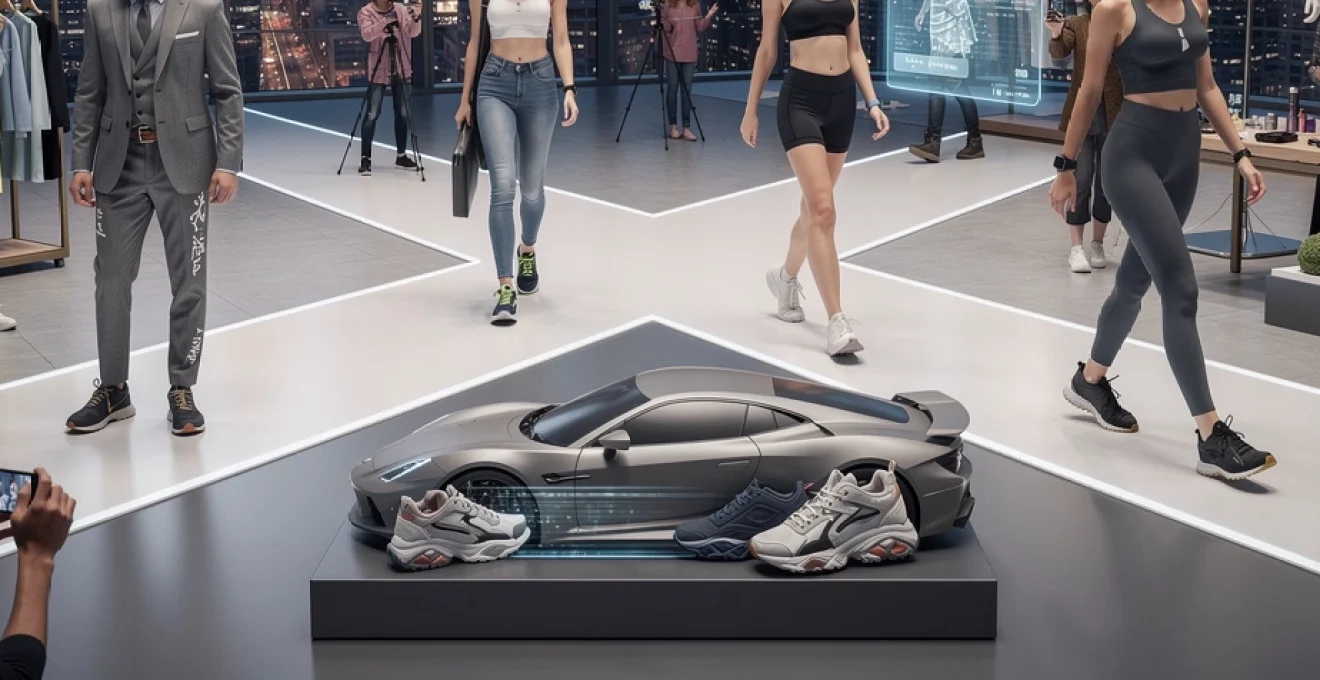
Fashion collaborations have fundamentally transformed how trends emerge, evolve, and spread across global markets. These strategic partnerships between diverse brands, influencers, and industries create ripple effects that extend far beyond traditional fashion boundaries. The convergence of luxury houses with streetwear brands, technology companies with fashion labels, and celebrity designers with established maisons has redefined trend forecasting and consumer behaviour patterns.
Modern collaboration strategies have evolved into sophisticated mechanisms that challenge conventional fashion hierarchies. When seemingly incompatible brands unite, they generate cultural conversations that transcend their individual market segments. This phenomenon creates unexpected trend movements that often defy traditional fashion wisdom, establishing new paradigms for how style influences travel through contemporary society. The acceleration of digital communication amplifies these collaborative effects, enabling rapid trend dissemination across geographical and demographic boundaries.
Cross-industry partnership dynamics in contemporary fashion ecosystems
Contemporary fashion ecosystems thrive on unexpected partnerships that blur traditional industry boundaries. Cross-sector collaborations between fashion brands and companies from automotive, technology, entertainment, and hospitality industries create innovative products that reshape consumer expectations. These partnerships leverage each brand’s core competencies whilst exploring uncharted creative territories, resulting in trend movements that neither entity could achieve independently.
The success of cross-industry collaborations depends on strategic alignment between brand values and target demographics. Fashion brands gain access to new technologies, distribution channels, and consumer insights, whilst non-fashion partners benefit from enhanced brand perception and cultural relevance. This symbiotic relationship generates trend movements that reflect broader cultural shifts towards interdisciplinary innovation and collaborative consumption patterns.
Luxury maisons and streetwear brand synergies: louis vuitton × supreme case study
The Louis Vuitton × Supreme collaboration represents a watershed moment in fashion history, demonstrating how luxury heritage brands can successfully engage with street culture. This partnership challenged traditional fashion hierarchies by elevating streetwear aesthetics to luxury status whilst maintaining both brands’ authentic identity. The collaboration created unprecedented demand patterns, with limited-edition pieces becoming cultural artifacts that transcended their original fashion context.
This strategic alliance generated trend movements that influenced luxury fashion’s approach to casual wear and accessibility. The collaboration’s success encouraged other luxury maisons to explore partnerships with streetwear brands, creating a new category of luxury streetwear that continues to shape contemporary fashion landscapes. The partnership’s impact extends beyond product design, influencing marketing strategies, retail experiences, and brand positioning across the fashion industry.
Technology integration through Fashion-Tech collaborations: nike × apple watch series
Fashion-technology collaborations create trend movements that integrate functionality with aesthetic appeal, reshaping consumer expectations for wearable devices. The Nike × Apple Watch partnership exemplifies how sports brands and technology companies can create products that appeal to fitness enthusiasts whilst maintaining fashion-forward design sensibilities. This collaboration established wearable technology as a fashion category rather than merely a functional tool.
These partnerships drive trend movements towards functional fashion that prioritises both performance and style. The integration of health monitoring capabilities with fashion-conscious design has influenced broader industry trends towards smart textiles, connected accessories, and performance-oriented everyday wear. This technological integration creates new consumer behaviour patterns that bridge the gap between fashion consumption and lifestyle enhancement.
Automotive brand fashion crossovers: prada × adidas luna rossa collection
Automotive brand fashion crossovers create unexpected trend movements by translating high-performance engineering principles into fashion design. The Prada × Adidas Luna Rossa collection demonstrates how sailing technology and luxury fashion can create innovative sportswear that appeals to both performance athletes and fashion-conscious consumers. This collaboration introduced technical materials and construction methods from sailing into mainstream fashion.
These partnerships establish trend movements towards technical luxury that combines performance functionality with premium aesthetics. The influence of automotive and maritime design principles in fashion has created new categories of performance-oriented luxury goods that prioritise both technological innovation and visual appeal. This cross-pollination continues to drive developments in sustainable materials, advanced manufacturing techniques, and performance-oriented design philosophies.
Entertainment industry fashion partnerships: balenciaga × fortnite virtual fashion strategy
Entertainment industry fashion partnerships create trend movements that extend into virtual environments, establishing new paradigms for digital fashion consumption
By integrating branded skins, virtual capsules, and limited-time “drops” inside the Fortnite ecosystem, Balenciaga tapped into a new generation of digital-first consumers. Virtual outfits worn by players quickly crossed back into physical fashion, inspiring streetwear styling, graphic motifs, and even IRL merchandise that echoed in‑game aesthetics. This two-way exchange illustrates how metaverse-ready fashion collaborations can trigger trend movements that start on screens and spill into wardrobes, accelerating the feedback loop between gaming culture and contemporary style.
For brands, these entertainment partnerships highlight a shift from one-directional marketing to participatory worlds where users co-create visibility through gameplay, streaming, and social sharing. A hoodie “seen” on millions of avatars can generate more cultural momentum than a traditional runway moment. As virtual fashion strategies mature, we can expect more collaborations that treat digital spaces as primary runways, with physical collections becoming extensions of virtual hype rather than the other way around.
Influencer-driven collaborative trend acceleration mechanisms
Influencer-driven collaborations operate as high-speed conduits for new fashion ideas. When brands co-create with celebrities, macro influencers, or micro communities, they plug into pre-existing fan networks that can amplify trends within hours. Instead of waiting for seasonal collections and editorial coverage, consumers now encounter collaborative drops in real time through livestreams, Reels, TikToks, and Stories, where styling cues are instantly copied and remixed.
The power of these mechanisms lies in the fusion of personal narrative and product design. Influencers do not just wear the clothes; they help design them, name them, and script the story around them. This sense of co-ownership accelerates adoption: followers feel they are buying into a relationship and a lifestyle, not just a garment. As a result, influencer collaborations can spark unexpected trend movements around niche aesthetics or subcultures that traditional fashion forecasting might overlook.
Celebrity designer partnerships: rihanna’s fenty × LVMH disruption model
Rihanna’s Fenty venture with LVMH demonstrated how celebrity-led fashion houses can disrupt entrenched luxury codes. Rather than treating the singer as a simple face of the brand, LVMH positioned Fenty as a fully-fledged maison with creative autonomy and a digital-first strategy. Collections dropped on a see-now-buy-now model, leveraging Rihanna’s social platforms to turn launches into cultural events rather than conventional runway shows.
This model triggered trend movements around inclusive luxury and body-positive silhouettes. Fenty’s approach to size ranges, diverse casting, and beauty-adjacent storytelling shifted consumer expectations of what a luxury brand should look like and who it should serve. Even though the ready-to-wear line paused operations, its ripple effects remain: collaborations between celebrities and conglomerates are increasingly judged by their ability to deliver authentic representation, agile drops, and social-media-native campaigns rather than purely runway prestige.
Social media influencer co-creation processes: chiara ferragni × lancôme beauty line
The Chiara Ferragni × Lancôme collaboration offers a clear blueprint for how co-creation with influencers accelerates beauty and fashion-adjacent trends. Ferragni’s active involvement—from packaging design to shade selection and launch content—gave her audience a behind-the-scenes view of product development. Each reveal on Instagram and TikTok became part of an extended narrative, turning the collection into a storyline her followers wanted to participate in.
This transparency fueled rapid adoption of specific looks, from glittery eye makeup to “day-to-night” beauty routines that mirrored Ferragni’s personal style. As followers recreated these aesthetics, adjacent fashion trends—sequinned dresses, logo knits, playful accessories—gained traction as part of the same visual universe. The collaboration illustrates how influencer co-creation can transform a single product line into a holistic lifestyle trend that spans both fashion and beauty ecosystems.
Micro-influencer collective collaboration networks: daniel wellington ambassador programme
Daniel Wellington’s ambassador programme shows how large numbers of micro-influencers can collectively move trends from the margins to the mainstream. Instead of banking on a single celebrity face, the brand cultivated thousands of everyday style creators who posted coordinated content featuring its minimalist watches and bracelets. This networked strategy flooded social feeds with similar styling cues—rolled sleeves, stacked bracelets, neutral palettes—subtly standardising a global “smart casual” look.
Because micro-influencers tend to maintain higher engagement rates and closer audience relationships, their collaborative content feels more like peer recommendation than polished advertising. The result is a slow-burn trend movement: rather than a single viral moment, consumers experience a steady drip of consistent visuals that normalise a particular aesthetic. For emerging fashion brands, this demonstrates how ambassador networks can democratise collaboration, using smaller voices in aggregate to rival the reach of marquee celebrity partnerships.
Platform-specific content creator partnerships: TikTok fashion challenge campaigns
TikTok fashion challenge campaigns have become fertile ground for unexpected trend movements. When brands collaborate with platform-native creators on hashtags like #styledbyme, #runwayathome, or #fliptheswitch, they invite users to reinterpret key pieces through short-form video. These challenges often emphasise transformation—one garment styled five ways, thrift flips, or “day-to-night in 15 seconds”—which aligns with TikTok’s appetite for quick, visually satisfying narratives.
Because TikTok’s algorithm surfaces content based on engagement rather than follower count, smaller creators can have outsized impact on trend development. A single viral styling hack or outfit transition can push a particular silhouette, colour palette, or accessory into global consciousness overnight. Brands that co-create filters, sounds, or duet-friendly formats with creators effectively build viral-ready collaboration frameworks that allow the community to finish the narrative, making trends feel participatory rather than top-down.
Fast fashion replication cycles and trend democratisation
Fast fashion brands play a controversial yet undeniable role in transforming niche collaborative ideas into mass-market trends. When luxury maisons or niche labels launch high-profile collaborations, fast fashion players rapidly decode the key visual elements—silhouettes, prints, colour blocking—and interpret them for lower price points. This accelerated replication cycle means that what appears on a runway or in a capsule drop can appear on global high streets within weeks.
On the one hand, this process fuels trend democratisation: consumers who cannot access limited-edition pieces can still participate in the aesthetic conversation. On the other, it raises challenging questions about intellectual property, originality, and sustainability. As brands race to capitalise on micro-trends born from collaborations, production volumes increase and product lifecycles shorten, which can exacerbate environmental impacts. For conscious consumers and designers, the challenge is to leverage the accessibility of fast fashion while advocating for slower, more responsible adoption of collaborative trends.
From a strategic standpoint, some collaboration partners now anticipate fast fashion replication and design with it in mind. They may focus on highly technical construction, proprietary materials, or integrated technology that is difficult to copy at scale. Others lean into hyper-limited drops that prioritise storytelling and community access over mass availability. In both cases, the interplay between high-end collaborations and fast fashion responses shapes how quickly—and how broadly—unexpected trend movements spread through the global style ecosystem.
Sustainable fashion collaboration models reshaping consumer behaviour
As consumers grow more concerned about climate impact and overconsumption, sustainable fashion collaborations are emerging as powerful catalysts for behavioural change. Instead of treating eco-conscious initiatives as side projects, leading brands are partnering with innovators, NGOs, and circular platforms to embed sustainability at the heart of collaboration strategies. These partnerships do more than swap materials; they introduce new ways of owning, using, and valuing clothes.
By framing sustainability through the lens of desirable collaboration—for example, a luxury house partnering with a cutting-edge biotech startup—brands make responsible choices feel aspirational rather than restrictive. Customers are invited to experiment with rental, resale, repair, and take-back programmes within the evolving sustainable fashion ecosystem. Over time, these initiatives can normalise new consumption habits, creating trend movements around longevity, repair aesthetics, and circular wardrobes that stand in contrast to fast, disposable fashion.
Circular economy partnerships: stella McCartney × adidas infinite play initiative
The Stella McCartney × Adidas Infinite Play initiative illustrates how circular economy principles can be woven into mainstream sportswear culture. By enabling customers to return used products in exchange for credit, the programme keeps garments in circulation through resale, recycling, or responsible disposal. The collaboration leverages McCartney’s long-standing sustainability credentials and Adidas’s global reach, transforming technical sportswear into part of a regenerative system.
This model encourages consumers to rethink the “end” of a product’s life. Instead of discarding worn pieces, you are invited to view them as assets that retain value within a closed loop. Over time, such programmes can shift trend movements towards circular desirability, where owning pre-loved or refurbished collaborative pieces becomes a marker of awareness rather than compromise. For brands, collaborating on infrastructure—logistics, digital tracking, refurbishment—is just as critical as co-designing collections.
Upcycling brand collaborations: patagonia × worn wear resale platform
Patagonia’s work with its Worn Wear platform offers a template for upcycling-focused collaborations that prioritise longevity and repair over endless novelty. Through events, capsule collections, and repair tours, the brand invites customers to trade in, mend, and reimagine their garments. When Patagonia partners with designers or local makers to transform returned items into limited upcycled pieces, each object carries visible signs of its previous life—patches, contrast stitching, or reassembled panels.
These upcycling collaborations generate trend movements around what we might call repair aesthetics: visible mending, purposeful distressing, and hybrid garments that celebrate imperfection. Instead of hiding wear and tear, consumers begin to value it as part of a garment’s story. In practice, this can nudge behaviour away from constant replacement and towards curation, where you build a wardrobe of character-rich pieces that evolve over time.
Eco-conscious material innovation: kering × bolt threads mylo leather development
Kering’s collaboration with Bolt Threads on Mylo, a mycelium-based leather alternative, shows how material innovation partnerships can shift long-term trend trajectories. By investing in bio-based textiles and testing them across brands like Stella McCartney and Gucci, Kering positions next-generation materials not as experimental novelties but as future standards. Limited-edition Mylo bags or sneakers become proof-of-concept pieces that signal where luxury fashion is heading.
As these collaborations mature and scale, eco-conscious materials can catalyse trend movements around biophilic aesthetics—textures and tones that evoke natural processes, storytelling rooted in lab-grown or regenerative origins, and product labels that highlight material journeys as key selling points. For consumers, the allure lies in owning items that feel both innovative and responsible, bridging the gap between high fashion desire and environmental ethics.
Digital fashion week platforms and virtual collaboration spaces
The rise of digital fashion weeks and virtual showrooms has opened new frontiers for collaborative trend-making. When brands present collections via livestream, augmented reality, or fully virtual environments, they can integrate music labels, gaming studios, CGI artists, and tech startups into the same experience. These multi-partner digital showcases turn a traditional runway slot into a collaborative canvas where fashion, sound, and interactive media converge.
Virtual platforms also lower barriers to participation for emerging designers and regional voices who may not have the resources for physical shows. Collaborative group shows, digital marketplaces, and shared virtual stages enable smaller brands to benefit from collective visibility, often alongside larger houses. For audiences, this translates into exposure to a wider range of aesthetics and narratives, which can spark trend movements around underrepresented cultures, craft traditions, or speculative “sci-fi” silhouettes that might never have reached a global audience through conventional circuits.
In parallel, virtual try-ons and digital-only garments sold as NFTs or in-game assets are redefining what it means to “own” fashion. When multiple brands collaborate with 3D artists or platforms to release digital capsules, they create an ecosystem where trends can be tested and iterated without physical production. You might experiment with a bold avatar look before deciding to invest in a physical analogue, effectively using virtual collaborations as a low-impact R&D laboratory for future style movements.
Geographical fashion collaboration impact on regional trend emergence
Geographical context plays a crucial role in how collaborations spark regional trends. When global brands partner with local designers, artisans, or cultural institutions, they tap into specific visual languages—textiles, motifs, tailoring methods—that resonate deeply in a particular place. These collaborations can revive heritage crafts, introduce them to wider audiences, and catalyse glocal trend movements where local identity becomes a driver of global desirability.
Consider how Scandinavian outdoor brands collaborating with global retailers have popularised functional minimalism, or how Japanese labels partnering with European maisons have amplified interest in workwear-inspired silhouettes and meticulous construction. In each case, the collaboration acts as a cultural bridge: it validates regional aesthetics on an international stage while giving global brands fresh storytelling material. Over time, these partnerships can transform once-niche regional signatures—such as Mexican embroidery, West African wax prints, or Indian block printing—into globally recognised style codes.
For brands and creatives, the key is respectful exchange rather than extraction. Successful geographical collaborations are built on long-term relationships, fair value distribution, and clear acknowledgment of origin. When handled with care, they do more than produce beautiful capsules; they influence travel patterns, inspire tourism, and encourage consumers to seek deeper connections with the places that shape their clothes. In this way, collaboration becomes a vehicle for cultural literacy, with each regional partnership seeding new, unexpected trend movements in the global fashion landscape.