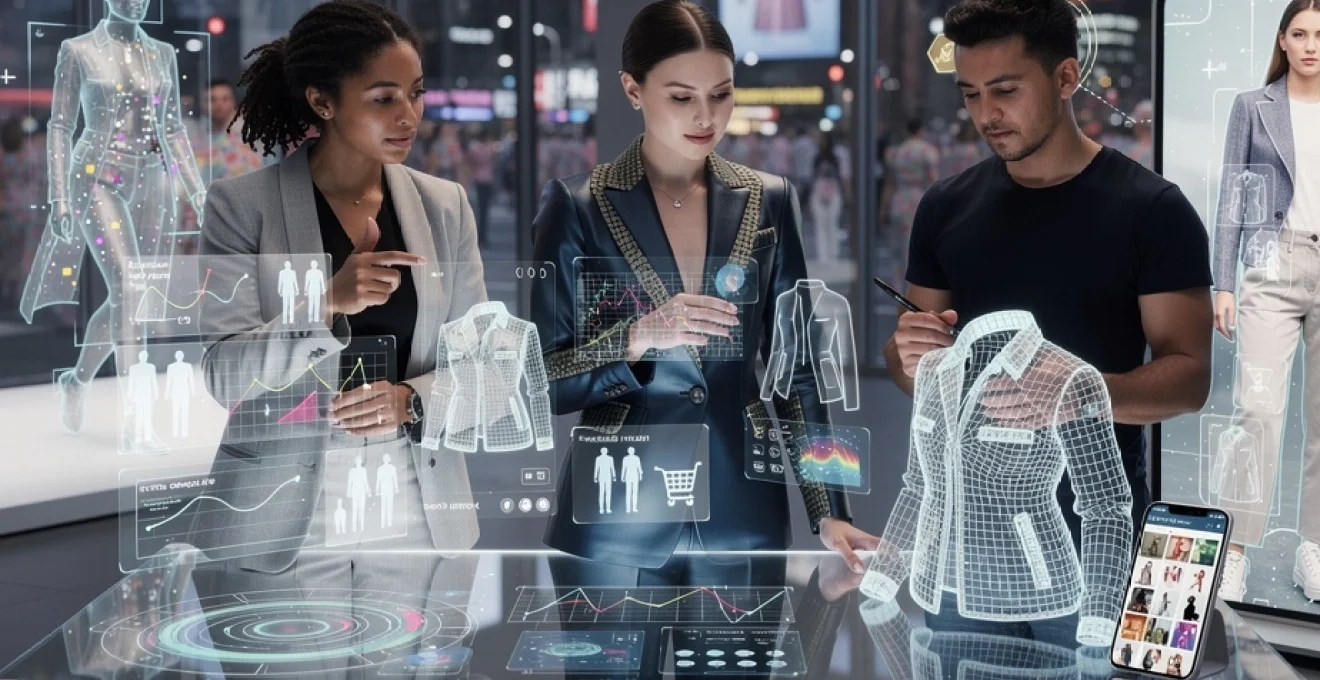
Fashion has always been a barometer of cultural shifts, but predicting what consumers will desire next season has traditionally relied on intuition and industry expertise. Today’s fashion landscape operates at breakneck speed, where trends can emerge from a single viral TikTok video and disappear within weeks. This rapid evolution has created an urgent need for more sophisticated prediction methods that can process vast amounts of data faster than any human analyst could manage.
The global fashion industry, worth approximately $2 trillion, cannot afford to miscalculate consumer preferences. A single misstep in colour palette selection or silhouette prediction can result in millions of unsold garments, contributing to the industry’s staggering annual waste of 92 million tonnes of fabric. Modern technology has emerged as the game-changing solution, offering unprecedented accuracy in trend forecasting through artificial intelligence, big data analytics, and innovative digital tools.
Technology-driven trend prediction represents a fundamental shift from traditional forecasting methods that relied heavily on runway observations and expert intuition. Today’s systems can analyse millions of social media posts, sales transactions, and consumer behaviours simultaneously, identifying emerging patterns that human forecasters might miss entirely. This technological revolution is not merely enhancing existing practices—it’s completely redefining how fashion brands understand and anticipate consumer demand.
Artificial intelligence and machine learning algorithms in fashion trend forecasting
Artificial intelligence has transformed fashion forecasting from an art form into a precise science. Modern AI systems process enormous datasets encompassing runway shows, street style photography, celebrity appearances, and social media content to identify emerging trends with remarkable accuracy. These algorithms can detect subtle pattern shifts, colour preferences, and style evolutions that would take human analysts weeks to recognise.
Machine learning models excel at identifying non-linear relationships between seemingly unconnected variables. For instance, an AI system might correlate increased searches for sustainable materials with rising interest in minimalist design aesthetics, predicting a trend towards eco-conscious fashion before it becomes mainstream. Predictive accuracy has improved dramatically, with some AI-driven forecasting systems achieving up to 85% accuracy in trend predictions compared to 60% accuracy from traditional methods.
Computer vision systems for runway analysis and street style detection
Computer vision technology has revolutionised how fashion data is collected and analysed. These systems can automatically scan thousands of runway images from Fashion Weeks worldwide, extracting detailed information about colours, cuts, fabrics, and styling elements without human intervention. The technology identifies specific design attributes such as neckline shapes, hem lengths, and pattern types with pixel-perfect precision.
Street style analysis represents another breakthrough application of computer vision. AI systems monitor fashion blogs, Instagram posts, and street photography to track how trends migrate from high fashion to everyday wear. This real-time analysis provides brands with invaluable insights into consumer adoption patterns, helping predict which runway trends will successfully translate into commercial success.
Natural language processing applications in social media sentiment mining
Natural Language Processing (NLP) enables fashion brands to understand consumer sentiment beyond simple metrics like likes and shares. These systems analyse fashion-related conversations across social platforms, interpreting context, emotion, and cultural references that influence trend development. NLP algorithms can identify emerging style terminology, track brand sentiment, and predict viral fashion moments before they peak.
Advanced sentiment analysis reveals not just what consumers are wearing, but how they feel about specific trends, brands, and style choices. This emotional intelligence helps brands position their products more effectively and avoid trends that might generate negative consumer response despite initial popularity.
Predictive analytics models using historical sales data and consumer behaviour patterns
Historical sales data provides the foundation for robust predictive models that forecast future demand with impressive accuracy. These systems analyse purchasing patterns, seasonal variations, and demographic preferences to predict which products will succeed in specific markets. Machine learning algorithms identify cyclical trends, helping brands understand when vintage styles might resurface or how economic conditions influence luxury versus affordable fashion preferences.
Consumer behaviour analytics extend beyond simple purchase history to include browsing patterns, wish list additions, and return rates. This comprehensive behavioural data helps brands understand the complete customer journey, predicting not just what consumers will buy, but when and why they’ll make those purchases.
Deep learning neural networks for pattern recognition in fashion design elements
Deep learning neural networks excel at recognising
repeated motifs, structures, and relationships within complex fashion datasets. Convolutional neural networks (CNNs), for example, can distinguish between micro-variations in prints, textures, and garment construction that would look almost identical to the naked eye. By training on millions of product images and runway photos, deep learning models can cluster similar styles, detect emerging micro-trends, and even suggest new combinations of design elements that resonate with current consumer tastes.
For designers, this means access to intelligent tools that act like a second pair of hyper-attentive eyes. A neural network might learn that consumers respond particularly well to a specific combination such as oversized tailoring, muted earth tones, and recycled wool fabrics, long before that aesthetic becomes a dominant look on social media. By surfacing these patterns, deep learning systems help creative teams refine their collections while maintaining their own brand identity, rather than simply copying what already exists on the market.
Amazon fashion’s style snap and google’s fashion trends API integration
Two of the most prominent examples of fashion-focused AI in practice are Amazon’s StyleSnap and Google’s fashion trend technologies. StyleSnap allows users to upload or screenshot a look, then uses computer vision to identify similar items available on Amazon. Behind the scenes, algorithms analyse garment type, colour, pattern, and fit to deliver recommendations that reflect both current fashion trends and the user’s price range. This feature not only improves the shopping experience, it also generates a constant feedback loop of real-world style data that can be mined for future trend forecasting.
Google has experimented with fashion trend APIs and image-based search capabilities that aggregate anonymised search queries, shopping behaviour, and visual similarity data. By integrating these insights into product development pipelines, brands can see which silhouettes, colours, or “fashion search journeys” are gaining traction over time. Imagine knowing that searches for “cropped puffer jacket with metallic finish” are up 120% quarter-over-quarter—this type of granular intelligence can shape everything from design briefs to allocation decisions for the next season.
Big data analytics and consumer intelligence platforms in trend prediction
While AI models provide the analytical engine, big data is the fuel that powers fashion trend prediction at scale. Every click, search, purchase, return, and social interaction contributes to an ever-expanding dataset that reflects real-time consumer preferences. Modern consumer intelligence platforms consolidate these disparate data streams, turning them into actionable insights for merchandisers, marketers, and designers who need to anticipate demand months in advance.
Instead of relying solely on a handful of fashion shows or editorials, brands can now draw on billions of data points spanning regions, age groups, and style tribes. This holistic view allows us to see not only which trends are “hot” right now, but also how quickly they’re accelerating, where they’re peaking, and when they’re likely to decline. In a world where a trend can go from underground to oversaturated within a season, this level of visibility is no longer a luxury—it’s a necessity.
Social listening tools: brandwatch and sprout social for fashion insight gathering
Social listening platforms like Brandwatch and Sprout Social act as radar systems for the fashion conversation. They continuously scan platforms such as Instagram, TikTok, X, and YouTube for brand mentions, hashtags, and visual content connected to clothing and style. Using natural language processing and image analysis, these tools can reveal not only what people are talking about, but how they feel about it—whether a trend is perceived as aspirational, overdone, or out of touch.
For fashion teams, this means we can track the rise of aesthetics like “quiet luxury,” “blokecore,” or “coastal cowgirl” almost as they form. By monitoring sentiment and engagement levels, brands understand which micro-trends are worth backing with full collections and which should remain limited experiments. Social listening also surfaces regional nuances: a style that’s trending positively in Seoul might be generating backlash in London, prompting different merchandising or messaging strategies in each market.
E-commerce data mining from ASOS, zara, and H&M purchase analytics
E-commerce giants such as ASOS, Zara, and H&M generate a goldmine of behavioural data every single day. From product views and add-to-cart events to size exchanges and return reasons, each interaction leaves a valuable digital footprint. By mining this data, predictive models can identify early signals that a particular trend—say, wide-leg cargo trousers or platform loafers—is gaining traction faster than expected.
These insights allow retailers to adjust inventory levels, restock winning styles, and phase out slow movers before they become dead stock. They can also test how price sensitivity interacts with trend desirability: are shoppers willing to pay a premium for a certain trend-led piece, or do they only respond once it’s discounted? Over time, feeding these observations back into trend forecasting systems helps brands move closer to “produce only what will sell,” reducing both financial risk and environmental impact.
Influencer marketing platforms: AspireIQ and klear for trend identification
Influencer marketing platforms like AspireIQ and Klear add another layer of intelligence to fashion forecasting. These tools map the relationships between influencers, their audiences, and the content that drives engagement. Instead of guessing which creator might spark the next big craze, brands can see which profiles consistently act as early adopters and which ones push trends into the mainstream.
By analysing metrics such as engagement rates, audience demographics, and content themes, platforms can highlight when certain styles start to cluster within influential communities. Perhaps a group of mid-tier creators in the fitness space suddenly shift from classic leggings to flared yoga pants; or beauty influencers begin pairing specific makeup looks with a particular style of blazer. These patterns often foreshadow shifts in broader consumer preferences, giving brands a crucial head start on trend-led product development.
Search engine optimisation data from google trends and pinterest predicts
Search behaviour is often the first breadcrumb on the path to a new fashion trend. Tools such as Google Trends and Pinterest Predicts reveal rising queries and saved content long before those styles dominate streetwear or e-commerce homepages. When you see search volume spike for terms like “sustainable denim capsule wardrobe” or “red patent Mary Jane heels,” you’re looking at early indicators of where consumer curiosity is heading.
SEO data helps fashion brands understand the language consumers use to describe emerging aesthetics, which can inform product naming, metadata, and on-site search optimisation. It can also flag mismatches between what people want and what’s currently available: if thousands of users search for a niche colourway or silhouette that hardly exists in the market, that’s a clear gap—and an opportunity. Combined with visual data from Pinterest boards and saved pins, search insights form a powerful long-tail forecasting tool for digital-first fashion strategies.
Digital fashion design technologies and 3D modelling applications
Digital fashion design tools and 3D modelling applications are reshaping how trends are tested and brought to market. Instead of committing to costly physical samples based on uncertain predictions, brands can simulate entire collections in virtual environments. Software like CLO 3D, Browzwear, and Marvelous Designer allows designers to create hyper-realistic garments, tweak fabric behaviour, and experiment with new silhouettes without ever cutting a piece of cloth.
How does this connect to predicting future fashion trends? By rapidly prototyping multiple design variations and visualising them on different body types, brands can A/B test looks with focus groups or even wider online audiences. Digital samples can be uploaded to e-commerce platforms, virtual showrooms, or metaverse environments to gauge interest before physical production begins. It’s similar to running a “trailer” for a film: you can see which scenes—here, which styles and colour stories—resonate most strongly, then invest in what performs best.
These technologies also integrate with trend forecasting platforms and PLM (Product Lifecycle Management) systems. Forecast data about upcoming colours, cuts, and materials can be imported directly into design software, guiding creative teams towards directions with the highest predicted demand. At the same time, designers retain control over the final aesthetic, using digital tools as creative partners rather than prescriptive dictators. The result is a more agile, sustainable, and data-informed fashion design process that keeps pace with fast-moving consumer expectations.
Blockchain technology and NFTs in fashion authentication and trend verification
Blockchain has entered the fashion conversation primarily through the lenses of authentication and digital ownership, but it also has implications for trend verification. By recording product provenance and ownership history on an immutable ledger, brands can combat counterfeiting and provide transparent stories behind limited-edition pieces. For luxury consumers, this verifiable authenticity is becoming part of the trend itself, adding intangible value to physical garments and accessories.
Non-fungible tokens (NFTs) extend this concept into purely digital fashion. Virtual sneakers, couture gowns, and accessories—worn in gaming environments or social platforms—are often released in carefully timed drops that mimic real-world fashion seasons. Because every NFT transaction is publicly visible on-chain, analysts can see which digital styles sell out fastest, which creators gain cult followings, and how secondary market prices evolve over time. This transparent data stream functions like a live trend lab for the next generation of style-conscious consumers.
What does this mean for forecasting? If we treat NFT collections as early experiments in aesthetics—colour palettes, silhouettes, or brand collaborations—we can observe which ideas inspire the strongest demand before they ever appear as physical products. A successful virtual sneaker drop might signal that a bold sole shape or futuristic colourway is ready for real-world adoption. In this way, blockchain doesn’t just authenticate fashion; it helps verify which directions have genuine cultural momentum.
Iot sensors and wearable technology data collection for consumer preference analysis
Internet of Things (IoT) devices and wearable technology provide an unusually intimate view of how people actually use and experience fashion in their daily lives. Smartwatches, fitness trackers, and sensor-embedded garments can collect anonymised data on movement, climate, and even biometric responses. While this data is often used for health and performance tracking, it can also inform how we design and forecast functional fashion trends.
Consider temperature-regulating fabrics, adaptive sportswear, or posture-supporting garments. By analysing aggregated sensor data, brands can learn when users feel too hot or cold, where clothes chafe or restrict movement, and which features see the most use. It’s like getting a continuous product review, but based on real behaviour rather than self-reported feedback. These insights feed back into design decisions, pointing toward future demand for specific performance features or comfort-focused silhouettes.
Some retailers are also experimenting with in-store IoT, such as smart mirrors and RFID-enabled fitting rooms that track which items customers try on, in what combinations, and whether they ultimately buy them. Patterns in this data can reveal emerging styling trends—perhaps customers frequently pair a certain blazer with unexpected bottoms—or signal that a promising trend is being held back by poor fit or fabric choice. When combined with traditional trend forecasting, IoT turns the physical shopping environment into a living laboratory for understanding consumer preference.
Augmented reality and virtual Try-On systems: sephora virtual artist and warby parker’s app integration
Augmented reality (AR) and virtual try-on systems sit at the intersection of technology, personalisation, and fashion experience. Tools like Sephora Virtual Artist and Warby Parker’s app allow users to see products on their own faces or bodies without visiting a physical store. In doing so, they reduce friction in the buying journey—but they also generate an entirely new type of trend data based on what people experiment with before they purchase.
Every virtual try-on session reveals preferences: which glasses frames are tried most often, which lipstick shades are abandoned quickly, which combinations users share with friends for feedback. Aggregated and anonymised, these interactions can be analysed to detect early surges in interest around particular colours, shapes, or styles. In many cases, we can see the “intention” trend—what people are curious to try—before it fully manifests in sales numbers, giving brands extra time to prepare inventory and marketing campaigns.
AR also changes how trends spread. When a user shares a screenshot of a virtual look on social media, they amplify that style’s visibility even if they never purchase the product themselves. In this sense, virtual try-on works like a digital fitting room with a built-in megaphone, allowing aesthetics to go viral faster than ever. For fashion brands ready to tap into this data, AR platforms aren’t just conversion tools—they’re powerful forecasting engines that show us, in real time, what the future of fashion might look like on millions of individual faces and bodies.