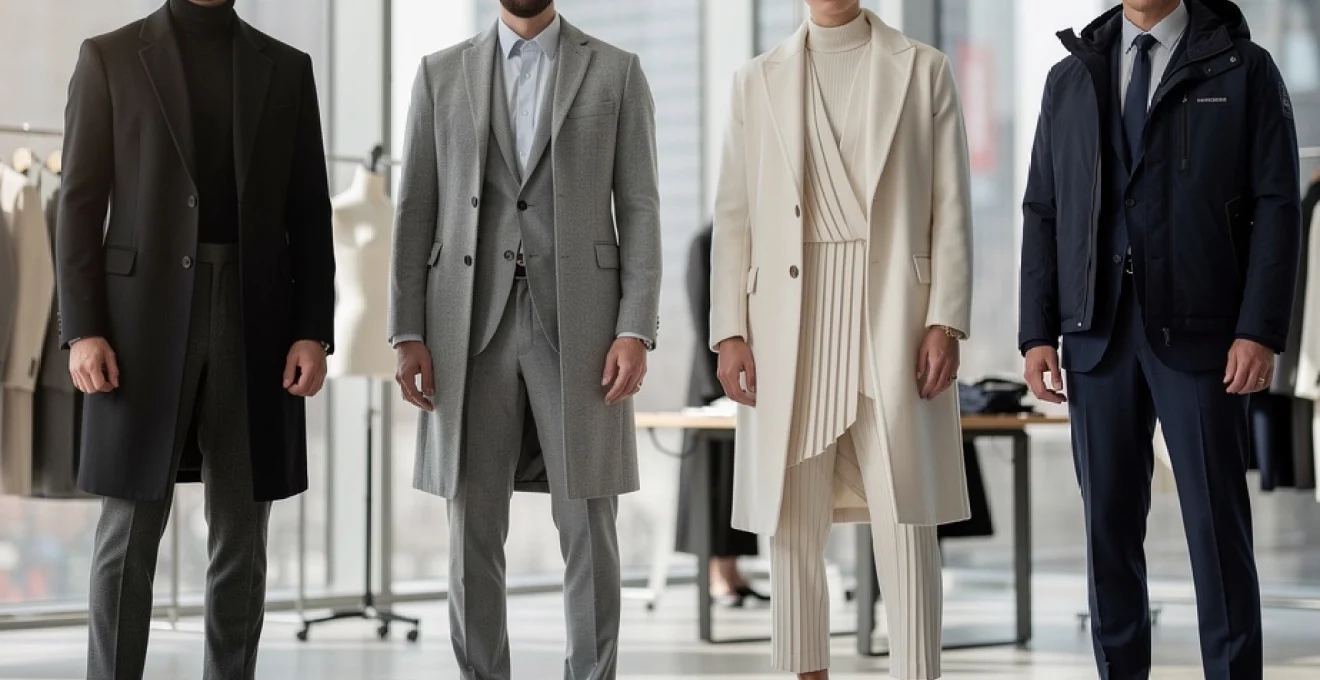
Monochrome dressing has evolved from a simple styling choice into a sophisticated art form that defines contemporary menswear. The approach of building an entire outfit around variations of a single colour creates visual cohesion whilst allowing for remarkable creativity through texture, proportion, and subtle tonal variations. This styling methodology appeals to modern men who appreciate the elegance of restraint and the power of refined simplicity.
The monochromatic approach transcends mere fashion trends, establishing itself as a timeless strategy that professional stylists and discerning gentlemen employ to create memorable, impactful looks. Whether executed in classic black, sophisticated greys, or bold statement colours, monochrome styling demands technical precision and an understanding of how different elements work together to create visual harmony without monotony.
Monochrome colour theory and visual psychology in men’s fashion
Understanding the psychological impact of monochromatic dressing begins with recognising how the human eye processes single-colour compositions. When viewing a monochrome outfit, the brain focuses on form, texture, and proportion rather than being distracted by colour contrasts. This creates an immediate impression of sophistication and intentional design choices that communicate confidence and attention to detail.
The visual weight of monochromatic elements varies significantly based on fabric choice, cut, and positioning within the overall silhouette. Darker tones naturally appear heavier and more grounding, whilst lighter shades create visual lift and airiness. Professional stylists leverage these principles to create balanced compositions that flatter the wearer’s physique whilst maintaining the cohesive aesthetic that defines exceptional monochrome styling.
Tonal gradation techniques using single hue variations
Mastering tonal gradation requires understanding the subtle differences between shades, tints, and tones within a single colour family. The most effective monochrome outfits incorporate at least three different values of the same hue, creating depth and visual interest without breaking the colour harmony. This technique prevents the flat, one-dimensional appearance that can result from using identical shades throughout an ensemble.
Professional colour matching involves considering undertones, which can dramatically affect how colours appear when placed adjacent to one another. Warm and cool undertones within the same colour family must be carefully balanced to avoid creating unintentional clashes that disrupt the monochromatic flow. Expert stylists often use natural lighting when selecting pieces to ensure accurate colour relationships.
Contrast ratios and optical weight distribution in All-Black ensembles
All-black styling presents unique challenges in creating visual interest through contrast ratios rather than colour variation. The key lies in manipulating light reflection through different fabric finishes – combining matte cottons with lustrous silks, or pairing smooth leather with textured wool creates the necessary contrast to prevent visual flatness whilst maintaining the monochromatic integrity.
Optical weight distribution in black ensembles requires careful consideration of garment proportions and fabric density. Heavier fabrics naturally command more visual attention, so positioning substantial pieces like wool coats or leather jackets strategically within the composition ensures balanced visual flow. The interplay between light-absorbing and light-reflecting surfaces creates subtle definition that gives dimension to single-colour styling.
Texture layering principles for monochromatic visual interest
Texture becomes the primary tool for creating visual complexity within monochromatic outfits. The strategic layering of different fabric textures – such as combining smooth silk with nubby wool, or pairing crisp cotton with soft cashmere – generates tactile contrast that translates into visual depth. This approach allows for sophisticated styling that appears effortless whilst demonstrating technical expertise.
Textile contrast ratios should follow the principle of balanced opposition, where smooth textures are paired with rougher ones, and matte finishes complement lustrous surfaces. The most successful monochrome outfits incorporate at least four different textures, distributed throughout the ensemble to create rhythmic visual interest that guides the eye naturally across the composition.
Proportional balance in Single-Colour silhouette construction
Silhouette construction in monochromatic dressing relies heavily on proportional relationships between garment elements. Without colour variation to define different sections of an
outfit, these relationships must be established through cut, length, and volume. Wider trousers require a more fitted upper body layer to avoid overwhelming the frame, while a voluminous overcoat is best anchored with slimmer trousers to maintain structural clarity. By consciously distributing volume within a single-colour silhouette, you ensure that the eye moves smoothly from top to bottom rather than fixating on one disproportionate area.
Vertical and horizontal lines within garments also play a crucial role in monochrome proportion. Longline coats, cropped jackets, and high-waisted trousers subtly manipulate perceived height and leg length, especially when colour remains constant. Strategic use of breaks – such as a visible waistband or a slightly different tonal belt – can refine the visual centre of gravity. When you view the entire monochrome outfit as a single shape, it becomes easier to adjust individual pieces to achieve harmonious balance.
Essential fabric technologies and textile selection for monochrome wardrobes
Building a refined monochrome wardrobe demands more than just choosing the right shades; it requires intelligent textile selection and an understanding of modern fabric technologies. High-quality materials not only drape better in single-colour outfits, they also maintain colour integrity over time, resisting fading and uneven wear that can disrupt tonal harmony. As performance and luxury textiles continue to evolve, men now have access to fabrics that combine aesthetic excellence with technical functionality.
From breathable natural fibres to advanced synthetics, each material interacts with light and movement in distinct ways. In a monochrome context, these differences become amplified, turning fabric choice into a central design decision rather than an afterthought. Selecting the right combination of merino, cashmere, technical membranes, and innovative blends ensures that single-colour outfits remain visually compelling, comfortable, and structurally sound across a range of climates and lifestyles.
Merino wool and cashmere blend properties for tonal matching
Merino wool and cashmere blends occupy a privileged place in monochrome menswear due to their exceptional drape, fine texture, and colour absorption. Their natural fibre structure allows dyes to penetrate deeply and evenly, producing rich, stable tones ideal for tonal dressing in greys, camels, navies, and blacks. Because these fibres reflect light softly rather than harshly, they create a gentle visual gradient even when pieces are close in shade, which is invaluable when you are building subtle tonal gradation within a single hue.
From a performance standpoint, merino’s temperature-regulating properties and cashmere’s insulating softness create garments that feel luxurious yet practical for everyday use. This makes them particularly suited to monochrome knitwear, overcoats, and tailored separates where comfort and elegance must coexist. When combining merino and cashmere within one outfit, matching fibre compositions where possible helps maintain consistent sheen and depth of colour, preventing jarring shifts that can occur when cheaper, less stable yarns are introduced into a carefully curated monochrome look.
Technical performance fabrics: Gore-Tex and outlast temperature regulation
For men who expect their monochrome outfits to perform in demanding environments, technical fabrics such as Gore-Tex and Outlast provide advanced weather and temperature management without sacrificing aesthetic coherence. Gore-Tex membranes deliver waterproof, windproof, and breathable protection, making them ideal for single-colour outerwear that must endure rain or snow whilst maintaining a sharp silhouette. When executed in deep blacks, charcoals, or navy tones, Gore-Tex shells blend seamlessly into urban monochrome wardrobes rather than looking overtly utilitarian.
Outlast technology, originally developed for NASA, works by absorbing, storing, and releasing heat to maintain a more stable microclimate next to the skin. Integrated into linings, mid-layers, or base layers, it enables monochrome outfits to adapt to fluctuating temperatures without the bulk of constant layering adjustments. This is particularly useful if you commute between climate-controlled offices and colder outdoor conditions but wish to maintain a consistent, single-colour aesthetic throughout the day. By pairing performance membranes with refined cuts, you create monochrome looks that feel as considered as traditional tailoring yet deliver modern technical resilience.
Luxury material combinations: alpaca, vicuña, and sea island cotton
At the highest end of monochrome menswear, luxury fibres such as alpaca, vicuña, and Sea Island cotton offer unparalleled tactility and visual refinement. Alpaca provides a soft halo and subtle sheen that works beautifully in tonal camel, brown, and charcoal compositions, especially in overcoats and chunky knitwear. Vicuña, one of the rarest and most coveted fibres in the world, delivers an almost weightless warmth and an extraordinarily fine surface, making it ideal for investment pieces where texture and depth of colour become the primary focal points in an otherwise minimalist monochrome outfit.
Sea Island cotton, renowned for its long staple length and silky hand, elevates shirts, knitwear, and lightweight layers within a single-colour wardrobe. Its smooth surface reflects light in a controlled, uniform manner, making it perfect for crisp white monochrome looks or deep navy ensembles where purity and saturation of colour are critical. When combining these luxury materials, the key is to let one hero fabric dominate the look and use others as supporting elements, ensuring that the overall monochrome composition feels intentional rather than ostentatious.
Synthetic innovations: coolmax and tencel modal for contemporary monochrome
Modern monochrome wardrobes increasingly rely on advanced synthetic and semi-synthetic fibres that prioritise comfort, sustainability, and performance. Coolmax, engineered to wick moisture away from the body, is particularly useful in single-colour activewear or hybrid casual pieces where breathability is essential. In monochrome athleisure outfits, Coolmax tees or polos in black, charcoal, or navy maintain a clean visual line while delivering technical benefits during commutes, travel, or gym sessions.
Tencel Modal, derived from sustainably sourced wood pulp, offers a fluid drape and ultra-soft handle that works superbly in relaxed monochrome tees, loungewear, and layering pieces. Its slight natural sheen adds a refined dimension to otherwise simple garments, ensuring that even minimalistic black or grey basics feel elevated. By integrating Coolmax and Modal into everyday monochrome dressing, you achieve a blend of practicality and sophistication that aligns with contemporary expectations of menswear: performance-driven yet aesthetically coherent.
Master tailoring techniques for monochromatic suit construction
Monochromatic suit construction demands a heightened level of tailoring precision because any flaw in cut, proportion, or finishing becomes more visible when colour contrast is removed. The eye is free to scrutinise every seam, dart, and lapel line, which means that pattern drafting and execution must be immaculate. A monochrome suit, whether in deep navy, charcoal, or soft beige, functions almost like architectural sculpture on the body, with each plane and angle defined by shadow rather than differing hues.
To achieve this, master tailors pay close attention to shoulder construction, lapel width, and button stance, ensuring that these structural elements create a flattering, coherent vertical line. Subtle details—such as pick-stitching in matching thread, tonal lining choices, and carefully calibrated trouser breaks—reinforce the single-colour narrative without introducing visual noise. When you commission or select a monochrome suit, scrutinise it in natural light and from multiple angles; the more restrained the colour palette, the more essential that the underlying tailoring supports and enhances your physique.
Iconic monochrome menswear designers and their signature approaches
Many of the most influential voices in modern menswear have used monochrome outfits as a central component of their design language. By limiting colour, they redirect attention toward form, innovation, and conceptual depth, often challenging conventional ideas of what menswear can be. Studying these designers offers valuable insights into how single-colour dressing can express distinct aesthetic philosophies—from radical deconstruction to disciplined minimalism.
Each of the following designers explores monochrome menswear through a different lens, yet all prove that restricting the palette does not limit creativity. Instead, it sharpens focus. As you refine your own monochrome style, drawing inspiration from these approaches can help you understand how to manipulate proportion, texture, and silhouette in ways that feel personal rather than imitative.
Yohji yamamoto’s deconstructed black aesthetic philosophy
Yohji Yamamoto has long been synonymous with sculptural black silhouettes that challenge traditional Western tailoring norms. His monochrome outfits often feature voluminous cuts, asymmetric hemlines, and unexpected fabric juxtapositions, using black as a canvas rather than a constraint. In Yamamoto’s world, black is not an absence of colour; it is a medium through which form, movement, and negative space are explored with almost poetic intensity.
For men looking to incorporate elements of this philosophy into their own wardrobes, the key is to experiment with proportion and drape whilst maintaining a disciplined palette. Wide-legged trousers, elongated coats, and layered shirts can create Yamamoto-inspired silhouettes, especially when executed in high-quality wool, cotton, and technical blends. Notice how his looks rarely rely on accessories or overt branding; instead, the monochrome structure itself becomes the statement, inviting you to view black as an active participant in the outfit rather than a neutral backdrop.
Jil sander’s minimalist germanic tailoring principles
In contrast, Jil Sander champions a precise, reductionist approach to monochrome dressing, rooted in sharp tailoring, immaculate finishes, and rigorous restraint. Her work often showcases tonal ensembles in white, navy, and muted neutrals, where every seam and panel is calibrated for clarity and function. Rather than using volume as a dramatic tool, Sander refines silhouettes to their essential forms, allowing the quality of fabric and construction to carry the visual impact in single-colour outfits.
When you apply Jil Sander’s principles to your monochrome style, focus on fit tolerance, clean lines, and the absence of unnecessary detail. Think unadorned coats in perfectly calibrated beige, navy suits with minimal padding and crisp shoulders, or white shirts with precise collars and concealed plackets. The result is a monochrome wardrobe that feels almost clinical in its efficiency yet undeniably luxurious in its execution, ideal for professional environments where subtlety and authority must coexist.
Rick owens’ avant-garde draping and proportional manipulation
Rick Owens approaches monochrome menswear through a darker, avant-garde lens, using elongated lines, dropped crotches, and dramatic layering to distort conventional body proportions. His palette frequently centres on black and muted earth tones, which act as a unifying element across complex, multi-layered silhouettes. By stripping away overt colour, Owens pushes the viewer to engage with shape, texture, and movement in a way that feels almost architectural.
To channel this aesthetic in your own monochrome outfits, consider integrating one or two statement pieces—such as a longline leather jacket, a draped knit, or exaggerated boots—against a foundation of simpler tonal basics. The goal is not to replicate runway extremity but to borrow the idea of controlled distortion: adjusting lengths, volumes, and layering in a single-colour scheme to create a powerful, contemporary presence. When executed thoughtfully, even a predominantly black wardrobe can feel experimental rather than predictable.
Issey miyake’s technical pleating and fabric innovation
Issey Miyake revolutionised monochrome dressing with his use of technical pleating and innovative textiles that retain sculptural forms while remaining lightweight and functional. His Pleats Please and Homme Plissé lines demonstrate how a single colour can become visually dynamic through engineered texture alone. The uniform hue allows the eye to trace the rhythm of pleats and folds, transforming simple garments into kinetic, almost architectural objects that move fluidly with the wearer.
You can interpret Miyake’s methodology by prioritising garments where fabrication itself is the design feature—pleated trousers, structured yet elastic jackets, or knitwear with engineered rib patterns. In a monochrome context, these pieces introduce visual and tactile complexity without resorting to prints or contrasting colours. This approach is particularly effective for men who value ease of movement and low-maintenance care, as many of Miyake-inspired textiles are wrinkle-resistant and travel-friendly, making them ideal for modern, minimalist wardrobes.
Seasonal monochrome adaptation strategies and climate considerations
Effective monochrome styling must respond to seasonal shifts and climatic demands, otherwise even the most refined single-colour outfit risks feeling impractical. In warmer months, darker monochrome outfits can trap heat and appear visually heavy, while in winter, pale ensembles may seem out of sync with the environment if fabrics lack sufficient weight. The solution lies in adapting both palette and material choice as temperatures change, whilst preserving the core monochromatic concept.
For spring and summer, lighter monochrome palettes—such as white, stone, light grey, or soft blue—paired with breathable fabrics like linen, lightweight cotton, and tropical wool keep you visually and physically cool. Looser cuts and unstructured tailoring enhance air circulation without compromising aesthetic integrity. As autumn and winter arrive, gradually transition toward deeper tones—charcoal, navy, forest green, or burgundy—in heavier flannels, brushed cottons, dense knits, and technical outerwear. By viewing the year as a tonal gradient, you maintain a cohesive monochrome identity that evolves organically with the seasons.
Professional styling methodologies for corporate monochrome dressing
In corporate environments, monochrome outfits offer a strategic advantage: they communicate discipline, attention to detail, and modernity without appearing ostentatious. However, the margin for error is small; an all-black or all-grey office look that neglects fit, fabric, or grooming can quickly appear severe or monotonous. Professional stylists therefore treat corporate monochrome dressing as a precise exercise in subtle differentiation—using micro-variations in texture, shade, and tailoring to create depth within strict dress codes.
For formal business settings, start with a well-tailored suit in a deep, neutral tone—navy, charcoal, or mid-grey—and build around it with a shirt, tie, and footwear from the same colour family. Slight differences in shade between suiting, shirting, and accessories prevent the outfit from reading as a flat block of colour, while still maintaining a unified impression. In more relaxed corporate cultures, monochrome smart-casual combinations—such as tonal knitwear with tailored trousers and minimal sneakers—offer a contemporary alternative to traditional suiting. The consistent thread is intentionality: every element of the single-colour outfit should feel deliberate, from belt finish to watch strap, reinforcing an image of considered professionalism.