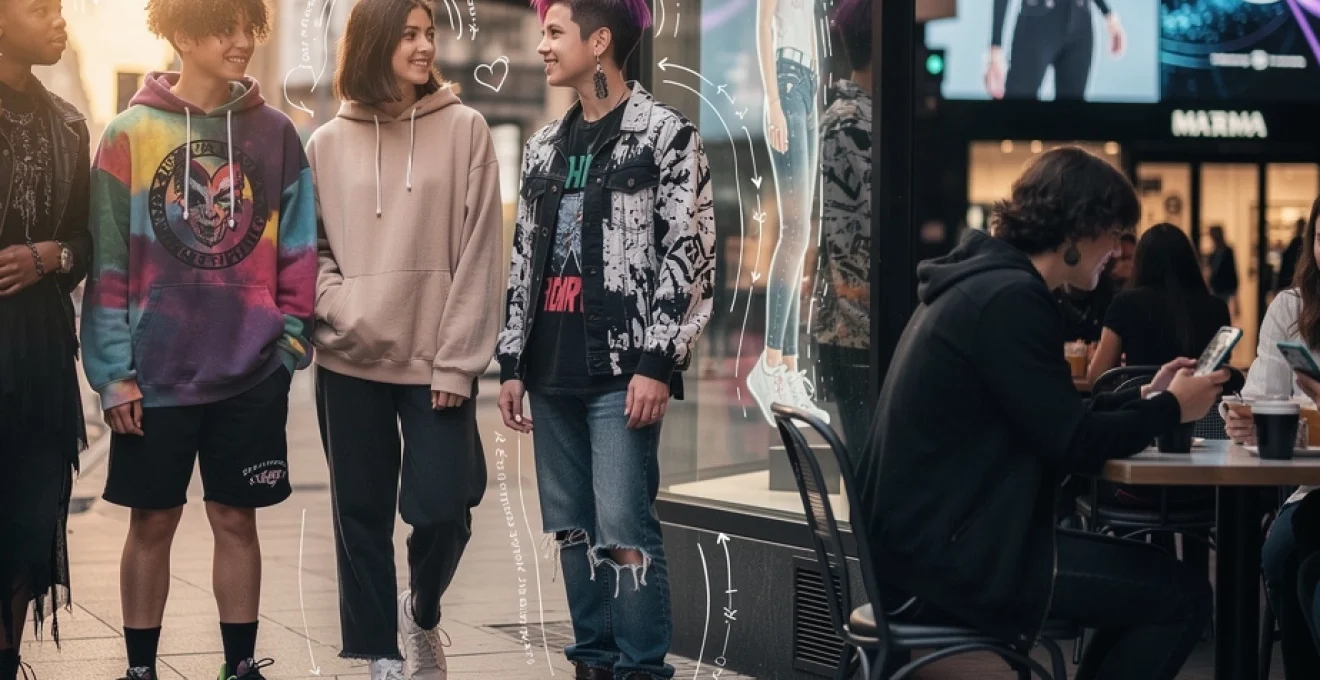
The teenage years represent a critical juncture in human development, where young people navigate the complex terrain of self-discovery whilst simultaneously managing social pressures and expectations. During this transformative period, fashion emerges as far more than mere clothing choices—it becomes a powerful psychological tool for identity construction and social communication. Fashion serves as a visual language through which adolescents articulate their emerging sense of self, experiment with different personas, and establish their place within peer groups and broader cultural contexts.
Research consistently demonstrates that clothing choices during adolescence carry profound psychological significance, influencing everything from self-esteem and confidence levels to social acceptance and cultural identity formation. As teenagers grapple with fundamental questions about who they are and who they wish to become, fashion provides a tangible means of exploring and expressing these evolving identities. The relationship between adolescent fashion choices and identity development operates through sophisticated psychological mechanisms that warrant careful examination to understand their lasting impact on personal growth and social integration.
Psychological mechanisms behind adolescent fashion choices and Self-Concept formation
The psychology underlying teenage fashion preferences operates through complex cognitive and emotional pathways that directly influence identity formation. During adolescence, the brain undergoes significant neurological changes, particularly in areas responsible for self-perception, social cognition, and decision-making processes. These developmental shifts create a heightened sensitivity to external validation and peer approval, making fashion choices particularly consequential for psychological wellbeing.
Adolescents utilise clothing as an extension of their developing self-concept, creating what psychologists term « identity capital »—tangible markers that represent their values, aspirations, and social affiliations. The act of selecting specific garments, brands, or styles becomes a deliberate process of self-curation, allowing teenagers to experiment with different aspects of their personality whilst maintaining some control over how others perceive them. This process often involves what researchers call « identity rehearsal, » where young people try on different personas through their fashion choices before committing to more permanent aspects of their identity.
Erik erikson’s identity vs role confusion theory in teen fashion expression
Erik Erikson’s seminal work on psychosocial development provides crucial insight into why fashion becomes so significant during adolescence. According to Erikson’s fifth stage of development, teenagers must successfully navigate the crisis of « Identity vs Role Confusion » to achieve a coherent sense of self. Fashion serves as a practical tool for this exploration, allowing adolescents to experiment with different roles and identities without making permanent commitments.
Through clothing choices, teenagers can explore various aspects of their personality—perhaps adopting a rebellious aesthetic one day and a more conservative look the next. This experimentation is not superficial but rather reflects the deep psychological work of identity formation that Erikson identified as essential for healthy development. When adolescents successfully integrate their various fashion experiments into a coherent personal style, they demonstrate progress towards achieving what Erikson termed « ego identity »—a stable sense of who they are across different contexts.
Symbolic interactionism and clothing as social communication tools
The sociological theory of symbolic interactionism offers another lens through which to understand the importance of fashion in adolescent identity development. According to this framework, individuals create meaning through social interactions, with clothing serving as one of the primary symbols through which teenagers communicate with their peers and broader society.
Each fashion choice carries symbolic weight, conveying messages about the wearer’s values, interests, social status, and cultural affiliations. Adolescents become highly attuned to these symbolic meanings, learning to decode the complex social messages embedded in different styles, brands, and aesthetic choices. This process develops their social intelligence and cultural literacy whilst providing opportunities to refine their own identity expression through increasingly sophisticated fashion choices.
Cognitive development impact on aesthetic preferences and brand recognition
The development of abstract thinking capabilities during adolescence significantly influences how teenagers approach fashion and style. As their cognitive abilities mature, adolescents become capable of understanding complex aesthetic concepts, brand positioning, and cultural symbolism that may have been beyond their comprehension in earlier years.
This cognitive sophistication allows teenagers to make more nuanced fashion choices that reflect their evolving understanding of themselves and their world. They begin to appreciate subtle differences in design, quality, and cultural significance that
shape the difference between simply « wearing clothes » and using fashion as a deliberate identity tool. Teenagers start to recognise how certain brands align with particular lifestyles, music scenes, or political stances, and this awareness feeds into more intentional wardrobe decisions. As brand recognition strengthens, adolescents may gravitate towards labels that symbolise creativity, sustainability, or status, using these preferences to refine a self-image that feels both aspirational and authentic.
At the same time, developing aesthetic preferences enables teenagers to curate wardrobes that reflect consistent themes—minimalist, sporty, vintage, or experimental—rather than random purchases. This coherence contributes to a more stable self-concept, as young people see their internal tastes mirrored in an external, visible form. Parents and educators who understand this cognitive shift can support healthy identity building by encouraging critical thinking about branding and helping teens differentiate between genuine preference and manufactured desire.
Mirror neuron activation through fashion imitation and peer modelling
Neuroscientific research on mirror neurons helps explain why adolescents so readily imitate the fashion choices of peers, celebrities, and influencers. Mirror neurons are brain cells that fire both when we perform an action and when we observe someone else performing that same action, creating a kind of internal simulation. In the context of teenage fashion, seeing a admired peer or influencer wearing a particular style can trigger a desire to reproduce that look as a way of « trying on » aspects of their identity.
This imitation is not mere copying; it functions as a developmental shortcut, allowing teenagers to experiment with social roles before fully defining their own. When an adolescent mirrors the streetwear of a favourite musician or the minimalist aesthetic of a content creator, they are engaging in psychological role-play that informs their emerging identity. Over time, as they assess how these borrowed styles feel and how others respond, they selectively retain elements that resonate and discard those that do not, gradually constructing a more personalised fashion identity.
Understanding mirror neuron activation also clarifies why peer groups can have such a powerful effect on what teenagers choose to wear. Observing friends receive positive feedback for particular outfits reinforces those styles within the group, leading to shared trends that feel almost instinctive. For parents, educators, and clinicians, recognising this mechanism can shift the conversation from « Why are you just following others? » to « What does this style help you explore about yourself? »—a much more constructive starting point for supporting healthy identity formation.
Peer group dynamics and social identity theory in adolescent style adoption
Adolescent fashion choices are deeply embedded in peer group dynamics and the need to belong. Social Identity Theory suggests that individuals derive part of their self-esteem from membership in social groups, which are often visually marked by shared styles, brands, and aesthetics. During adolescence, when fitting in can feel as critical as breathing, clothing frequently becomes the most visible signifier of group membership and social identity.
Teenagers use fashion to signal who they are « with » and, just as importantly, who they are not with. Whether it is the trainers associated with a particular sports clique, the band T-shirts of a music subculture, or the curated thrift-store looks of an artsy crowd, style acts as an informal uniform that simplifies social categorisation. This can be both empowering—providing a ready-made sense of belonging—and limiting, if young people feel they must suppress their true preferences to maintain group acceptance.
In-group fashion conformity and social categorisation processes
In-group conformity in adolescent fashion operates as a subtle yet powerful social regulation mechanism. Once a teenager identifies with a specific peer group, they quickly learn the unwritten dress code that signals membership, from acceptable brands to preferred silhouettes and colours. These shared fashion norms reduce social anxiety by providing clear guidelines on how to appear « right » in a given context, especially in environments like school corridors where visual first impressions carry significant weight.
Social categorisation—the process of classifying people into « us » and « them »—relies heavily on these visual cues. A hoodie with a skate brand, a religious head covering, or a particular type of makeup can instantly place someone in a mental category, for better or worse. While such categorisation can help teenagers navigate complex social landscapes, it can also fuel stereotyping and exclusion. Encouraging adolescents to experiment across style boundaries—mixing sporty with academic, or high-street with thrifted pieces—can soften rigid group divisions and support a more flexible sense of self.
From an identity-building perspective, a certain amount of conformity is not only inevitable but also developmentally useful. Trying on the « uniform » of a friendship group allows teenagers to experience collective identity and social cohesion. The key question is whether they feel free to step outside those norms when their personal tastes diverge. Adults can foster healthier fashion conformity by validating group belonging while also affirming that changing style over time is a normal part of discovering who you are.
Status signalling through designer labels and luxury brand consumption
Designer labels and luxury fashion play a prominent role in how some adolescents construct and communicate social status. Wearing a recognisable logo or limited-edition trainer can act as a shorthand for wealth, exclusivity, or cultural capital, particularly in school environments where subtle economic differences are constantly on display. For teenagers, these items often function less as clothing and more as social currency, shaping who is perceived as influential, « cool, » or aspirational.
Psychologically, this status signalling taps into a deep need for recognition and respect during a life stage marked by insecurity and comparison. However, it can also create significant pressure, especially for young people who lack the financial resources to participate in luxury consumption. Some may turn to counterfeit goods, overextension of family budgets, or unhealthy work patterns to « keep up » with perceived fashion standards.
Supporting healthy identity building involves helping teenagers separate self-worth from price tags. Conversations about cost-per-wear, ethical production, and personal style can reframe fashion as a creative practice rather than a competition. Many adolescents respond well to the idea of using a single quality item—a well-made jacket, a distinctive pair of shoes—as a focal point in outfits built from more accessible basics, allowing them to feel stylish without relying entirely on conspicuous consumption.
Subculture identification via gothic, streetwear, and alternative fashion movements
Subcultures such as Gothic, punk, streetwear, K-pop-inspired looks, and other alternative fashion movements offer adolescents powerful templates for identity formation. These style communities provide more than just aesthetic guidelines; they often come with shared values, music preferences, political attitudes, and online forums where young people can find like-minded peers. For teenagers who feel out of place in mainstream school culture, adopting a subcultural style can be a lifeline, offering a sense of belonging and validation.
Gothic fashion, with its dark palettes, dramatic silhouettes, and symbolic accessories, for example, may appeal to adolescents exploring themes of introspection or non-conformity. Streetwear, grounded in skate, hip-hop, and urban culture, allows teens to align themselves with creativity, resistance, or athleticism. These fashion codes function like visual passports into communities where specific forms of difference are not only tolerated but celebrated.
At the same time, subcultural identification can occasionally narrow self-expression if teenagers feel obliged to conform rigidly to group norms—only wearing black, for instance, or only buying certain sneaker brands. Healthy identity development involves using subcultures as starting points rather than cages, encouraging young people to adapt and remix elements so that their style expresses individuality as well as group connection. Parents and educators can support this by showing curiosity—asking what a certain look means—rather than dismissing alternative fashion as a phase or rebellion.
Social comparison theory application in instagram and TikTok fashion trends
Social Comparison Theory explains why platforms like Instagram and TikTok exert such a powerful influence on adolescent fashion. Teenagers naturally evaluate themselves against others to gauge how they are doing socially and aesthetically, and social media places a constant stream of highly curated images at their fingertips. These platforms can make it seem as though everyone else has flawless skin, endless wardrobes, and perfectly styled outfits, fuelling upward comparisons that may erode self-esteem.
Yet, the same mechanisms that create pressure can also support identity building when used consciously. Teenagers can follow diverse creators who share affordable styling tips, body-positive content, or cultural fashion that reflects their own backgrounds, transforming comparison into inspiration. Asking reflective questions— »Do I actually like this style, or do I just see it everywhere? »—helps young people distinguish authentic preference from algorithm-driven desire.
Parents and professionals working with adolescents can encourage practical strategies such as setting time limits on scrolling, curating feeds to include realistic fashion influencers, and engaging in occasional « offline style days » where outfits are chosen for comfort and self-expression rather than postability. Used mindfully, social media can become a broad moodboard for identity exploration rather than a relentless scoreboard.
Cultural capital acquisition through fashion literacy and brand knowledge
Cultural capital—the non-financial assets that confer social advantage, such as tastes, skills, and knowledge—plays a crucial role in adolescent fashion and identity. Fashion literacy, including understanding style history, brand narratives, and sustainability issues, equips teenagers with conversational tools that extend beyond the wardrobe. Knowing the difference between fast fashion and slow fashion, or between streetwear collaborations and heritage brands, can influence which spaces they feel confident entering, both online and offline.
For many young people, building fashion literacy is akin to learning a new language. They pick up terminology like « capsule wardrobe, » « upcycling, » or « gender-neutral clothing, » and these concepts expand the possibilities for how they might dress and who they might become. This knowledge can also function as a levelling force: a teenager with limited financial means but strong styling skills and thrift-shopping savvy may earn as much fashion respect in their peer group as someone with a larger budget but less creativity.
From an educational standpoint, encouraging adolescents to research designers from diverse backgrounds, explore local or second-hand fashion ecosystems, and question marketing messages helps them build critical cultural capital. Such skills not only benefit their personal identity development but can also open pathways into creative industries, marketing, or design careers. When teenagers view fashion as a field of knowledge rather than simply consumption, they are more likely to make choices aligned with their values and long-term goals.
Body image development and clothing as identity armour during puberty
Puberty brings rapid physical changes that can destabilise even the most confident adolescent. Height spurts, weight fluctuations, acne, and the emergence of secondary sexual characteristics all demand psychological adjustment. In this context, fashion often functions as a form of « identity armour »—a protective layer that helps young people feel safer and more in control as they move through public spaces such as classrooms, buses, and social events.
Clothing choices can either soften or accentuate bodily changes, enabling teenagers to negotiate how visible they wish those changes to be. An adolescent feeling self-conscious about their shape might choose oversized hoodies or layered outfits to create a sense of security, while another might embrace fitted silhouettes as a way of celebrating new curves or musculature. The crucial point is that fashion gives them options, allowing the body to be framed in ways that support, rather than undermine, emerging self-esteem.
Body image research indicates that adolescents who feel they can influence their appearance in line with their identity tend to report higher confidence and lower levels of distress. Practical guidance—like helping a teen find jeans that fit their body type comfortably, or supporting them in choosing modest or expressive clothing aligned with their cultural or religious values—can transform shopping from a source of anxiety into an exercise in agency. By treating fashion as a tool for comfort and authenticity rather than perfection, we help teenagers build a more compassionate relationship with their changing bodies.
Digital fashion influence and virtual identity construction in generation Z
For Generation Z, identity building does not occur solely in physical spaces; it unfolds just as powerfully in digital environments. Avatars, profile pictures, and curated grids on social platforms form parallel wardrobes where teenagers can experiment with fashion in low-risk, low-cost ways. In many cases, the digital self becomes a testing ground for bolder styles that may eventually migrate into offline outfits, illustrating how virtual and real-world identities continually influence each other.
Digital fashion—ranging from augmented reality filters to fully virtual garments used in gaming and social apps—expands what « getting dressed » can mean. A teen who feels constrained by school dress codes or family expectations might express a more flamboyant or gender-fluid style through a gaming avatar, using this space to explore aspects of their identity that feel unsafe elsewhere. As these virtual expressions gain social validation from online peers, they can bolster the confidence needed to integrate elements of that style into everyday life.
Social media algorithm impact on fashion discovery and trend propagation
Social media algorithms significantly shape how adolescents discover fashion trends and interpret what is « in » or « out. » By tracking likes, shares, and watch time, platforms prioritise content that keeps users engaged, often amplifying specific aesthetics—clean girl, e-girl, cottagecore, Y2K—that then appear in endless variations. For a teenager scrolling through these feeds, it can feel as though everyone dresses in a single dominant style, even if their offline reality is more diverse.
This algorithm-driven exposure can accelerate trend cycles and intensify pressure to update wardrobes frequently, which may clash with financial or environmental concerns. Yet, it also creates opportunities for niche communities and micro-trends to flourish. A young person interested in modest fashion, adaptive clothing, or DIY upcycling can find highly tailored content within a few taps, discovering role models they might never encounter locally.
To use these algorithms in a way that supports identity building, adolescents can be encouraged to actively curate their feeds rather than passively accept whatever appears. Following a range of creators—different body types, cultures, price points, and aesthetics—turns the algorithm into a more balanced moodboard. Asking, « If I liked three different styles this week, what do they have in common? » can help teens identify deeper preferences (colours, silhouettes, values) that guide more intentional fashion choices.
Influencer marketing psychology and parasocial relationships with fashion icons
Influencer marketing leverages psychological mechanisms that are particularly potent during adolescence, including parasocial relationships—one-sided emotional bonds that viewers form with media personalities. Teenagers may feel they « know » a fashion YouTuber, TikTok stylist, or Instagram model, interpreting product recommendations as advice from a trusted friend rather than advertising. This emotional connection can strongly shape fashion choices and, by extension, identity development.
On the positive side, influencers can model body positivity, cultural pride, gender diversity, and creative self-expression, offering alternative role models to traditional celebrity culture. A teen who sees someone with their skin tone, body type, or background confidently styling outfits may feel newly empowered to experiment. However, the commercial nature of many influencer relationships means that self-expression is often entangled with product promotion, which can blur the line between authentic recommendation and paid endorsement.
Helping adolescents navigate these dynamics involves promoting media literacy: discussing sponsorship disclosures, comparing different influencers’ approaches, and encouraging teens to reflect on how content makes them feel. Questions like « Do I feel inspired or pressured after watching this haul? » can guide healthier consumption. In this way, parasocial relationships can become sources of identity inspiration rather than unexamined scripts dictating what teenagers « should » wear.
Virtual try-on technology and digital wardrobe experimentation
Virtual try-on technology—accessible through augmented reality apps, retailer websites, and even social media filters—has transformed how adolescents experiment with fashion. Instead of relying solely on dressing rooms or imagination, teenagers can overlay outfits, makeup, or hairstyles onto their own image in real time. This digital experimentation lowers the stakes of style exploration, making it easier to test bold colours, unconventional silhouettes, or gender-fluid pieces without committing to a purchase.
From an identity-building perspective, virtual try-ons function like a digital sketchbook where young people can draft multiple versions of themselves. They can compare how different aesthetics align with how they want to feel—powerful, soft, professional, artistic—and use those insights to guide real-world shopping. This can be particularly empowering for adolescents who experience dressing rooms as stressful or dysphoria-inducing spaces, including those navigating gender transition or body image challenges.
To maximise the benefits of virtual fashion tools, it is useful to pair them with reflective questions: « Which digital looks felt most like ‘me’? » or « What small element from this bold style could I bring into my everyday outfits? » In doing so, teenagers move from passive play to intentional identity design, using technology as a bridge between imagination and reality rather than a source of distortion.
Fast fashion accessibility through shein, ASOS, and online retail platforms
The rise of fast fashion platforms such as Shein, ASOS, and other online retailers has dramatically increased adolescents’ access to trend-driven clothing. Low prices, constant new arrivals, and targeted social media ads make it possible for teenagers to update their wardrobes frequently and imitate influencer looks with remarkable accuracy. For identity building, this accessibility can feel liberating: young people can experiment with multiple styles in quick succession, discovering what resonates without long-term commitment.
However, this model also poses psychological and ethical challenges. When trends shift at high speed, it can be harder for adolescents to develop a stable sense of style; they may feel compelled to reinvent themselves constantly to avoid seeming « outdated. » Additionally, awareness of environmental and labour issues in fast fashion can create a values conflict for socially conscious teens who nevertheless feel drawn to these accessible options.
Supporting healthy identity formation in this context involves encouraging a more intentional approach to fast fashion. Practical strategies include setting a monthly limit on impulse purchases, mixing low-cost items with second-hand or higher-quality basics, and learning simple DIY alterations to extend a garment’s life. Inviting teenagers to ask, « Will this still feel like me in six months? » before clicking « buy » subtly shifts the focus from instant trend alignment to longer-term identity coherence. In this way, even fast fashion becomes a site for critical thinking and self-discovery rather than mere consumption.